U.S. airlines are pushing the Trump administration to block more flights between the United States and China, setting up a fight over market access, cost disadvantage and the next phase of transpacific travel just as Beijing presses to reopen the corridor.
U.S. Airlines Push to Block More China Flights
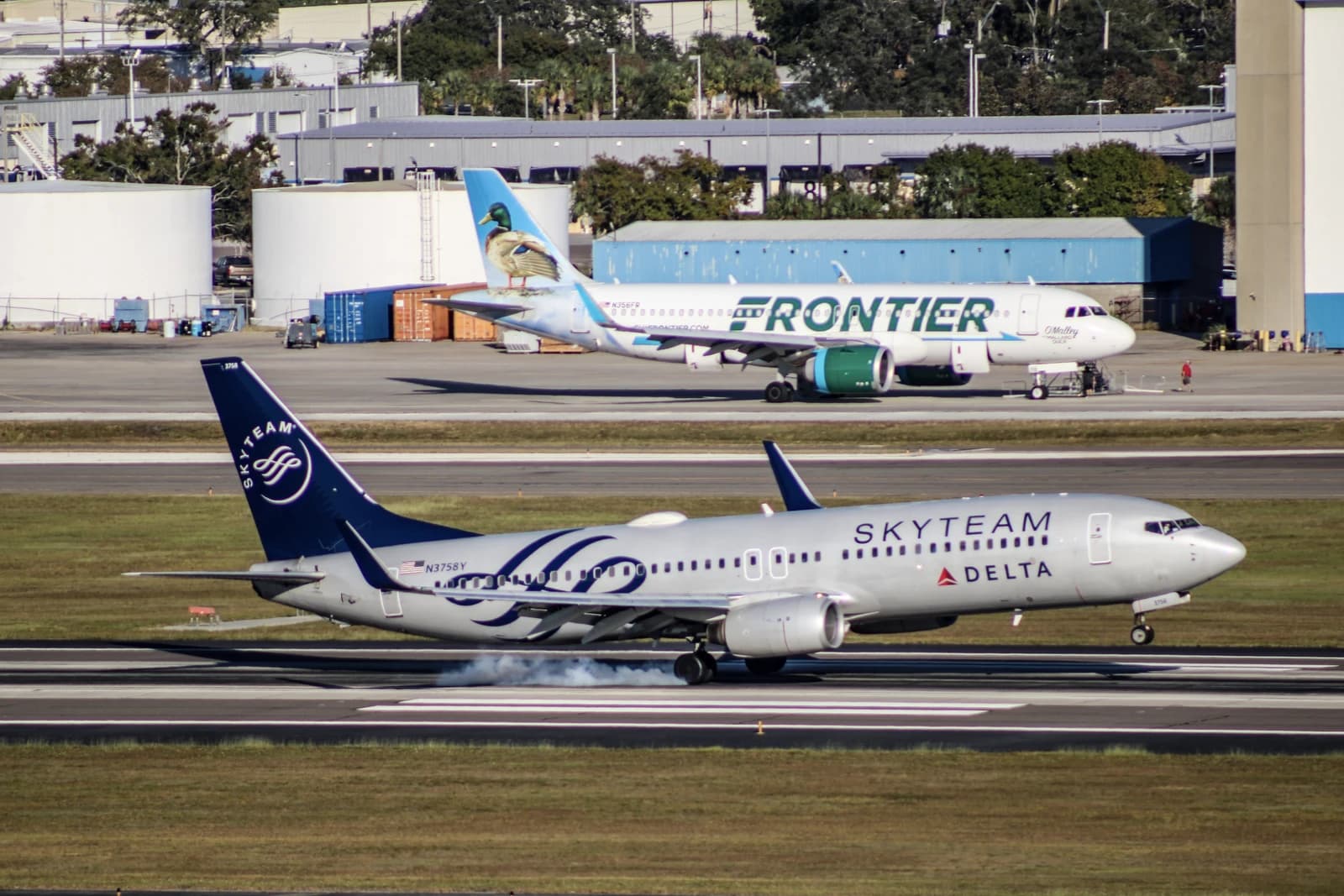
The stakes are bigger than a route map adjustment. More China-U.S. flying would reopen capacity in one of the world’s most important long-haul markets, but it would also sharpen an uneven competitive field for U.S. carriers that still have to detour around Russian airspace while some Chinese airlines can fly a shorter path. That raises fuel burn, crew time and aircraft utilization costs at the exact moment airlines are trying to protect margins.
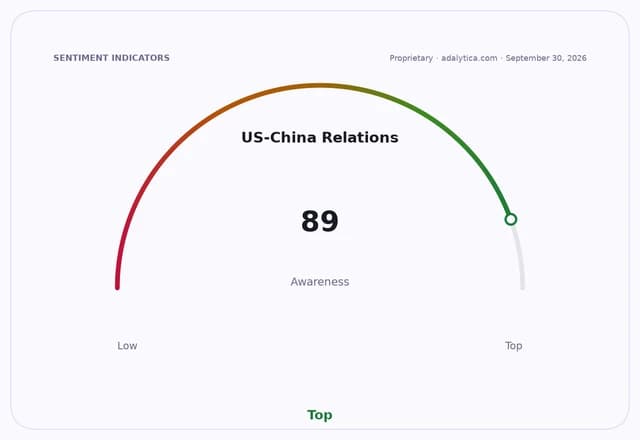
Sentiment IndicatorsⓘProprietary · adalytica.com · September 30, 2026
This is a snapshot — live sentiment, awareness and momentum for 130+ markets update continuously in the dashboard.Open AlphaPulse
Airlines for America, the trade group representing Delta Air Lines, United Airlines, American Airlines and others, warned in a letter to the administration that expanding China service would deepen that gap. Chris Sununu, the group’s chief, called the mismatch “a huge cost” and said it is “unfair” that Chinese carriers can still benefit from access to Russian airspace on some routes while U.S. carriers cannot.
The backdrop is a route structure that remains far below pre-pandemic levels. The current framework allows roughly 50 weekly round-trip flights per country, down from more than 150 before the COVID-19-era collapse in 2020. Xi Jinping, meanwhile, told a Washington event that the two sides “may also increase direct flights to facilitate two-way travel and trade,” signaling that Beijing wants aviation links to become part of the broader thaw in commercial ties.
For investors, the implications cut two ways. More flights could support demand recovery across the Pacific and help Boeing if China-related aircraft orders re-emerge, but the near-term read-through for U.S. airlines is more negative if additional capacity arrives before the competitive imbalance over Russian airspace is resolved. That could pressure yields and keep pricing power under scrutiny on a route network that already carries heavy fixed costs.
The market is already sensitive to geopolitical routing risk. Adalytica’s US–China relations sentiment gauge showed extreme greed and elevated awareness around the issue, underscoring how quickly policy shifts can move airline and aerospace expectations. The broader geopolitical backdrop also remains fragile, with airspace access still shaped by the fallout from Russia’s invasion of Ukraine.
American Airlines, Delta and United do not need a full reopening of China demand to matter here — they need a fair one. If Washington accepts more flights without a reciprocal fix to the airspace imbalance, Chinese carriers get the cleaner economics and U.S. airlines absorb the pain. If the administration ties any expansion to a better operating framework, the transpacific market could become a more investable growth story for the right carriers and aircraft manufacturers.
For now, the trade groups’ message is clear: capacity without parity is a margin drag. The key question for investors is not whether China-U.S. flying comes back — it is who captures the economics when it does.
| Entity | Gains | Losses |
|---|---|---|
| Chinese carriers | ▲More access, more traffic | ▼Less concern over limits |
| U.S. airlines | ▲Potential demand recovery | ▼Higher costs, weaker parity |
| Boeing | ▲Possible China order upside | ▼Delay in deal timing |
| Travelers/trade | ▲More flight options | ▼Higher fares if capacity stays tight |