China is rejecting Western claims that its industrial policy is creating global overcapacity, doubling down on a manufacturing model that is fueling trade barriers in electric vehicles, batteries and solar equipment and raising the risk of a broader tariff fight.
China tariffs on EVs, batteries and solar imports
Beijing’s pushback matters because the dispute is no longer a theoretical trade argument: it is shaping pricing, market access and industrial strategy across some of the world’s most important green-tech supply chains. Western governments say Chinese state subsidies are allowing firms to export at prices domestic rivals cannot match, while China says cheaper output is exactly what the world needs to speed the energy transition.
Sentiment Indicators
The clash has already reached the auto sector, where the European Union has imposed temporary tariffs on several Chinese vehicle brands. Battery makers in North America are pressing for government support to offset China’s dominance in lithium-ion supply chains, and European solar producers are asking for emergency aid as low-cost imports squeeze margins.
For investors, the stakes extend beyond trade headlines. Chinese equities and China-linked funds remain sensitive to any sign of policy escalation or a retreat in exports, while global automakers, battery suppliers and renewable-energy companies face a more fragmented market in which pricing power increasingly depends on politics as much as technology.
The issue also underscores a deeper split in the global economy: developed markets are building defenses around strategic industries, while developing countries continue to welcome cheap Chinese goods as a faster route to electrification and industrial upgrading. That divergence makes any consensus at the World Trade Organization or on future trade rules harder to reach.
China ETFs have already reflected the tension. FXI closed at $33.48 on Nov. 13, below its 200-day moving average of $35.26, while the broader iShares MSCI China ETF, MCHI, finished at $49.57, also under its 200-day average of $54.94. The Direxion Daily FTSE China Bear 3X ETF, YANG, closed at $33.18, well above its 200-day average of $29.57, underscoring continued demand for bearish China hedges.
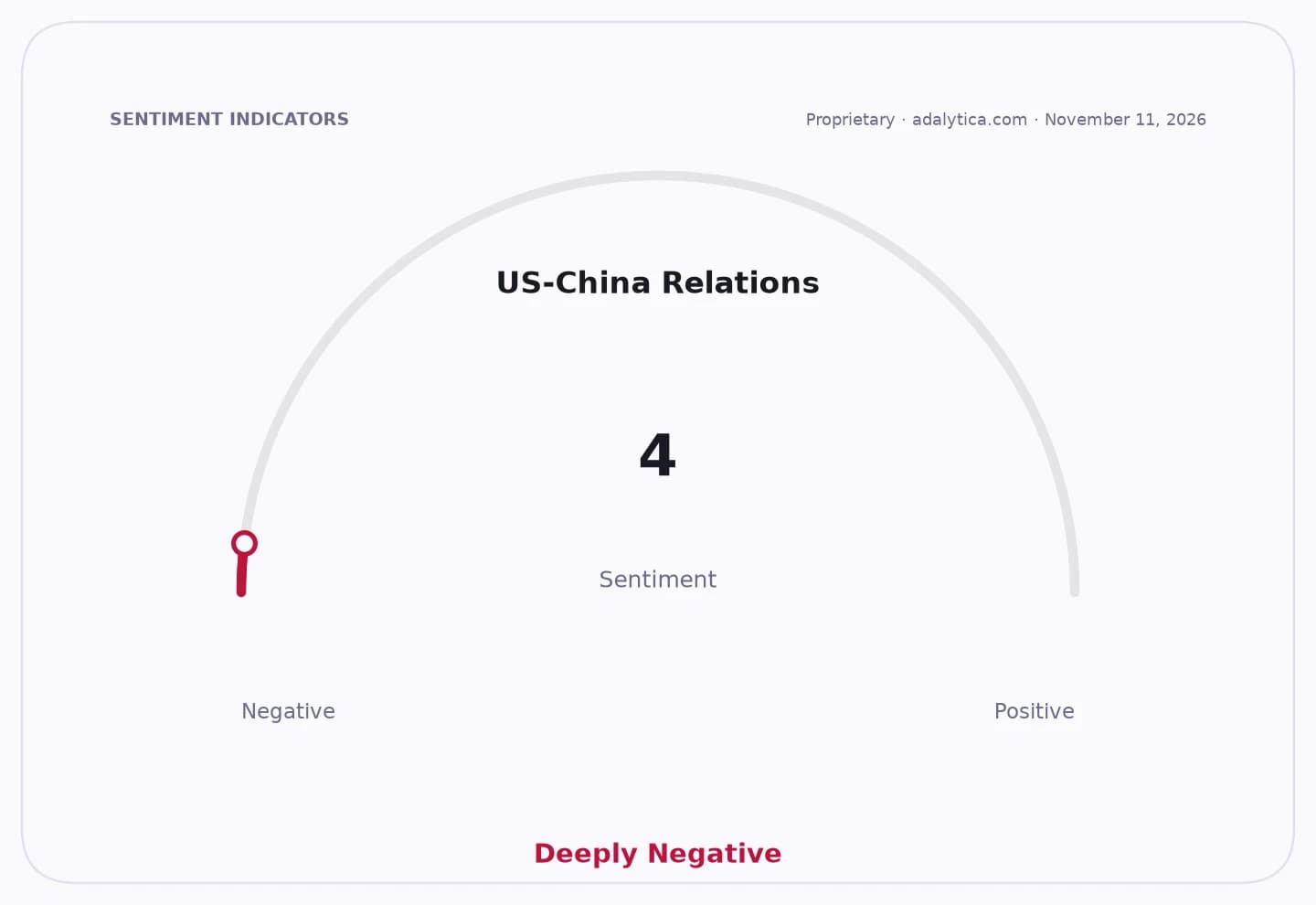
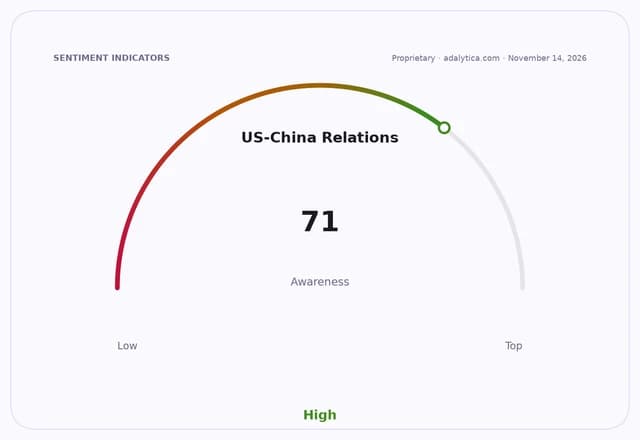
Adalytica’s US-China relations sentiment gauge is flashing Extreme Fear at 4, suggesting investors are pricing in a more hostile policy backdrop even as awareness of the issue remains elevated. The next catalyst is likely to come from further tariff moves, trade negotiations and any response from Beijing as governments decide whether to tighten barriers or seek another temporary truce.
| Entity | Gains | Losses |
|---|---|---|
| Chinese exporters | ▲Market share in developing markets | ▼Access to U.S./EU markets |
| Western automakers and manufacturers | ▲Potential tariff protection | ▼Cheaper imported competition |
| Consumers in emerging markets | ▲Lower-cost EVs and solar gear | ▼Fewer local suppliers |
| China ETFs / bear hedges | ▲Volatility trading opportunities | ▼Clear policy stability |