The U.S. has escalated its China travel advisory with a new warning about the risk of wrongful detention, a move that underscores worsening bilateral tensions and raises the stakes for Americans doing business, research or other work in the mainland.
China travel advisory adds detention warning

The State Department added a “D” risk indicator to China’s advisory, signaling what it calls a serious threat of arbitrary enforcement and exit bans, even as the overall warning remains at Level 2. The update is aimed at U.S. travelers who could be detained without fair legal process under China’s broad national security and counterespionage laws.
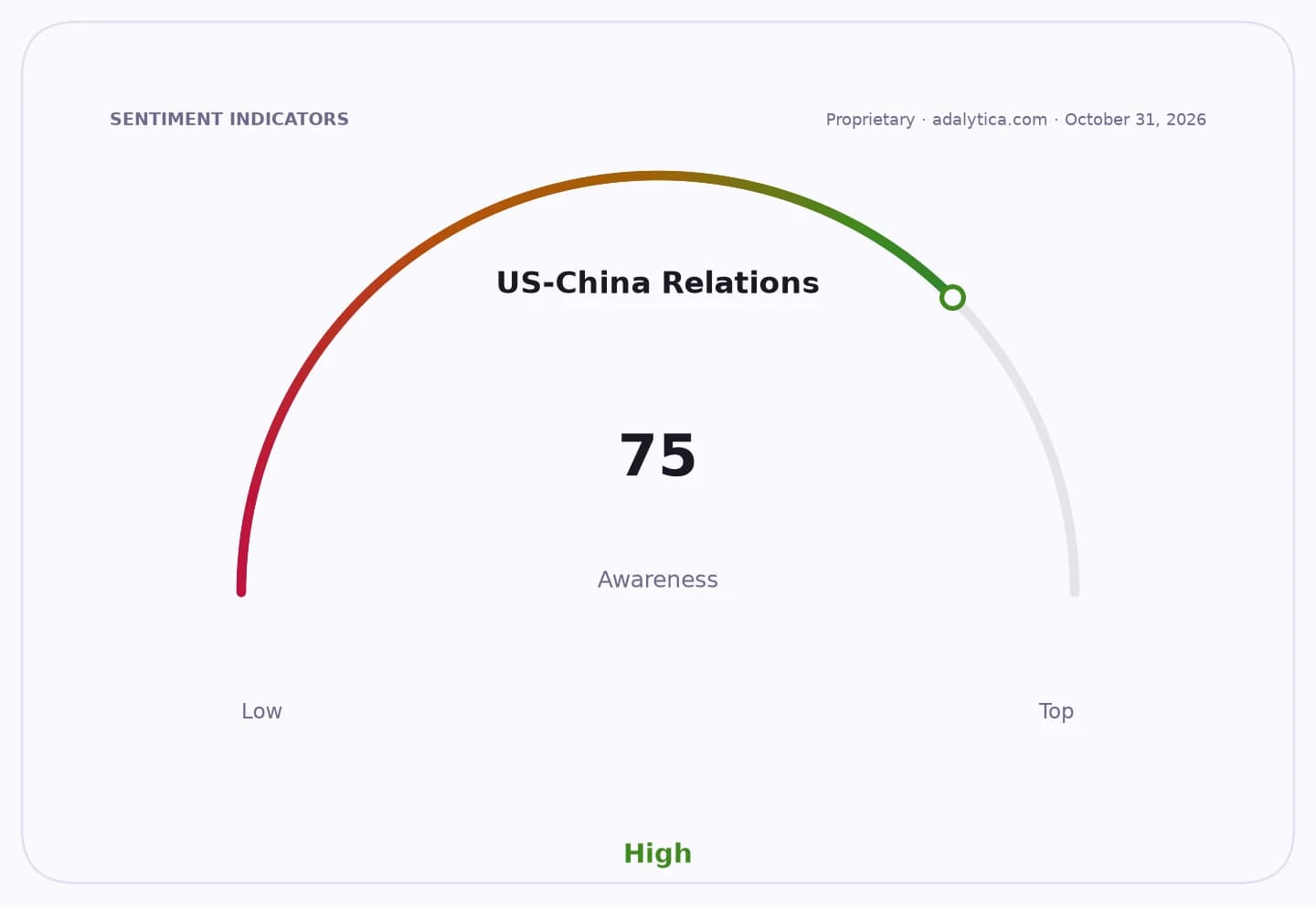
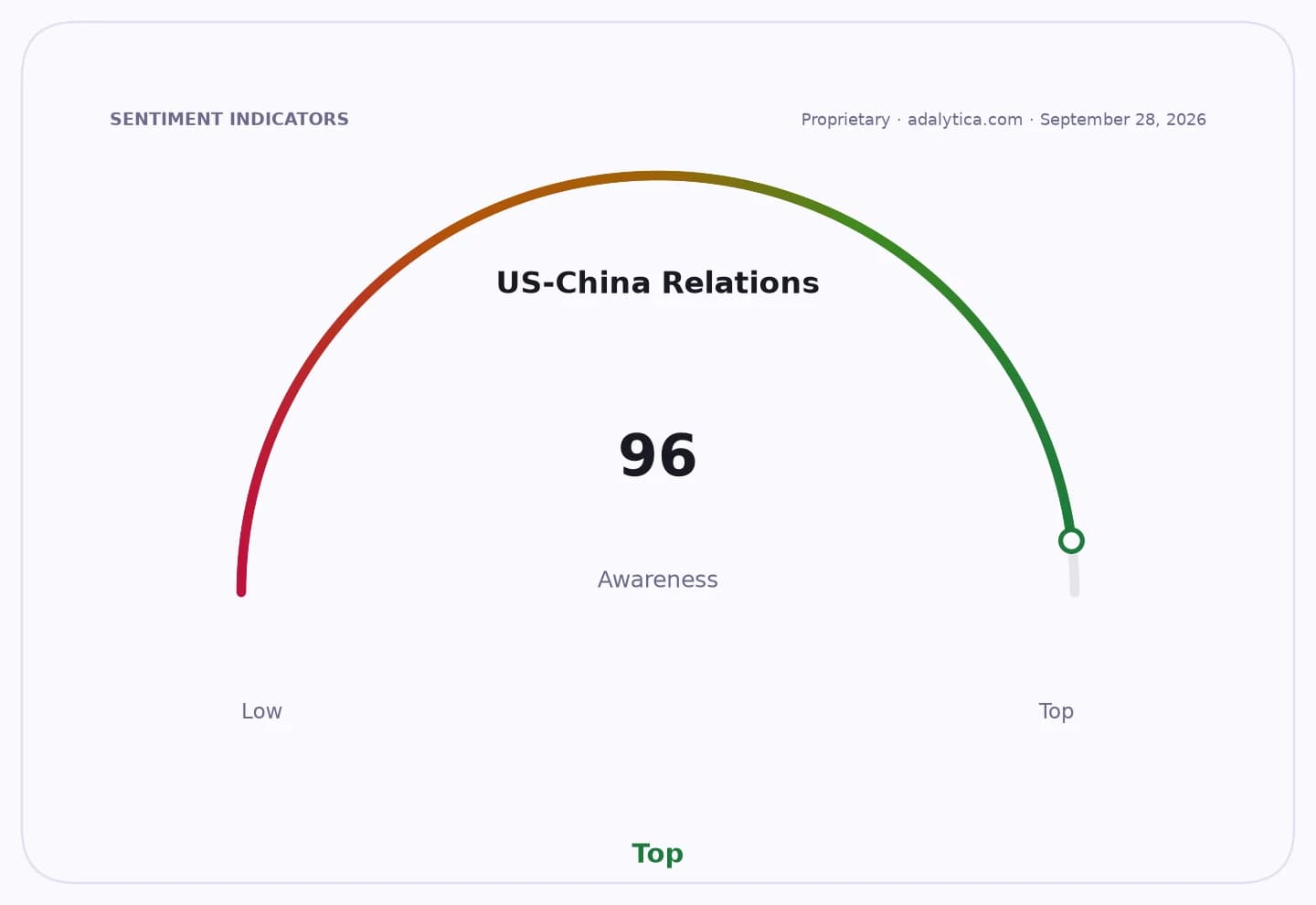
Sentiment Indicators
The warning matters economically because it adds another layer of friction to already strained U.S.-China ties and may make companies, academics and professionals more cautious about travel to the world’s second-largest economy. For investors, that can translate into higher compliance costs, more disruption to cross-border work and a chill on sectors exposed to China-linked mobility, including airlines, hospitality, education and multinational services.
The timing also highlights a broader policy squeeze. Washington has recently moved to suspend visa-free travel for Chinese nationals to the Northern Mariana Islands and proposed tighter restrictions on investments in Chinese biotech firms, steps Beijing has condemned as harmful to both sides.
Geopolitical Risk — 30-day sentimentadalytica.com
Explore this data interactively — full history, time series and cross-market comparisons.
Shares in the China-focused iShares MSCI China ETF, FXI, were trading at $32.50 on Oct. 27, down from $35.88 on Sept. 4, while the U.S.-listed airline United Airlines, which carries significant international exposure, closed at $104.71, above its Oct. 23 low but still below its 50-day moving average. Technical indicators on both names suggest investors are still wary, with FXI and UAL trading below their 200-day moving averages.
The warning follows reports of the detention of two American scholars, whom Washington says are being wrongfully held. U.S. officials are urging travelers to enroll in the Smart Traveler Enrollment Program and to maintain detailed communication plans before entering China.
For investors, the key risk is that the advisory becomes another headwind for business travel and cross-border confidence at a time when geopolitical risk is already elevated. Any further retaliation from Beijing, or new U.S. restrictions on travel, investment or visas, would likely deepen the drag on sentiment toward China-exposed assets.
| Entity | Gains | Losses |
|---|---|---|
| U.S. travelers | ▲clearer risk warning | ▼higher detention risk |
| U.S. government | ▲stronger leverage in talks | ▼more bilateral friction |
| China tourism/business links | ▲none | ▼weaker travel confidence |
| FXI and China-exposed equities | ▲possible bargain hunters | ▼geopolitical discount |