China has moved to reassert the United Nations’ role in space governance, urging tighter international rules to prevent an arms race and keep the orbital domain from becoming a new theater of war.
China urges UN rules for space governance
That matters because space has shifted from a scientific commons into critical infrastructure for communications, navigation, intelligence and missile warning, making ambiguity over satellite safety and weapons in orbit a direct economic and strategic risk. Beijing’s proposal for a legally binding arms-control framework, mandatory notifications on launches and satellite collisions, and clearer oversight of commercial space activity is an effort to shape the rules before rival powers and private operators do.
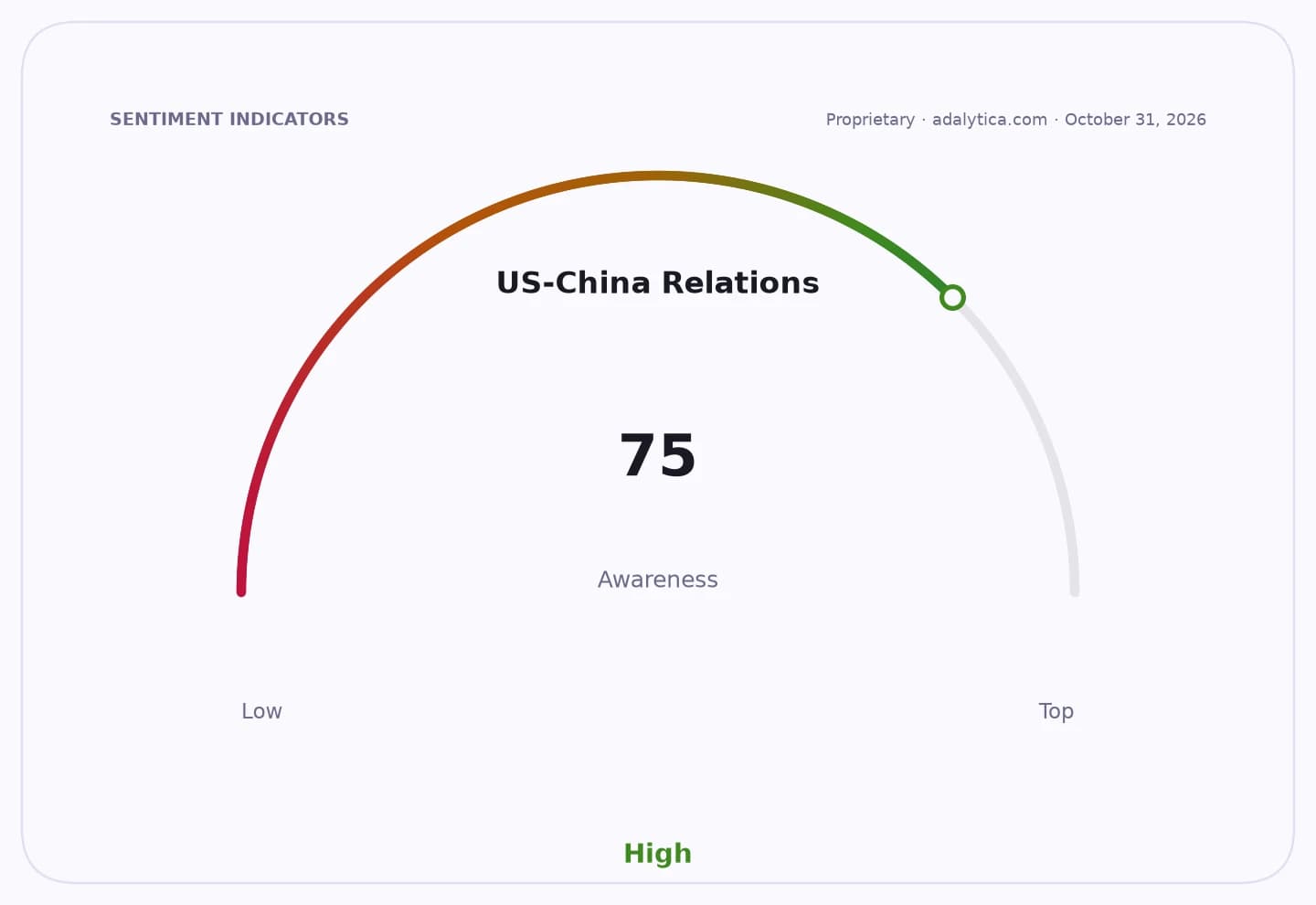
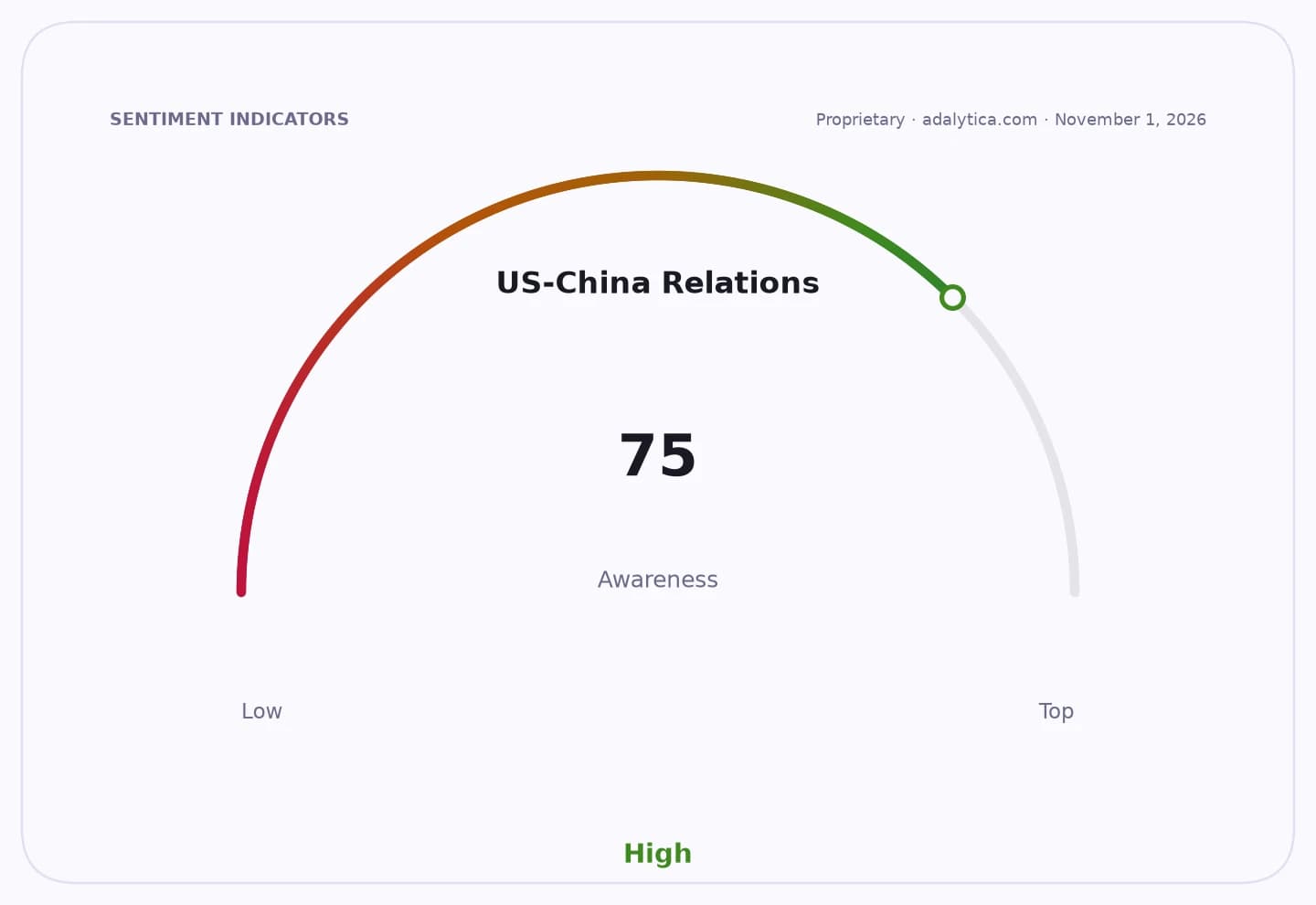
Sentiment Indicators
The timing underscores how quickly the strategic backdrop has changed. Concern over anti-satellite weapons, cyber attacks and space debris has intensified as military planners increasingly depend on orbital assets for battlefield awareness and strike coordination. China’s call for information-sharing on launches, close approaches and reentries also reflects a practical concern: with more satellites in orbit, the probability of accidents, debris cascades and miscalculation rises, raising costs for operators and governments alike.
For investors, the most immediate read-through is to aerospace, defense and satellite services companies that stand to benefit from more spending on resilience, surveillance, in-orbit servicing and debris tracking. Lockheed Martin, Northrop Grumman and RTX all have exposure to space-related defense programs, and their shares have remained sensitive to the market’s view of long-cycle military demand and government budgets. Industry filings from the three companies all point to a heightened global security environment as a factor supporting demand.
The policy push also highlights a split between firms that profit from space commercialization and those that could face more compliance burdens. China wants governments to police private companies more closely, which could add friction for satellite operators, launch providers and insurers if standards on liability, deconfliction and debris mitigation become stricter. At the same time, firms offering satellite servicing, space situational awareness and orbital defense tools could see a bigger addressable market if states move from broad principles to enforceable rules.
The broader narrative is that space is entering the same geopolitical cycle that reshaped cybersecurity and undersea infrastructure: once a shared commercial platform, it is becoming a contested strategic domain. China’s proposal is partly a call for restraint, partly a bid to preserve U.N.-led rulemaking, and partly an attempt to influence where the line is drawn between civilian activity and military use. The investment implication is that the more militarized space becomes, the more capital will flow into defensive systems, redundant architectures and debris management — but the risk premium on the sector will rise as well.
| Entity | Gains | Losses |
|---|---|---|
| China / U.N. framework | ▲Rule-setting influence | ▼U.S.-led unilateralism |
| Defense contractors | ▲More space-security spending | ▼Policy uncertainty |
| Satellite operators | ▲Clearer traffic rules | ▼Higher compliance costs |
| Private launch firms | ▲More demand for services | ▼Tighter regulation |