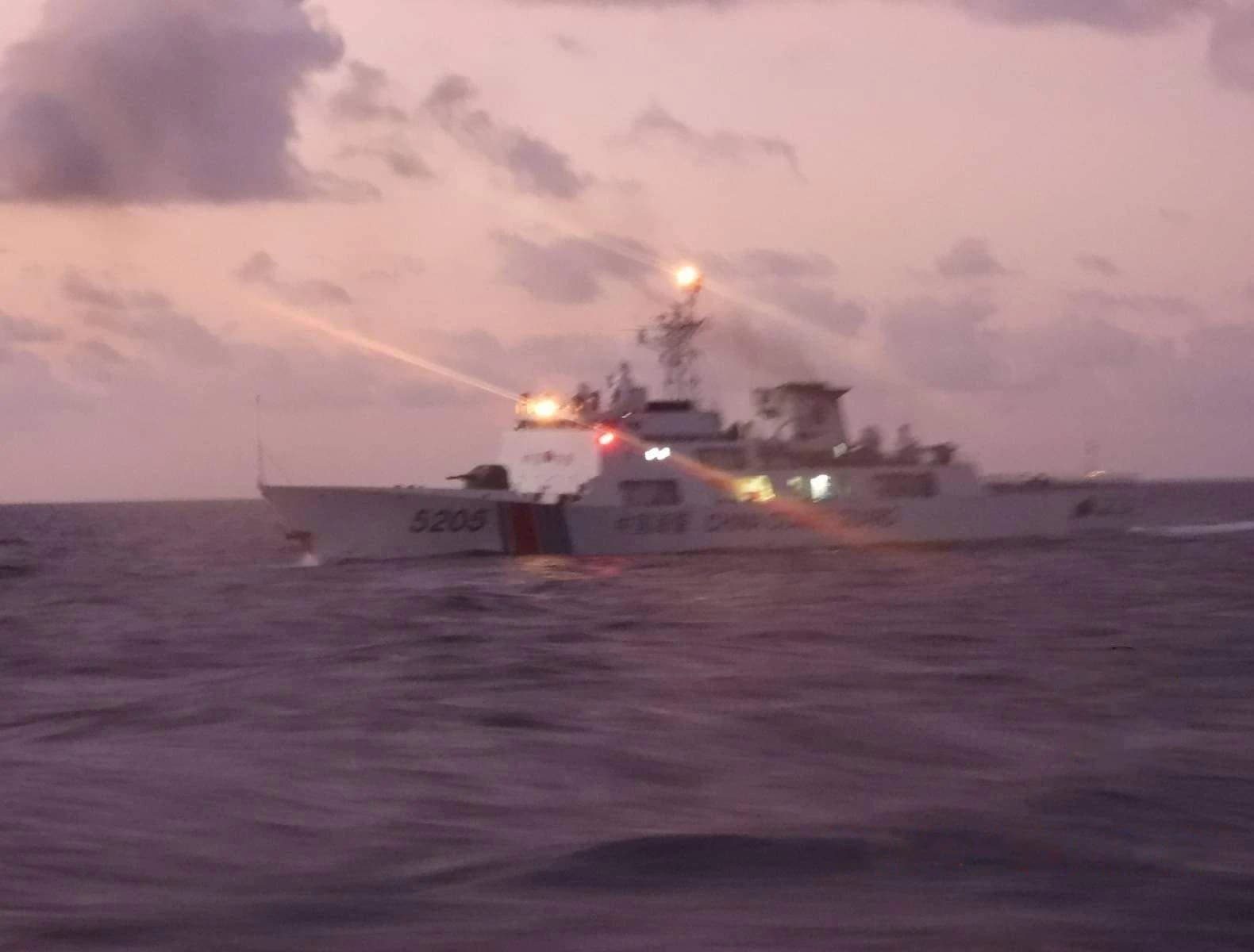
Taiwan’s long-awaited $14 billion U.S. weapons package has become a test of how far President Donald Trump is willing to risk friction with Beijing to preserve the island’s defense posture.
Taiwan $14B U.S. weapons sale faces delay
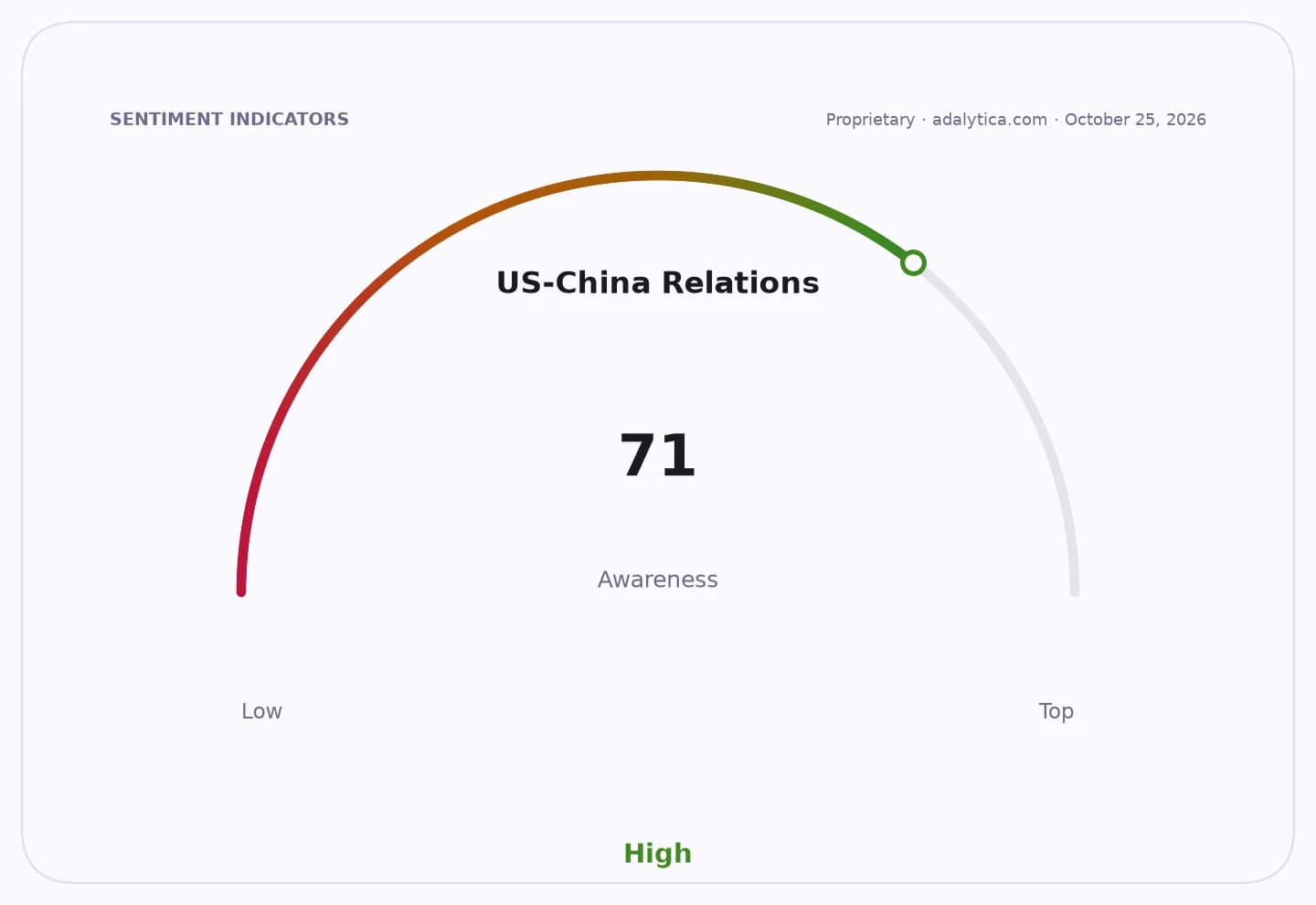
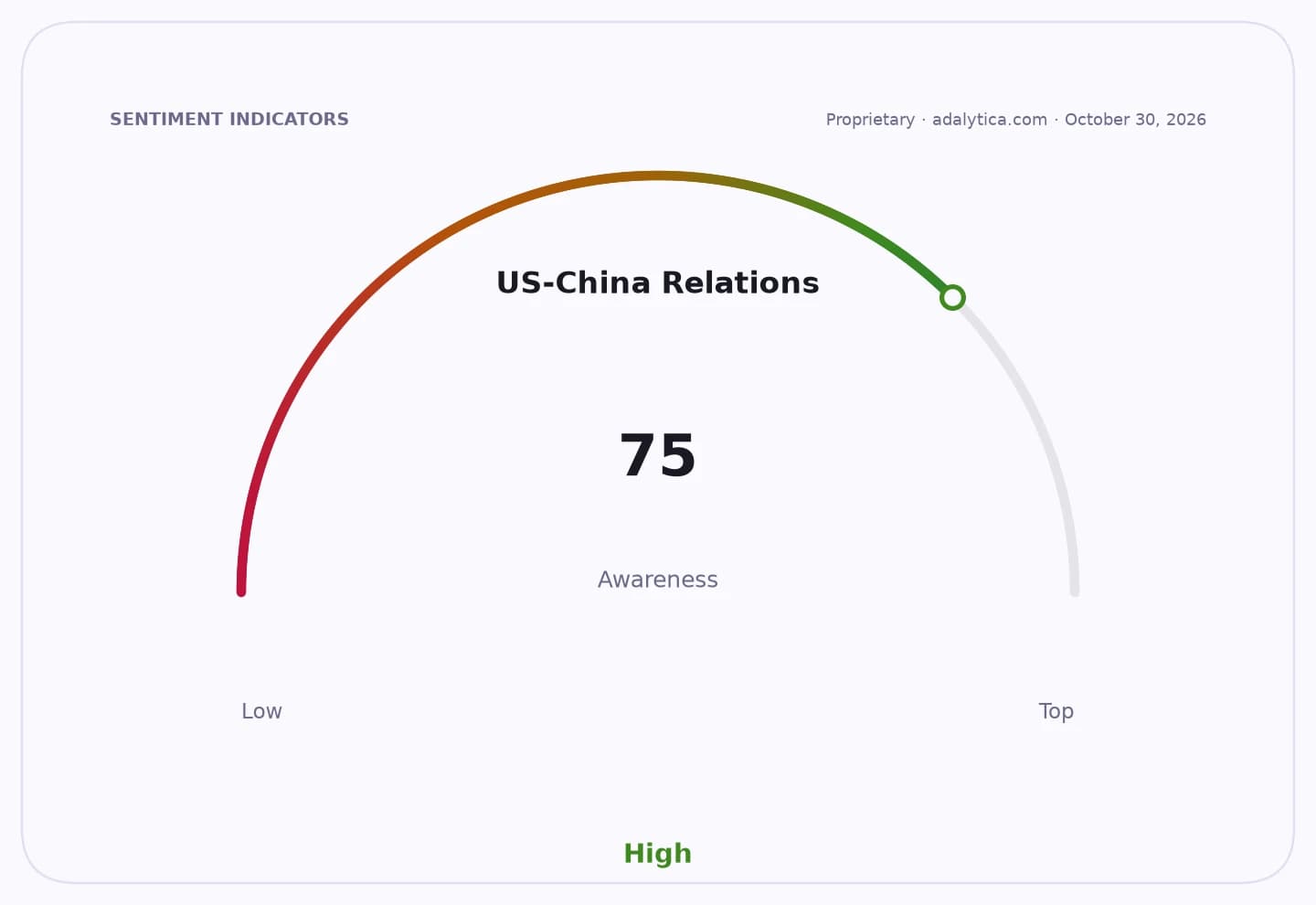
US-China Relations
The delay matters because the sale is not just another foreign military transaction. It is a central signal of U.S. commitment to Taiwan at a moment when China is stepping up pressure around the island and Washington is trying to keep trade and security talks with Beijing from collapsing into open confrontation. For Taipei, the package is intended to fill urgent gaps in air defense; for investors and defense contractors, the holdup underscores how geopolitics can slow revenue recognition even when demand is already locked in.
Sentiment Indicators
The package reportedly includes Patriot missiles, an automated command-and-control system and a 360-degree air-defense radar, all aimed at supporting Taiwan’s developing “T-Dome” air-defense architecture. Taiwan is already spending heavily on its own military buildout and has passed a $25 billion defense bill, but officials in Taipei say they still need U.S. systems to create enough deterrence against China’s missile and airpower advantage. Military experts say the systems would strengthen the resilience of Taiwan’s strategic air defenses, yet delivery and training would take time even after approval.
What is holding it up is a collision between two of Trump’s priorities: sustaining a fragile trade truce with Xi Jinping and responding to domestic pressure to arm Taiwan. Trump has suggested U.S. arms sales could be used as leverage in talks with China, and after meeting Xi in May he declined to commit immediately to the package. A U.S. official has since said the odds of splitting the sale into smaller tranches have risen, a sign that Washington is looking for a way to preserve the package without delivering a single, highly visible provocation to Beijing.
US-China Relations — 30-day sentimentadalytica.com
Explore this data interactively — full history, time series and cross-market comparisons.
That caution reflects the broader strategic trade-off. China opposes all U.S. military support for Taiwan and has warned that missteps on the issue could push the two powers into conflict. Beijing’s latest release of high-resolution satellite imagery of Taiwan, along with continued maritime pressure in the region, is a reminder that the security environment is worsening even as diplomacy remains stuck. For Taiwan, every month of delay narrows the window to field new defenses before any crisis. As one Taiwanese analyst put it, procurement is not like ordering at a drive-through.
The investor angle is more immediate for U.S. defense suppliers. Lockheed Martin, which is central to Patriot-related systems, has seen its shares swing sharply in recent months as demand for missile defense has surged and then retraced with broader market volatility. Its stock is still well above the 50-day moving average, but recent price action and technical readings point to a market that is already pricing in strong defense spending while remaining sensitive to timing risk around contracts and deliveries. RTX and Northrop Grumman, also exposed to missile-defense programs, sit in a similar position: the strategic thesis remains intact, but awards can be delayed by politics, stockpile checks and export-review bottlenecks.
For investors, the key question is not whether Taiwan will ultimately buy the weapons, but whether the sale arrives as one package or a series of smaller approvals. A single tranche would be the clearest signal of U.S. resolve, but it would also carry the highest diplomatic cost with Beijing. Smaller tranches would likely reduce immediate political risk, though they would leave Taiwan waiting longer for integrated capabilities. Either way, the episode shows how the U.S.-China relationship continues to shape defense demand, sovereign risk and supply-chain planning well beyond the Taiwan Strait.
| Entity | Gains | Losses |
|---|---|---|
| Taiwan | ▲stronger air defenses | ▼delayed deterrence |
| China | ▲leverage in talks | ▼U.S. arms flow |
| Lockheed Martin, RTX, Northrop | ▲future missile-defense orders | ▼timing uncertainty |
| Trump administration | ▲room to manage Beijing ties | ▼credibility on Taiwan |