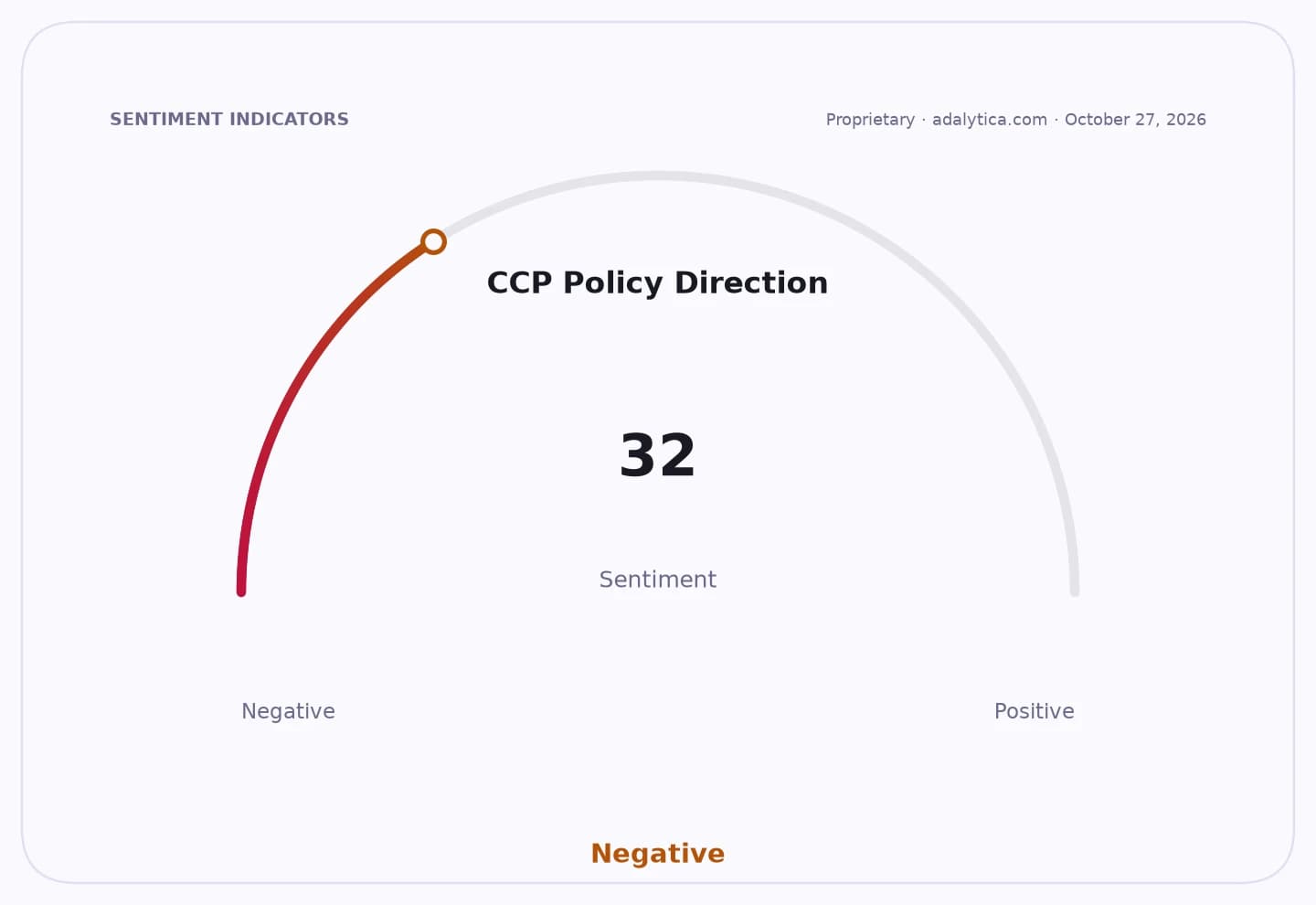
Taiwan’s security bureau says China is stepping up efforts to sway the island’s local elections, accusing Beijing of six tactics that range from funding favored candidates to discounted flights for voters returning from China, a warning that raises the political risk premium around the vote.
Taiwan Security Bureau Flags China Election Interference
US-China Relations
The National Security Bureau said the Chinese Communist Party is also using disinformation, underground betting, cyberattacks and subsidized trips to influence Taiwan’s nine-in-one local elections, according to a briefing to lawmakers reported by The Taipei Times. The allegations matter because even limited interference can distort turnout, amplify polarization and test confidence in Taiwan’s electoral process at a time of elevated cross-strait tension.
Sentiment Indicators
Director-General Tsai Ming-yen said the bureau will collect evidence and, where possible, refer suspected election-related activity to judicial authorities before polling day. He said discounted airline tickets could appear about three weeks before the vote, a detail that suggests efforts to shape participation may intensify as election day approaches.
The warning comes alongside a larger cyber backdrop. Taiwan’s government service network was hit by an average of about 2.58 million intrusion attempts a day as of September, while more than 100 million attempts were detected in July alone, according to the report cited by The Taipei Times. For investors, that underscores how political interference and cyber risk are increasingly intertwined, adding uncertainty for Taiwan’s markets, technology supply chains and broader regional stability.
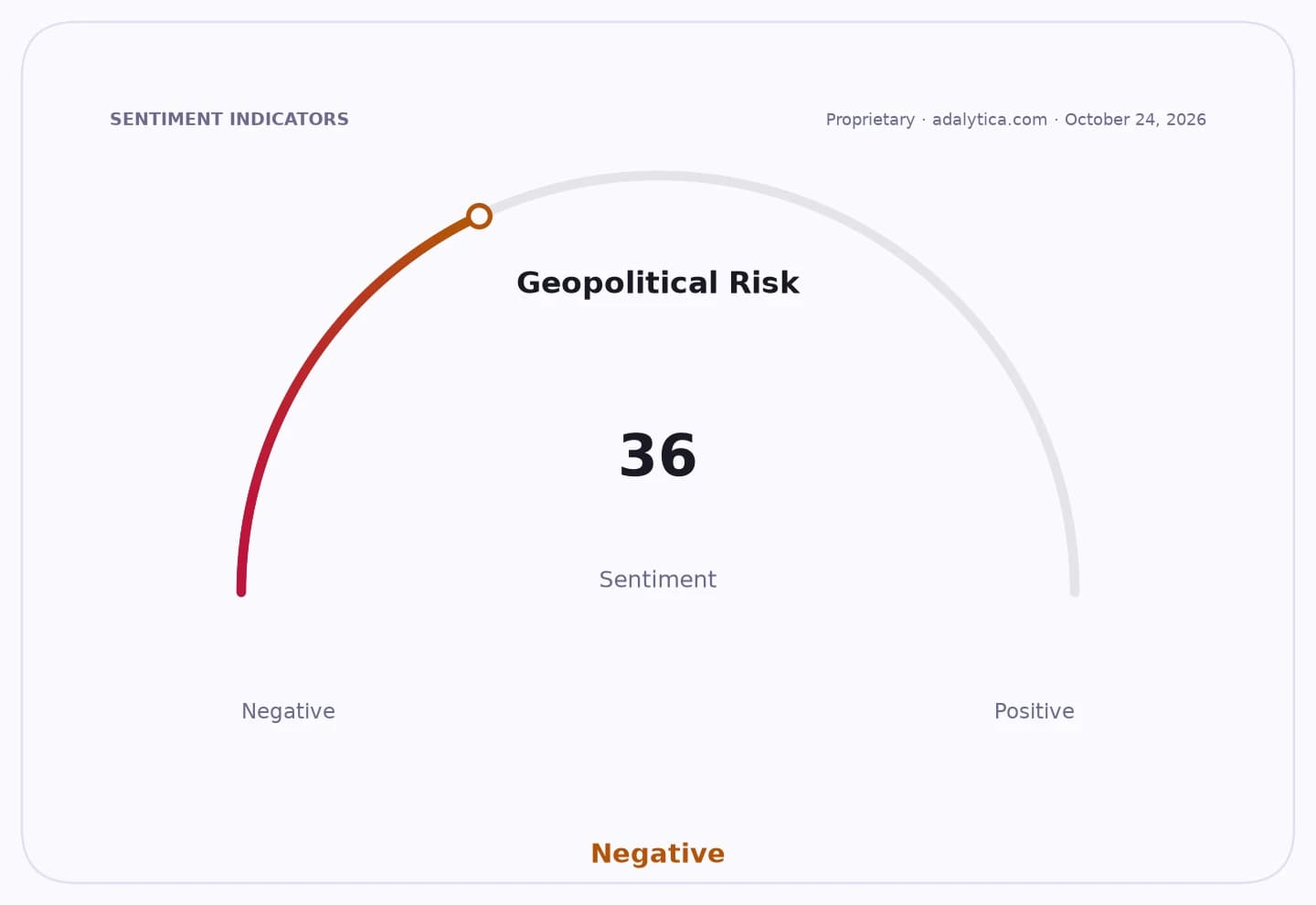
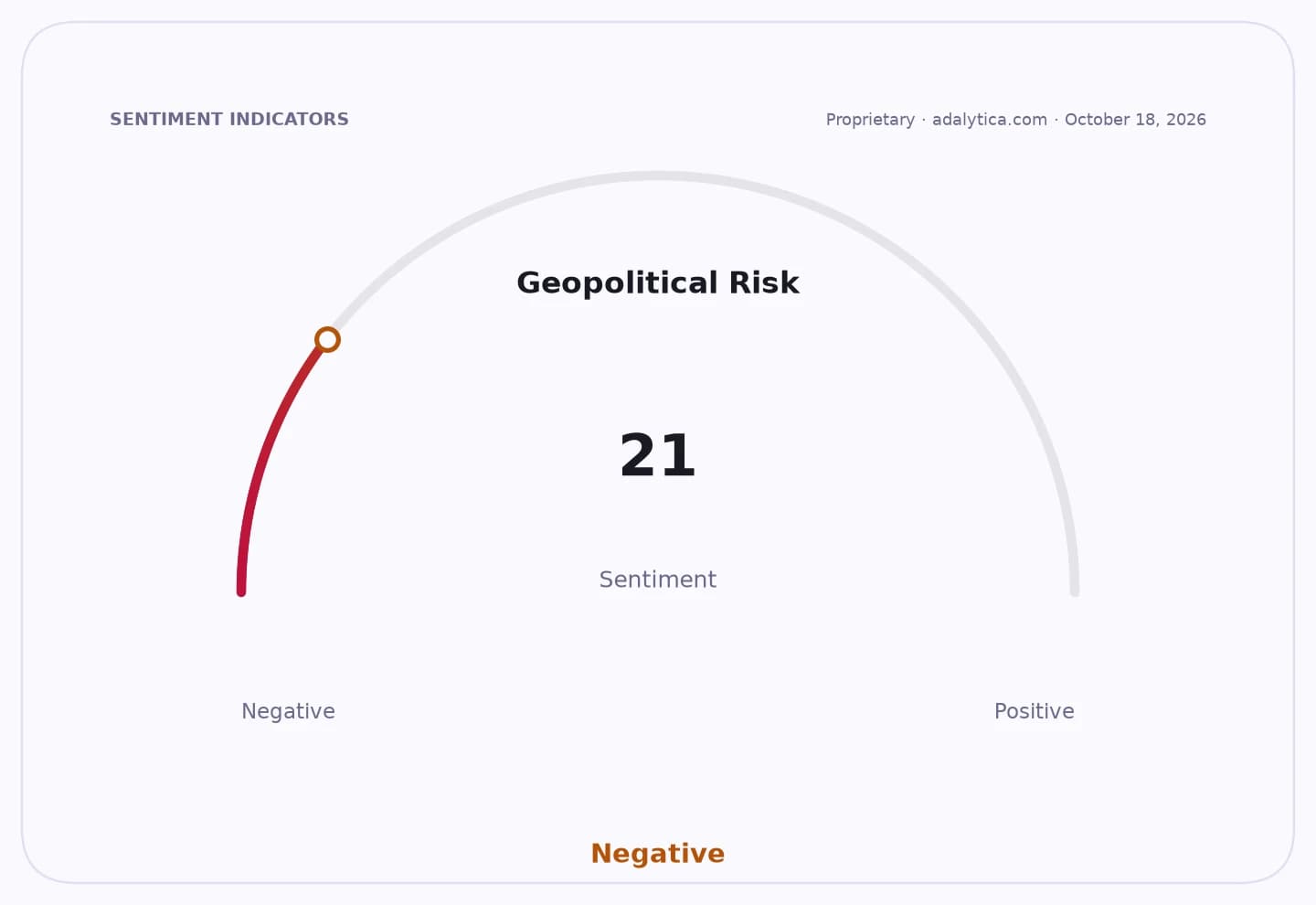
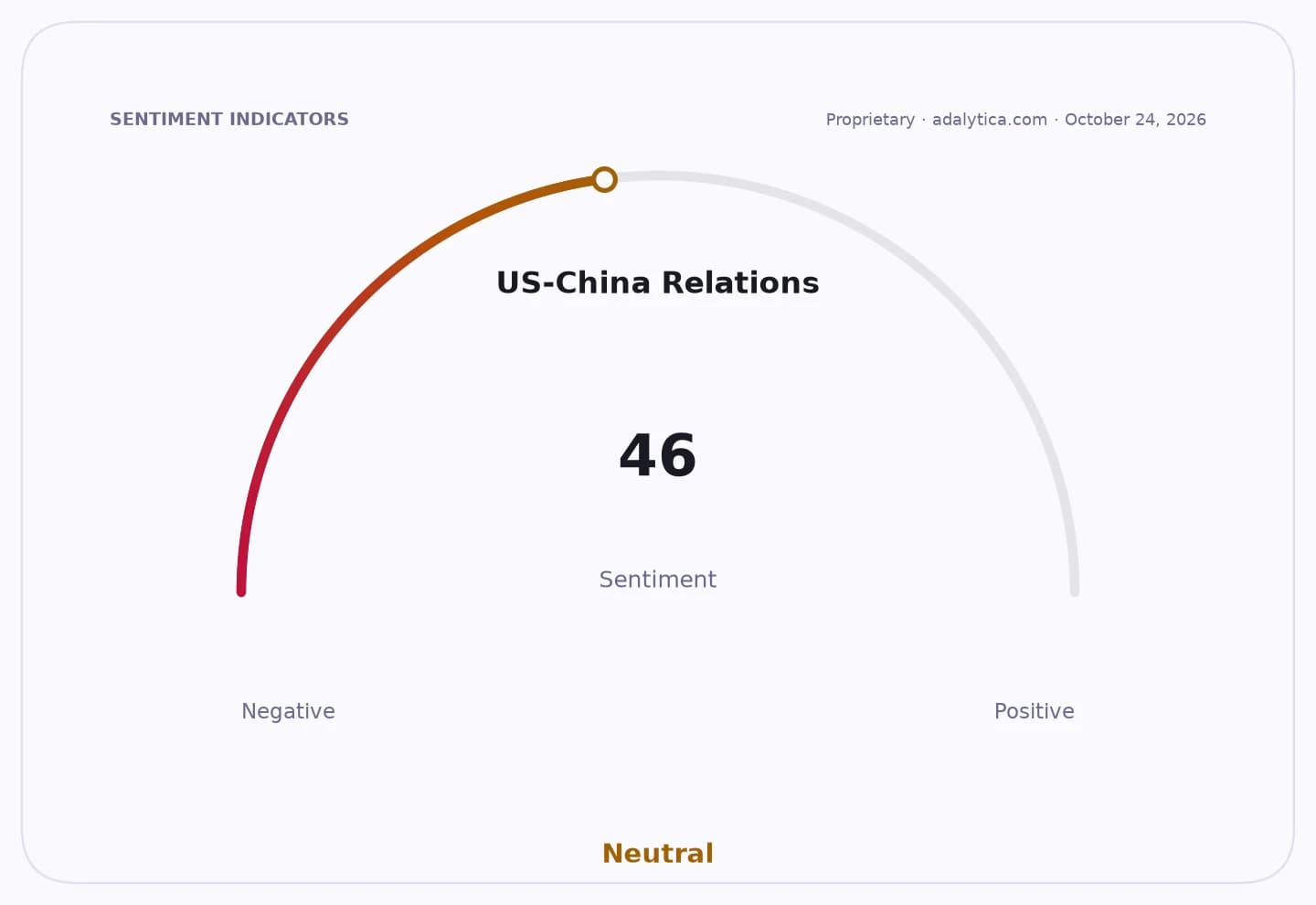
The issue also lands against a volatile geopolitical backdrop, with Adalytica’s US–China Relations Sentiment gauge at 54, or neutral, after a 14-point one-day jump, while its Global Stability Sentiment sits at 89, or extreme greed, despite an awareness reading of just 7, or extreme fear. That combination points to a market environment that is still pricing in geopolitical fragility even as risk appetite remains elevated.
Taiwan’s iShares MSCI Taiwan ETF, EWT, and the iShares China Large-Cap ETF, FXI, were both trading below their 50-day moving averages in the latest readings, with EWT’s RSI at 32.4 and FXI’s at 26.3, technicals that suggest both funds have been under pressure. Taiwan’s dollar proxy, TWN, also showed weak momentum, with its RSI at 18.4 and the price below the 50-day average.
The immediate focus now is on whether Taiwan can document alleged interference before voting day and whether the claims trigger new scrutiny of travel flows, online influence campaigns and cyber defenses. Any fresh evidence, or a visible escalation in Beijing-linked activity, is likely to keep cross-strait risk front and center for regional assets and multinational companies exposed to Taiwan.
| Entity | Gains | Losses |
|---|---|---|
| Taiwan election authorities | ▲scrutiny of interference | ▼credibility if breaches deepen |
| Beijing/CCP proxies | ▲turnout leverage if tactics work | ▼diplomatic backlash if exposed |
| Taiwan voters | ▲tighter election oversight | ▼distorted information environment |
| Taiwan-linked investors | ▲clearer risk visibility | ▼volatility in Taiwan assets |