Taiwan is warning that a sharp jump in suspected China-linked cyberattacks is not just a security problem — it is a political and economic one, arriving just as local elections approach and Beijing appears determined to widen pressure on the island without firing a shot.
Taiwan Reports Surge in China-Linked Cyberattacks
Taipei’s National Security Bureau said Taiwan’s Government Service Network absorbed 185.6 million attacks in July alone, more than the combined total in the first three months of the year and an average of 2.58 million a day. That scale matters because cyber intrusion is no longer a nuisance at the margins; it is becoming a steady campaign to probe government systems, disrupt decision-making and erode confidence in Taiwan’s institutions at a moment when voters are being asked to judge local leadership.
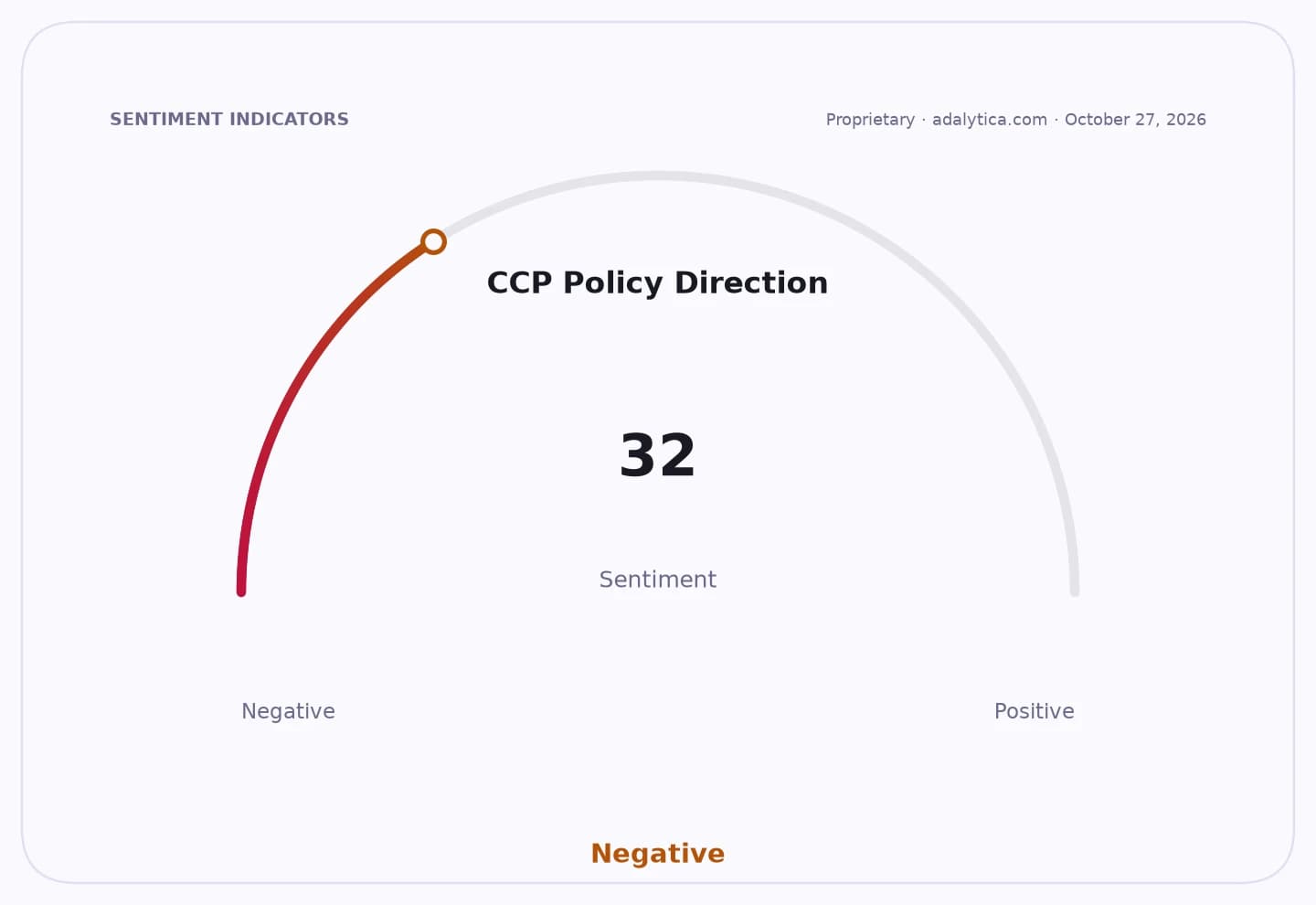
Sentiment IndicatorsⓘProprietary · adalytica.com · October 27, 2026
This is a snapshot — live sentiment, awareness and momentum for 130+ markets update continuously in the dashboard.Open AlphaPulse
The stakes are especially high for an economy built around advanced technology and a delicate supply chain role in the global semiconductor industry. The bureau said suspected Chinese hackers targeted academic institutions, telecom networks and defense-industry suppliers in the first half of the year, seeking sensitive technologies and information tied to governance and defense policy. For investors, that raises the risk of operational disruption, higher security spending and the kind of political uncertainty that can seep into valuations of Taiwan-linked assets, even when the underlying businesses remain strong.
The timing is the real story. Taiwan’s November 28 local elections come against a backdrop of intensifying information warfare, with authorities warning that fabricated opinion polls, misleading election reports and AI-generated content could be used to exploit domestic divisions over energy, food safety and national defense. Suspicious accounts posted 2.5 million pieces of disputed or controversial content from January through September, up 48% from a year earlier, underscoring how cyber operations and influence campaigns are increasingly fused into one broader effort to shape public opinion.
That evolution should matter to long-term investors because it widens the risk premium around Taiwan, not just for politics but for the industrial ecosystem that depends on it. When cyber pressure rises, companies face more spending on resilience, governments face more difficulty coordinating policy, and markets are left to price in a less predictable operating environment. Even large, globally diversified firms can see sentiment swing when the island becomes a flashpoint.
For Taiwan Semiconductor Manufacturing Co. and other Taiwan-exposed names, the immediate business model remains intact, but the macro overlay is less comfortable. Taiwan’s benchmark market has already been volatile, and the broader geopolitical backdrop argues for patience rather than complacency. Investors do not need to trade every headline, but they should understand that cyberwarfare is now part of the investment case for Taiwan — and likely to remain so as election season heats up.
The long-term takeaway is straightforward: Beijing’s pressure campaign is expanding beyond military signaling into the digital and informational space, and that makes Taiwan’s political calendar matter more to markets. For investors with a multiyear horizon, Taiwan remains strategically important, but it is worth treating geopolitical resilience as a core part of the thesis, not an afterthought.
| Entity | Gains | Losses |
|---|---|---|
| Taiwan authorities | ▲More urgency for cyber defenses | ▼Higher political pressure |
| Beijing | ▲More leverage without open conflict | ▼Greater scrutiny |
| Taiwan voters | ▲More awareness of election interference | ▼Less trust in information |
| Taiwan-linked investors | ▲Opportunity in resilient tech franchises | ▼Higher geopolitical risk |