Taiwan’s security officials say China is stepping up AI-enabled information warfare ahead of local elections, underscoring how disinformation has become a political and economic risk for a democracy sitting on the front line of Beijing’s pressure campaign.
Taiwan warns of AI election disinformation campaign

In a report sent to parliament, the National Security Bureau said Beijing was collecting information on campaign themes, candidate platforms, polling trends and other flashpoints in order to shape a “cognitive warfare” strategy against Taiwan. The bureau said Taiwan’s government network was hit by an average of 2.58 million intrusion attempts a day through September, with attempts trending higher since June, suggesting a parallel push for intelligence gathering and digital penetration as election season intensifies.
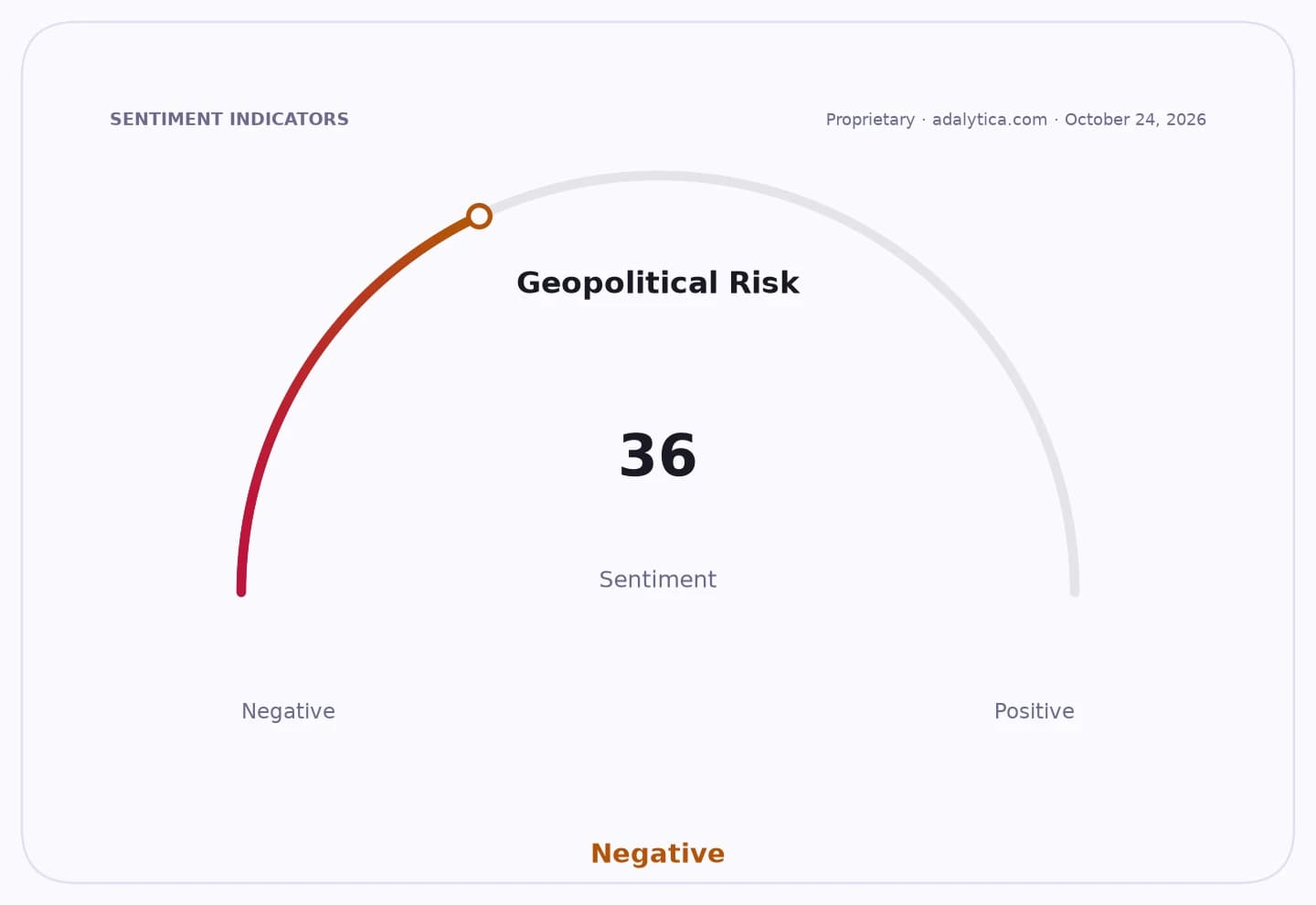
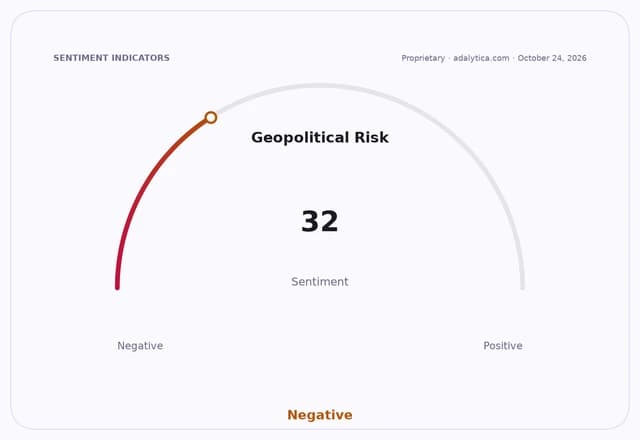
Sentiment IndicatorsⓘProprietary · adalytica.com · October 24, 2026
This is a snapshot — live sentiment, awareness and momentum for 130+ markets update continuously in the dashboard.Open AlphaPulse

The warning matters well beyond politics. Taiwan is home to the world’s most advanced chip manufacturing hub and remains central to global supply chains, so any sign of escalating cross-strait tension tends to feed into risk premiums across semiconductors, regional equities and the Taiwan dollar. Markets have learned to treat election-period instability in Taiwan as more than a local issue: it can shape defense spending, foreign investment sentiment and the probability of sharper policy responses from both Taipei and Beijing.
The bureau said China has been spreading “controversial messages” on Taiwan’s energy policy, food security and national defense while amplifying narratives around individual candidates, local infrastructure and the quality of public works. Between January and September, officials collected about 2.5 million controversial social-media messages, up from 1.69 million in the same period a year earlier, with Facebook, forums, Threads and YouTube among the main channels.
Taipei also said the campaign toolkit now includes troll networks, fake content farms, bogus websites and AI-generated video and audio, reflecting a shift from traditional propaganda toward faster, cheaper and more scalable manipulation techniques. That raises the cost of election defense for Taiwan and complicates the job of platforms already under pressure to police inauthentic content at speed.
The timing is sensitive. The vote comes little more than a month before Taiwan’s local elections, in which about 20 million people will choose local officials, including mayors in Taipei, Taichung, Tainan and Kaohsiung. While presidential races in Taiwan are often dominated by China policy, local elections usually turn on bread-and-butter issues such as housing, services and infrastructure — precisely the kind of terrain where disinformation can be harder to detect and easier to weaponize.
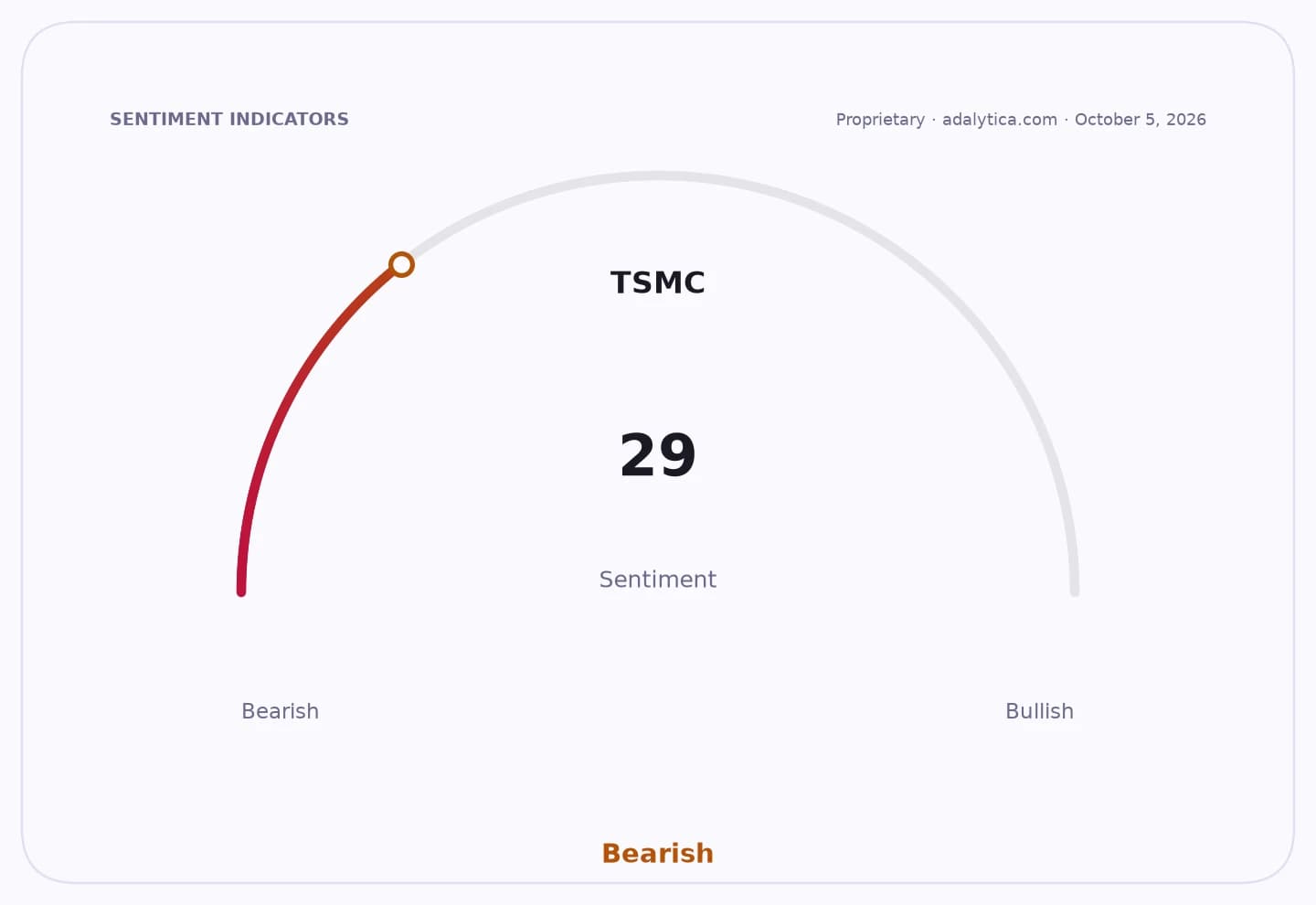
For investors, the immediate read-through is not a direct earnings event but a reminder that geopolitical risk around Taiwan is persistent and increasingly technical. Semiconductor names such as Taiwan Semiconductor Manufacturing Co. and Taiwan-linked exchange-traded funds such as EWT remain exposed to shifts in cross-strait sentiment, while broader China equities can also be affected when tensions sharpen and global investors reassess regional risk.
The market backdrop reinforces that point. Recent moves in Taiwan-related and China-focused assets have reflected caution rather than conviction, with technical indicators on Taiwan and mainland proxies showing elevated volatility and weakening momentum into late October. That does not by itself signal a structural break, but it does suggest investors are not pricing in a calmer political backdrop.
The key question now is whether Taiwan’s authorities can blunt the impact of AI-driven influence operations without turning the campaign into a larger confrontation with Beijing. If the election passes without major disruption, the market reaction may be limited. If disinformation, cyber intrusions or public accusations escalate, the result could be a higher geopolitical risk premium for Taiwan assets and a fresh test of investor tolerance for cross-strait friction.
| Entity | Gains | Losses |
|---|---|---|
| Taiwan government | ▲Security focus, voter awareness | ▼Political distraction, higher defense burden |
| Chinese influence operators | ▲Wider reach, lower-cost messaging | ▼Greater scrutiny, attribution risk |
| Taiwan voters | ▲More transparency on interference | ▼More polarised information environment |
| Taiwan-linked assets | ▲Safe-haven appeal if tensions rise | ▼Volatility, higher risk premium |