China is tightening its legal playbook for war, with a new framework that broadens Beijing’s authority over military, economic and civilian mobilization and raises the risk of deeper friction with India, the U.S. and other rivals.
China war mobilization law raises geopolitical risk

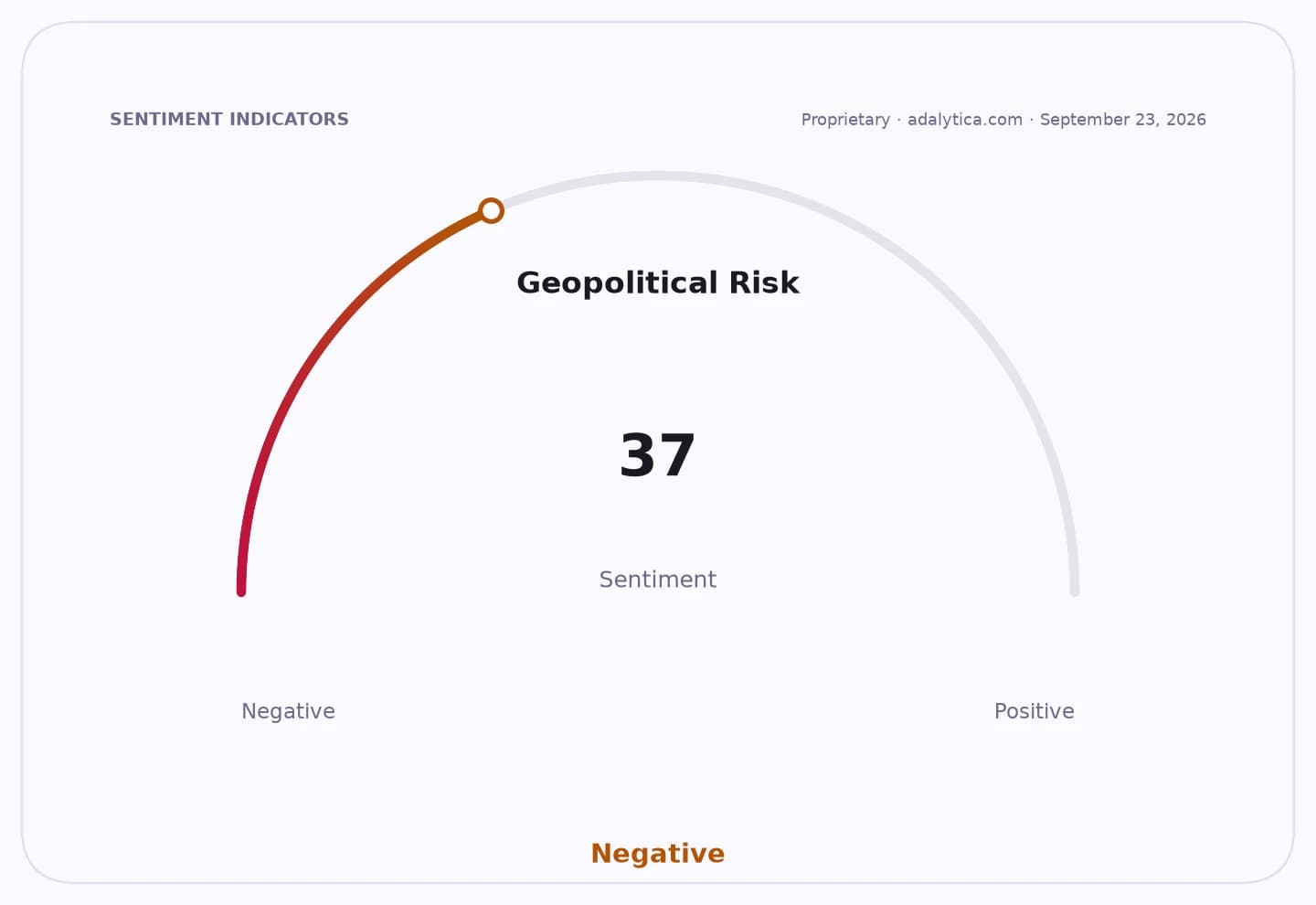
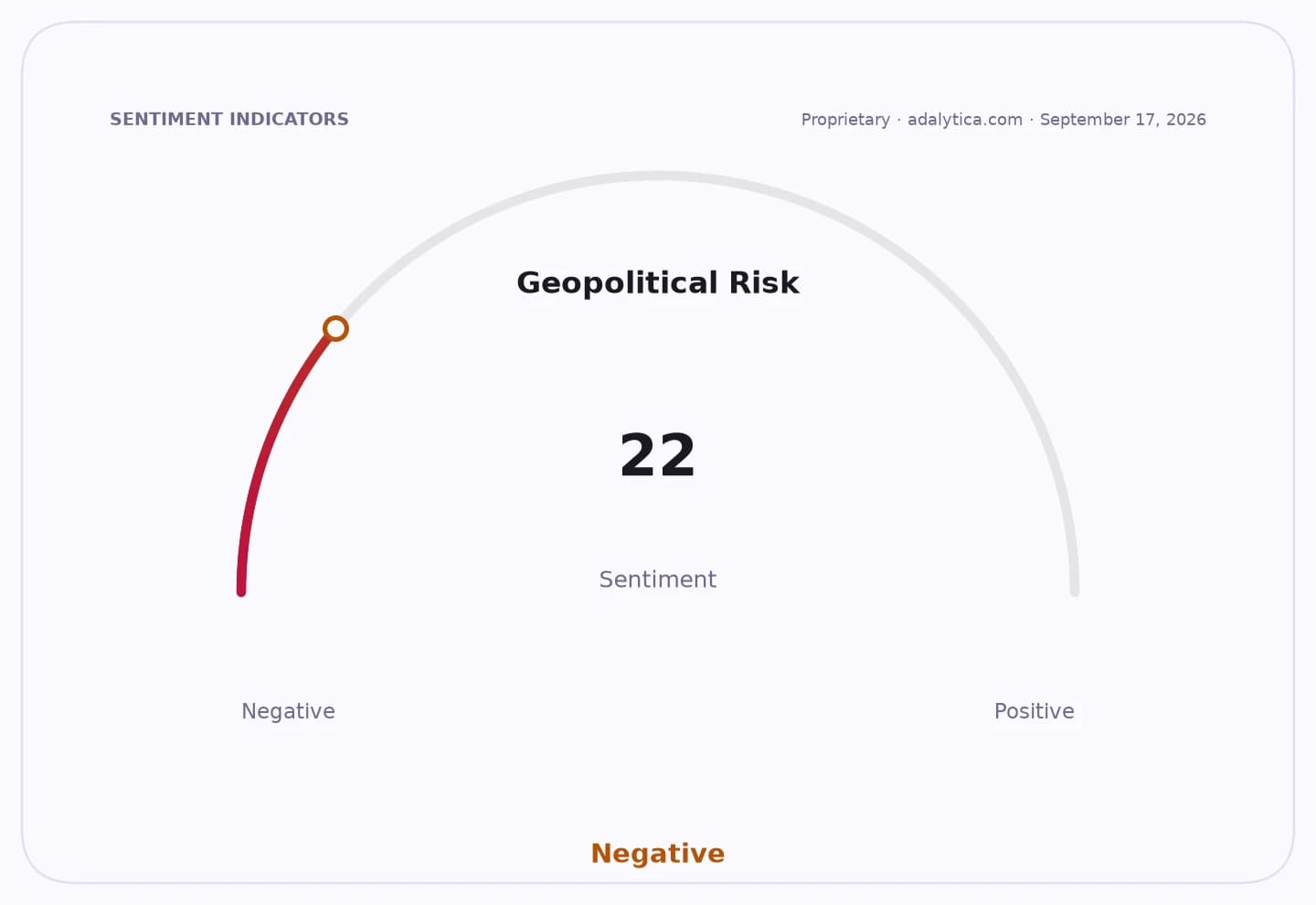
The law matters because it formalizes how China could shift from peacetime to a “full-spectrum” conflict posture, giving the state wider latitude to coordinate defense production, logistics, information controls and national resources if tensions escalate. For investors, that means a higher geopolitical risk premium around Chinese assets, cross-border trade routes and sectors exposed to sanctions, export controls and supply-chain disruption.
Sentiment IndicatorsⓘProprietary · adalytica.com · August 31, 2026
This is a snapshot — live sentiment, awareness and momentum for 130+ markets update continuously in the dashboard.Open AlphaPulse
The immediate strategic concern is India. Any statute designed to integrate the civilian economy with wartime requirements underscores how quickly a border crisis could spill into trade, technology and industrial policy, particularly given the already strained relationship between Beijing and New Delhi and the broader deterioration in U.S.-China relations.
The move also lands against a backdrop of fragile market sentiment toward China. Alibaba, Baidu and JD.com have all seen sharp swings in recent months, with technical readings showing each name under pressure again, suggesting investors remain wary of policy risk and weak conviction in the mainland demand story. Alibaba closed at $118.90 on Aug. 28, below its 50-day moving average of $115.08 after a volatile rebound from much lower levels earlier this year; Baidu ended at $97.12, well under its 50-day average of $106.88; JD finished at $28.74 versus a 50-day average of $29.30.
Adalytica’s U.S.-China Relations Sentiment gauge is at 44, in neutral territory, while awareness remains elevated at 85, reflecting how heavily the relationship is being watched even as conviction fades. That combination fits a market that is alert to geopolitical shocks but not yet fully pricing a sustained crisis.
For investors, the bigger issue is not just the law itself but what it implies about Beijing’s priorities: resilience, control and readiness for confrontation. That can support defense-linked spending at home, but it also risks heavier constraints on private enterprise, capital flows and foreign access if relations with Washington and New Delhi worsen.
The next catalyst is whether China pairs the law with concrete implementation measures, military drills or additional regulatory steps that could force a fresh reassessment of regional security and China exposure.
| Entity | Gains | Losses |
|---|---|---|
| China state planners | ▲War-time mobilization powers | ▼None immediately |
| Chinese defense sector | ▲Budget and procurement support | ▼Private-sector flexibility |
| India and regional rivals | ▲Strategic clarity | ▼Higher conflict risk |
| China stocks and exporters | ▲Possible policy stimulus | ▼Sanctions, disruption, volatility |