China’s revised Water Law is set to give Beijing a sharper legal tool to direct one of the country’s most strategically important and most constrained resources, reinforcing conservation, coordinated management and tighter oversight of rivers, lakes and water infrastructure as economic growth slows and climate pressures intensify.
China Water Law Tightens Allocation and Oversight
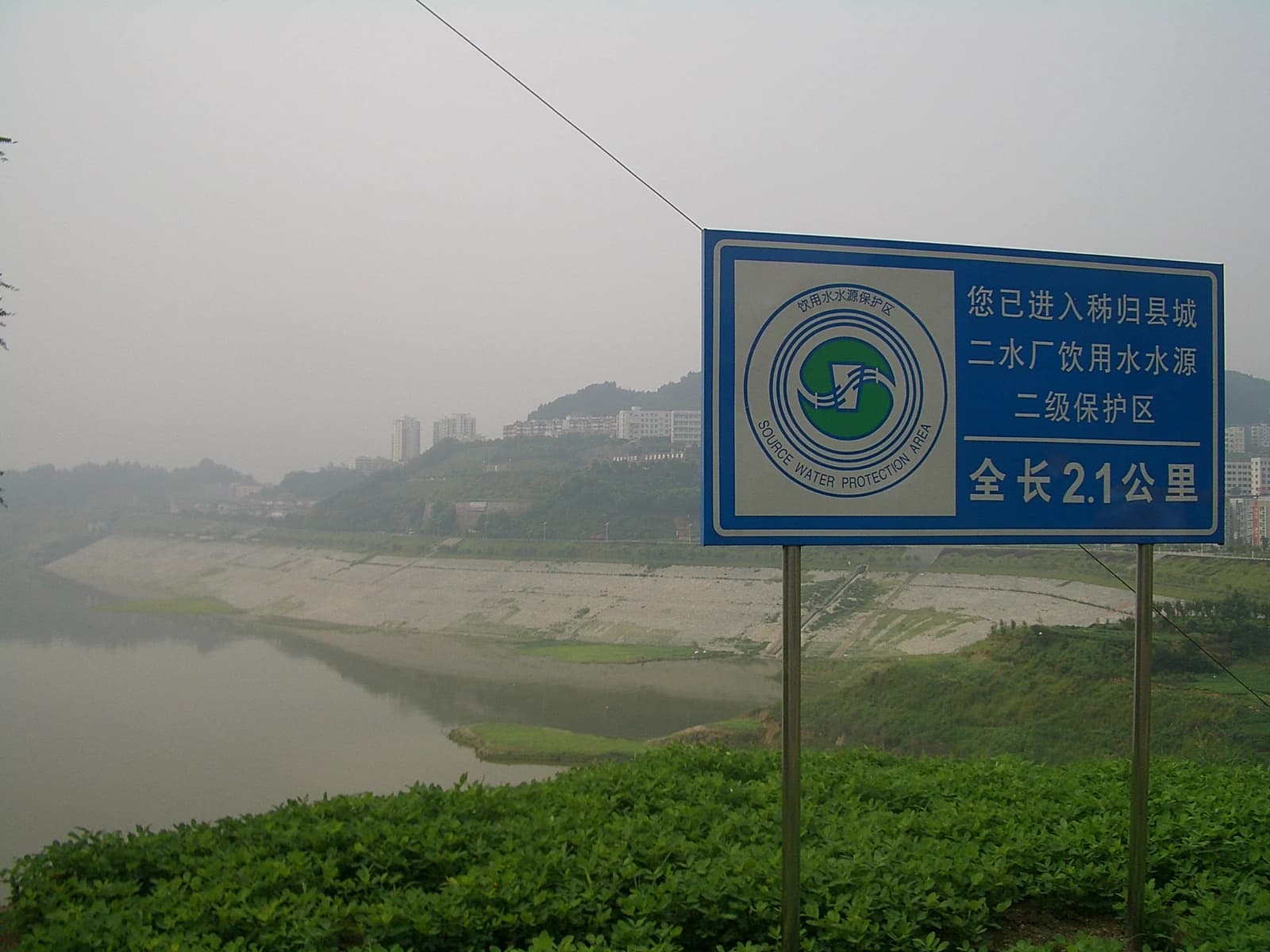
The legislation, approved by lawmakers on Friday and due to take effect on March 22, 2027, elevates water savings to a policy priority and calls for a more balanced spatial allocation of resources, alongside a system-wide approach that combines government direction with market mechanisms. For the world’s second-largest economy, the law matters because water scarcity is no longer just an environmental issue: it is a constraint on industrial output, agricultural production, urban expansion and long-term energy and infrastructure planning.
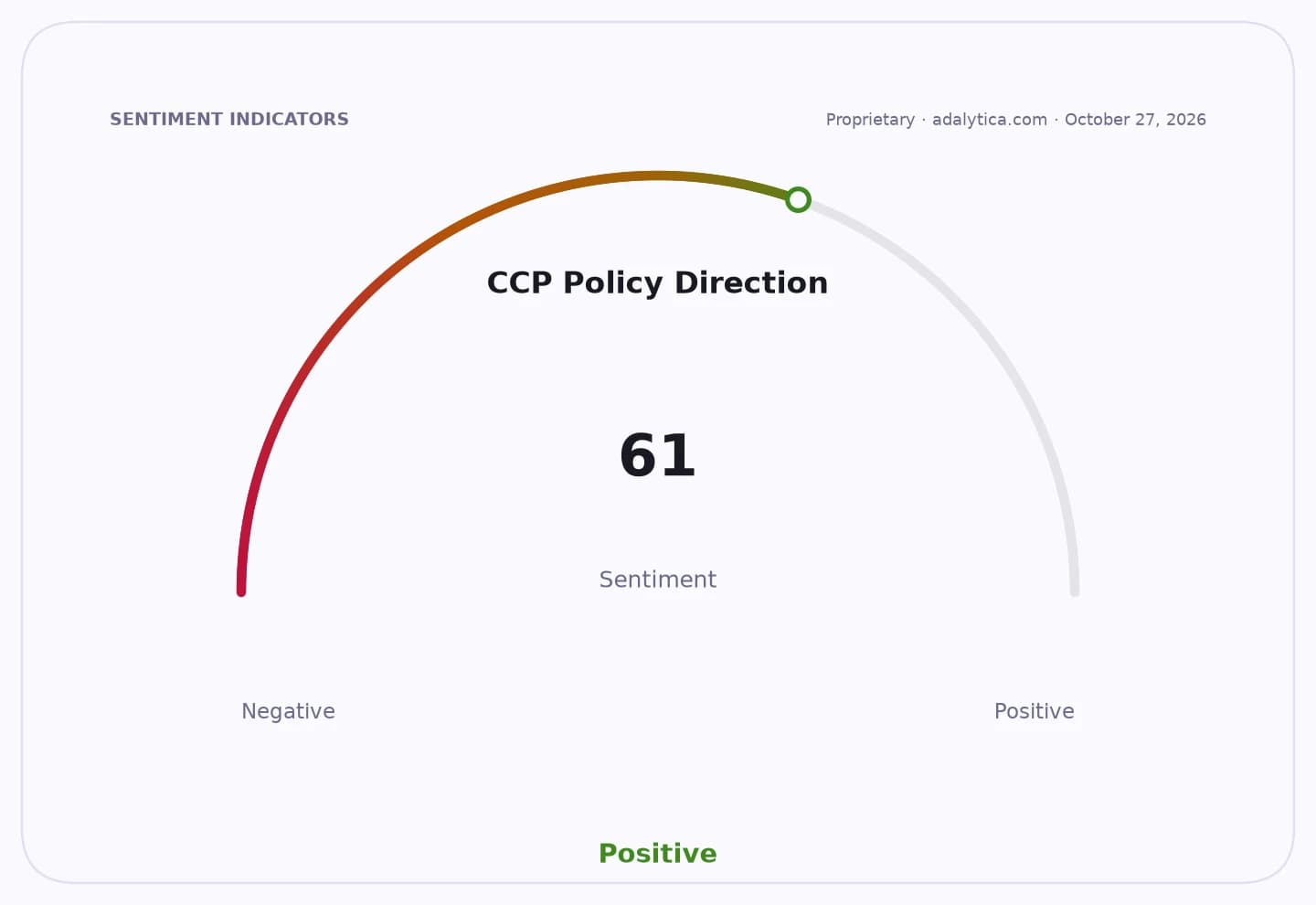
Sentiment Indicators
CCP Policy Direction
Beijing’s timing is significant. China said its total water resources reached 2.72 trillion cubic meters in 2025, but the bigger story is the state’s push to use what it has more efficiently. According to the water ministry, water consumption per 10,000 yuan of GDP fell 4.5% last year, while industrial water intensity dropped 7.2%. That points to a structural shift away from volume-driven growth toward higher efficiency, which is consistent with China’s broader industrial policy and its attempt to reduce vulnerability to drought, pollution and regional water imbalances.
The law also underlines the government’s intent to manage water as a full ecosystem rather than a narrow utility input. It covers planning, protection, development and use, river and lake management, waterworks construction and legal liability. In practice, that should strengthen enforcement and raise compliance costs for water-intensive industries, while supporting spending on conservation, treatment, monitoring and infrastructure upgrades.
For investors, the implications are most direct for companies tied to water equipment, flow management, filtration, metering and reuse systems, as well as engineering contractors and utilities exposed to municipal and industrial spending. Shares of water infrastructure groups such as Xylem and Watts Water Technologies have already been volatile this year, reflecting broader market sensitivity to infrastructure demand and rate expectations. A tougher regulatory framework in China could support demand for efficiency and treatment technologies, even as it increases scrutiny on projects that rely on heavy water consumption.
The policy also fits a wider geopolitical and environmental narrative. China has been working to reduce water stress in major basins, including the Yellow River, and to expand conservancy projects that help manage floods, droughts and contamination. At the same time, tighter domestic water governance may bolster Beijing’s resilience as cross-border pollution, climate shocks and competing industrial claims become more acute.
The main bull case is that the revised law accelerates a multi-year capex cycle in conservation, smart metering, reuse and treatment. The bear case is that stronger regulation may slow approvals and raise costs for water-intensive sectors without solving deeper regional shortages quickly enough. Either way, the direction is clear: water is becoming a strategic policy variable in China, not just a natural resource.
| Entity | Gains | Losses |
|---|---|---|
| Chinese state planners | ▲Stronger control over allocation | ▼Less policy flexibility |
| Water-tech suppliers | ▲Higher efficiency demand | ▼Greater compliance scrutiny |
| Water-intensive industries | ▲Better long-term resource security | ▼Higher operating costs |
| Urban and industrial users | ▲Improved supply resilience | ▼Tighter usage limits |