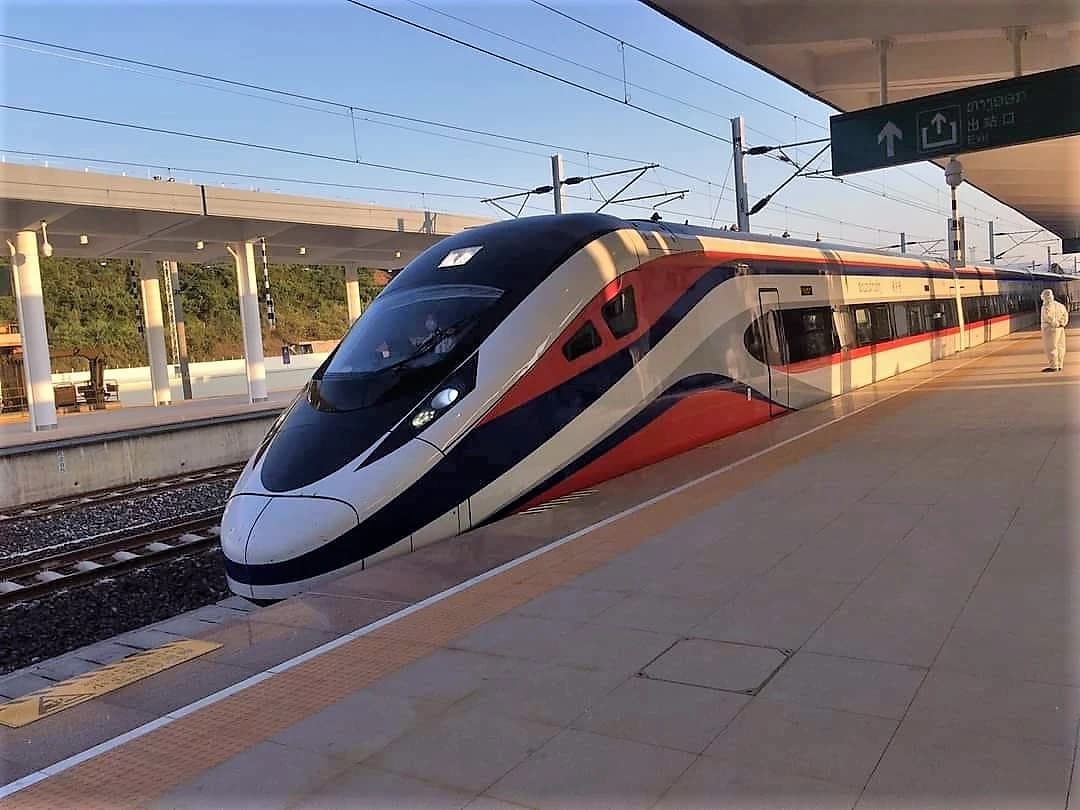
China is still pouring money into its rail network, adding 1,625 kilometers of new high-speed lines through the third quarter and signaling that infrastructure remains one of Beijing’s most reliable tools for supporting growth.
China Rail Investment Rises on High-Speed Expansion
CCP Policy Direction
That matters because rail is not just transport in China — it is stimulus, industrial policy and regional development rolled into one. The latest figures from China State Railway Group show rail investment reached 601.2 billion yuan, or about $89 billion, in the first nine months of 2026, up 1.3% from a year earlier, while passenger trips hit a record 3.71 billion, up 4.8%. For investors, the message is clear: domestic mobility demand is still expanding, and the state is willing to keep funding the arteries that connect factories, cities and consumption hubs.
Sentiment Indicators
The new lines underscore how Beijing is using rail to tighten links between inland provinces and major economic corridors. On Sept. 28, China opened four high-speed routes spanning Hebei, Henan, Shaanxi, Hubei and Heilongjiang, part of a broader push to improve regional efficiency and make travel faster and more convenient. China’s operating network had already reached 165,000 km by the end of 2025, including more than 50,000 km of high-speed rail, and the long-term plan calls for 70,000 km of high-speed track by 2035.
The economics are straightforward: a bigger rail network lowers logistics friction, pulls smaller cities into the national market and supports construction, equipment, steel, signaling and maintenance spending. It also helps sustain employment and fixed-asset investment at a time when China’s broader growth model is under pressure from weak property demand and uneven consumer confidence. Rail is one of the few sectors where Beijing can still reliably create near-term activity and long-cycle asset value at the same time.
For markets, this is a reminder that China’s infrastructure complex still has a policy backstop. The obvious beneficiaries are rail builders, rolling stock suppliers, electrification firms and industrial companies tied to heavy equipment and materials. The less obvious winners are logistics operators, tourism-linked businesses and cities positioned along the new corridors. The broader equity read-through is that China’s state-led capex cycle is not fading — it is being redirected toward assets that improve productivity and national integration.
That also helps explain why China continues to favor large-scale transport spending even as global investors debate its growth trajectory. The rail buildout is not a cyclical burst; it is a multi-year infrastructure program with measurable usage. With passenger volumes at record highs and a 2035 expansion target still far away, the market may be underestimating how durable this spending stream is.
The investment takeaway is simple: China’s rail expansion is a quiet but powerful secular theme, and the best exposure remains in the picks-and-shovels of infrastructure, equipment and mobility-linked industrials rather than in headline-grabbing consumer plays.
| Entity | Gains | Losses |
|---|---|---|
| China Railway / state builders | ▲More project volume | ▼Margin pressure from scale |
| Rail equipment suppliers | ▲Sustained orders | ▼Cyclical steel-cost risk |
| Regional cities on new lines | ▲Better access, traffic | ▼Smaller hubs bypassed |
| Competing transport modes | ▲Less congestion risk | ▼Air and road share pressure |