China is pushing the Shanghai Cooperation Organization to speed up work on the Trans-Caspian international transport route and other corridors, a move aimed at cutting logistics bottlenecks and shielding regional trade from rising protectionism.
China Pushed SCO on Trans-Caspian Trade Routes
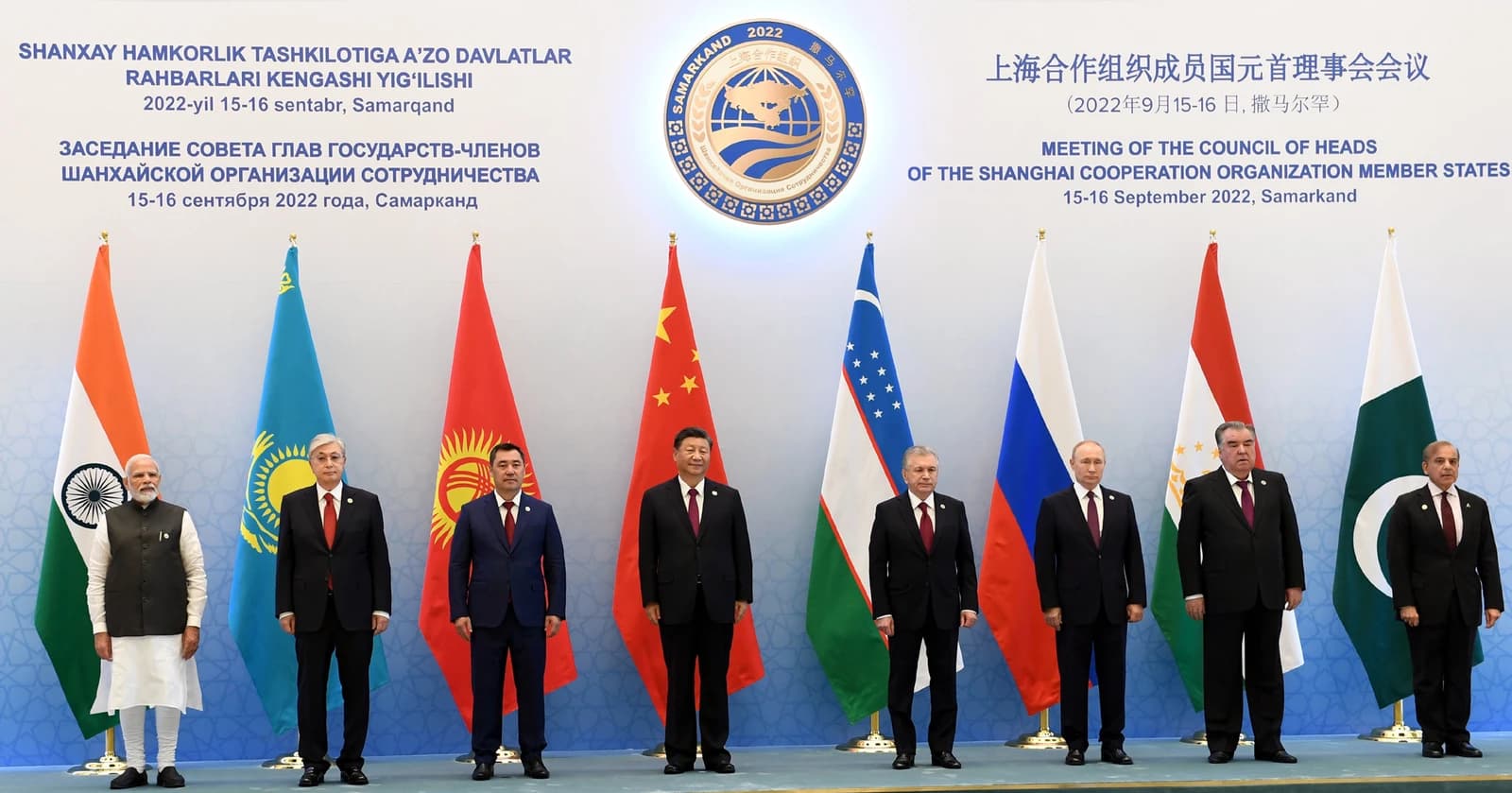
Premier Li Qiang told SCO leaders in Dushanbe that member states should liberalize trade and investment, keep global supply chains stable and oppose new trade barriers, according to Chinese state media. He singled out the Trans-Caspian route and the Northern Sea Route as priorities, saying a more stable network of transport corridors would strengthen links across the bloc and create room for industry and commerce.
Sentiment IndicatorsⓘProprietary · adalytica.com · October 25, 2026
This is a snapshot — live sentiment, awareness and momentum for 130+ markets update continuously in the dashboard.Open AlphaPulse
The economic stakes are rising fast. SCO trade surpassed $700 billion in 2025, underscoring how much commerce now depends on faster, more resilient east-west and north-south routes across Eurasia. For China, the push fits a broader effort to diversify freight paths away from congested or geopolitically exposed corridors and to deepen access to Central Asia, the Caucasus and Europe.
For investors, the message is that infrastructure and logistics remain central to China’s regional strategy, with potential spillovers for rail operators, ports, shipping, freight forwarders and industrial suppliers tied to cross-border trade. Any progress on the Trans-Caspian corridor could also be watched as a test of how quickly SCO members can translate political alignment into actual trade facilitation.
The backdrop is a softer risk climate around China-U.S. relations, with Adalytica’s US–China Relations Sentiment gauge at 46, neutral, though its awareness reading remains at an extreme-fear level. Global Stability Sentiment is also subdued at 32, suggesting markets are still pricing in friction even as Beijing presses for more open regional commerce.
| Entity | Gains | Losses |
|---|---|---|
| China and SCO exporters | ▲Faster routes, lower costs | ▼ |
| Trans-Caspian logistics firms | ▲More freight demand | ▼Congestion-sensitive rivals |
| Central Asian and Caucasus hubs | ▲Transit fees, investment | ▼Traditional corridor operators |
| Protectionist trade policies | ▲ | ▼Easier market access, lower barriers |