Ports on the Caspian Sea could hit capacity limits as soon as 2027-2028 unless Kazakhstan and Azerbaijan accelerate upgrades, threatening the main non-Russia land bridge between China and Europe and the freight rates, reliability and investment case built around it.
Kazakhstan, Azerbaijan Ports Face Middle Corridor Limits
The warning matters because the Trans-Caspian or Middle Corridor has emerged as a strategic alternative to routes through Russia, especially since geopolitical tensions pushed shippers and governments to diversify overland trade. If the bottleneck at Aktau, Kuryk and the Azerbaijani side is not eased, the corridor may struggle to handle more than bulk cargo and fail to win the container traffic that would make it commercially competitive.
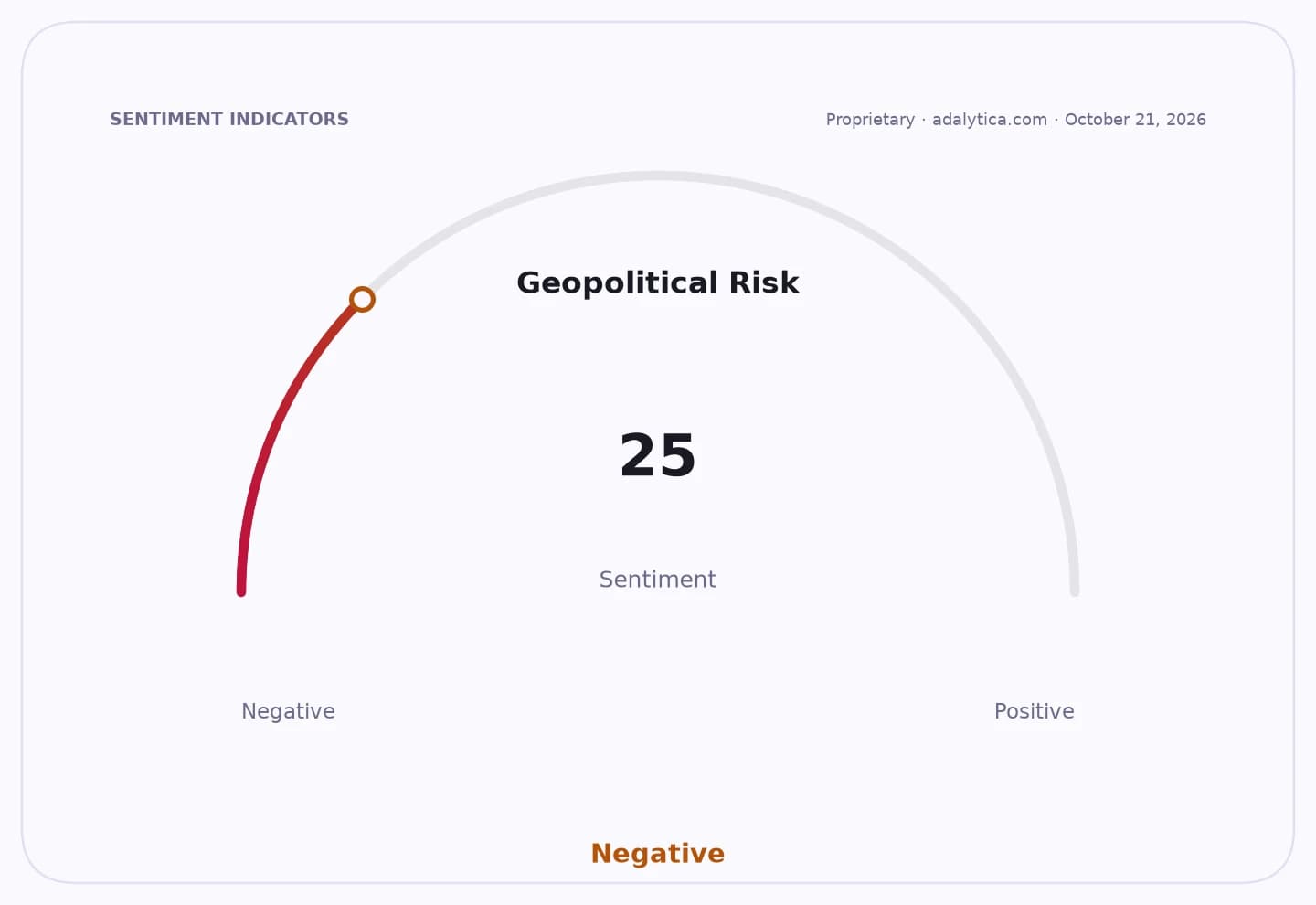
Sentiment IndicatorsⓘProprietary · adalytica.com · October 22, 2026
This is a snapshot — live sentiment, awareness and momentum for 130+ markets update continuously in the dashboard.Open AlphaPulse
The route currently takes about 12-15 days from China to Europe, faster than the 30-35 days typically needed via Suez, but still slower and more expensive than the 7-10 day northern rail path through Russia. That leaves operators with a narrow economic window: the Middle Corridor can sell resilience and route diversification, but only if it can cut logistics costs and deliver predictable schedules.
Fergana Agency said the pressure points stem from lower water levels in the Caspian and a shortage of ships and ferries, while Kazakhstan has already started dredging ports and waterways at Aktau and Kuryk. Experts also point to a western choke point at the Georgia-Turkey border, where gauge changes add time and cost, meaning rail expansion alone will not unlock throughput.
For investors, the story keeps the spotlight on logistics, shipping and infrastructure names tied to Eurasian trade, but also on the risk that corridor enthusiasm runs ahead of physical capacity. The more the route is marketed as an alternative to Russia, the more capital will be needed to prove it can carry higher-value container cargo at scale.
That makes port modernization, vessel availability and cross-border coordination the key catalysts to watch into 2027. Without them, the Middle Corridor remains a useful backup lane rather than a genuine China-Europe freight rival.
| Entity | Gains | Losses |
|---|---|---|
| Kazakhstan, Azerbaijan | ▲Transit investment | ▼Capacity pressure |
| China-Europe shippers | ▲Route diversification | ▼Higher logistics costs |
| Russian northern corridor | ▲Continued traffic share | ▼Some downside if route improves |
| Port operators/infrastructure builders | ▲Upgrade spending | ▼Bottleneck risk if delayed |