A decade after an international tribunal threw out much of China’s maritime claim in the South China Sea, the ruling has done little to curb Beijing’s push to tighten control and raise the cost of pushing back.
South China Sea Dispute Keeps Pressure on China Assets

The anniversary underscores the economic reality behind the legal fight: the region remains a chokepoint for trade, energy flows and military access, so every new episode of coercion or confrontation carries outsized risk for shipping, investment and regional supply chains. The latest warning is that the dispute is no longer just a paper contest over rights under the UN Convention on the Law of the Sea, but a sustained test of presence, deterrence and alliance politics.
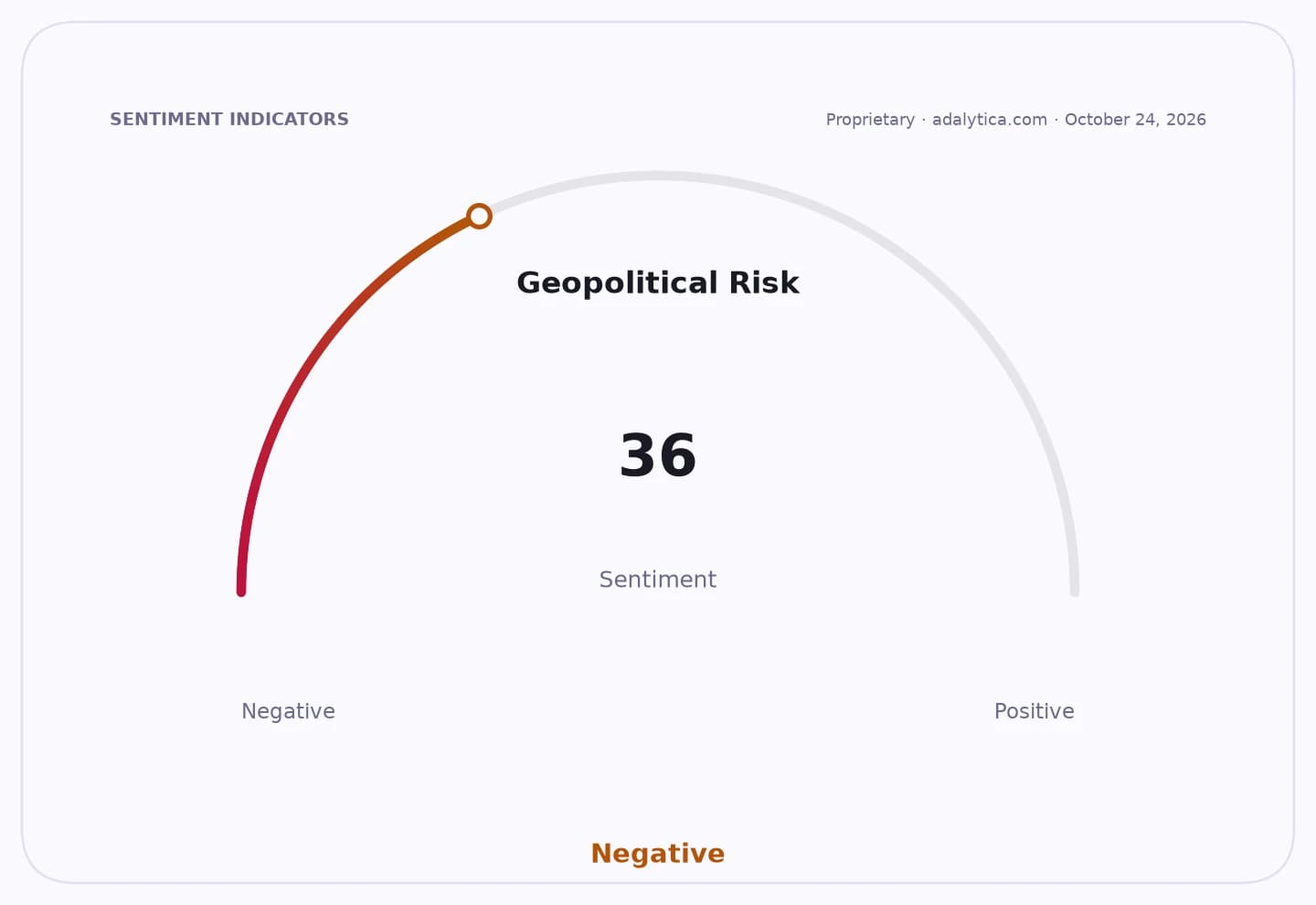
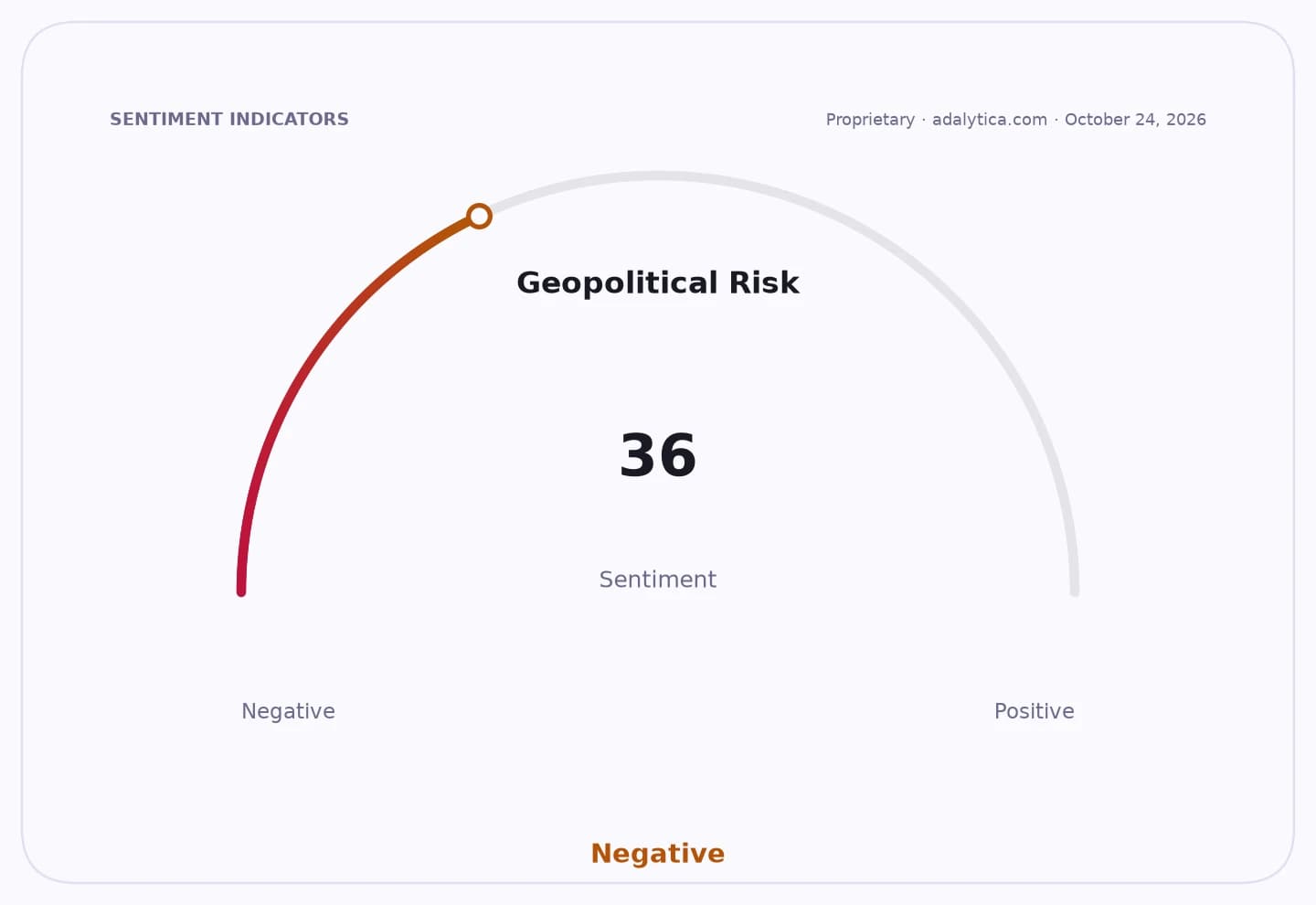
Sentiment IndicatorsⓘProprietary · adalytica.com · October 24, 2026
This is a snapshot — live sentiment, awareness and momentum for 130+ markets update continuously in the dashboard.Open AlphaPulse
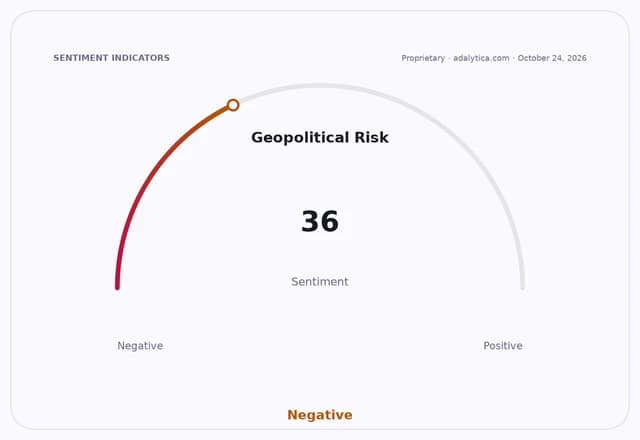
That matters for investors because persistent tension can seep into Chinese and regional assets even when there is no outright conflict. China-focused equities, including the FXI exchange-traded fund, have recently traded below their 50-day moving average and under the 200-day line, reflecting a market that is still pricing in political and trade risk. The broader Asia gauges have also been choppy, with Australia’s EWA holding near its 50-day average and Canada’s EWC outperforming, a reminder that capital is favoring markets seen as less exposed to great-power friction.
The message from the diplomatic side is equally stark: the legal victory did not create enforcement. Instead, Beijing has normalized physical contestation at sea, while Washington and regional governments have leaned harder on patrols, partnerships and deterrence rather than expecting negotiations to resolve the dispute. That makes the South China Sea one of the clearest examples of how international rules can constrain rhetoric without necessarily changing behavior.
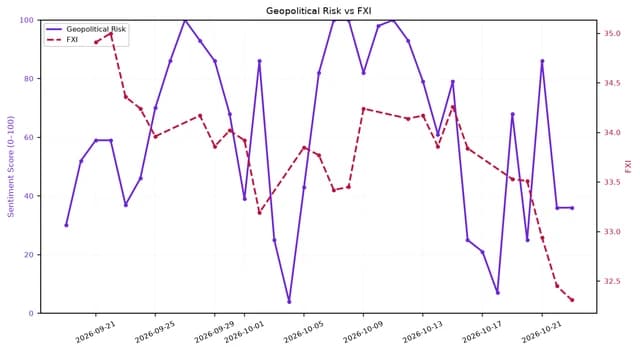
Adalytica’s Global Stability Sentiment gauge sits at 36, labeled neutral but with “extreme fear” awareness, while its U.S.-China Relations Sentiment reading is 39, also neutral and near the bottom of the range. Those readings fit a market that has stopped assuming a clean diplomatic reset and instead treats the region as a standing source of tail risk.
The next catalyst is likely to come from the water, not the courtroom: more naval encounters, another freedom-of-navigation operation or fresh moves around contested features could quickly reprice both regional risk and China exposure.
| Entity | Gains | Losses |
|---|---|---|
| China | ▲stronger leverage at sea | ▼legal credibility |
| Philippines/ASEAN claimants | ▲diplomatic backing | ▼enforcement power |
| U.S. and allies | ▲security relevance | ▼room for de-escalation |
| FXI/China equities | ▲none | ▼higher geopolitical discount |