A specially chartered flight from Yekaterinburg to China has turned into a broader push by Russia’s Sverdlovsk region to deepen commercial, academic and cultural links with one of its most important foreign partners. The trip matters because it ties regional business expansion, logistics planning and university cooperation to China at a time when cross-border supply chains and trade routes remain politically sensitive.
Sverdlovsk region deepens trade ties with China
The delegation’s most immediate economic focus was the city of Yiwu, a major hub for consumer goods and wholesale trade, where officials discussed launching production of everyday goods and building warehouses in Sverdlovsk region. That would support imports, local distribution and potentially new manufacturing capacity in a region that already hosts Russian-Chinese ventures in timber processing and pipe production.
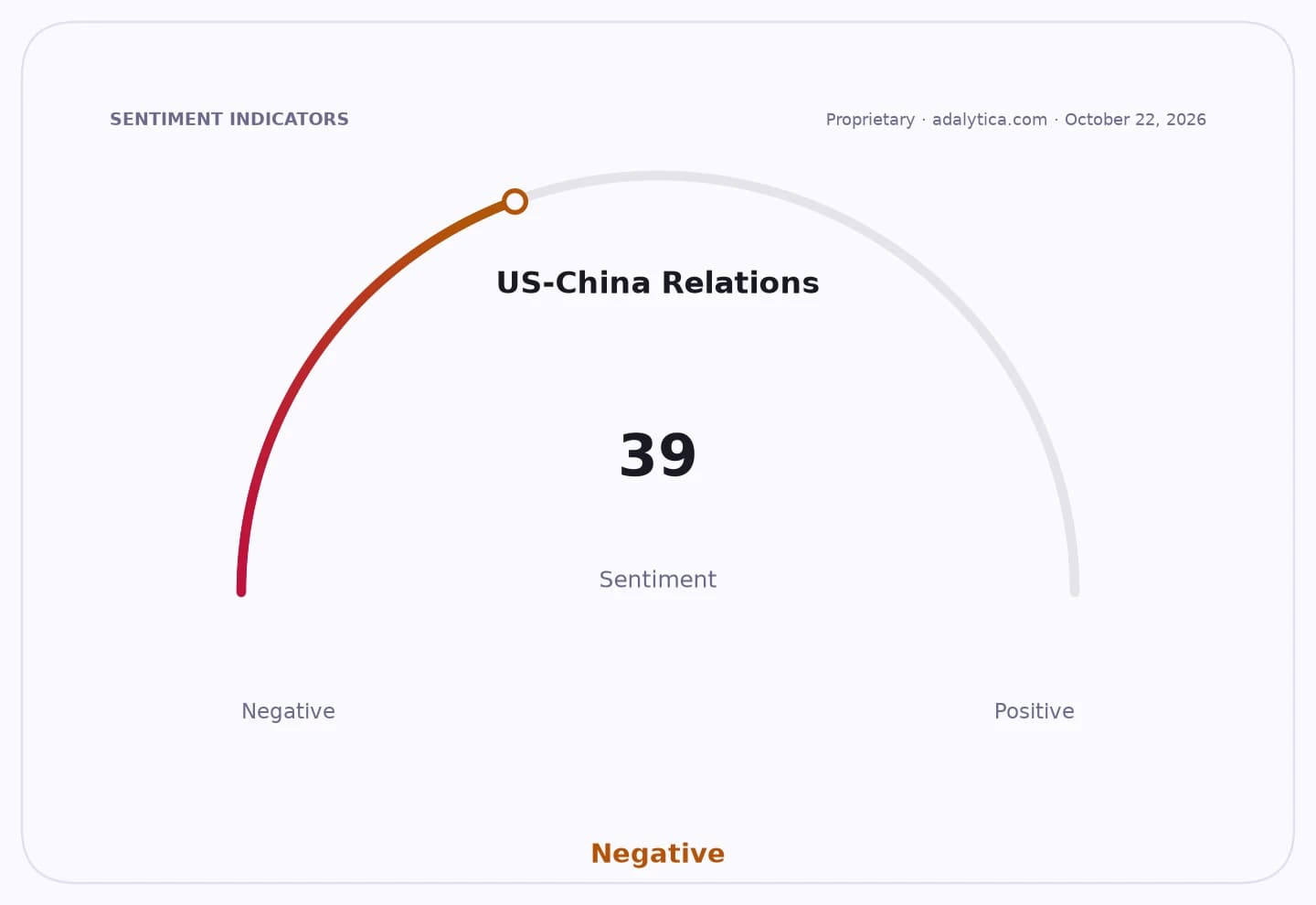
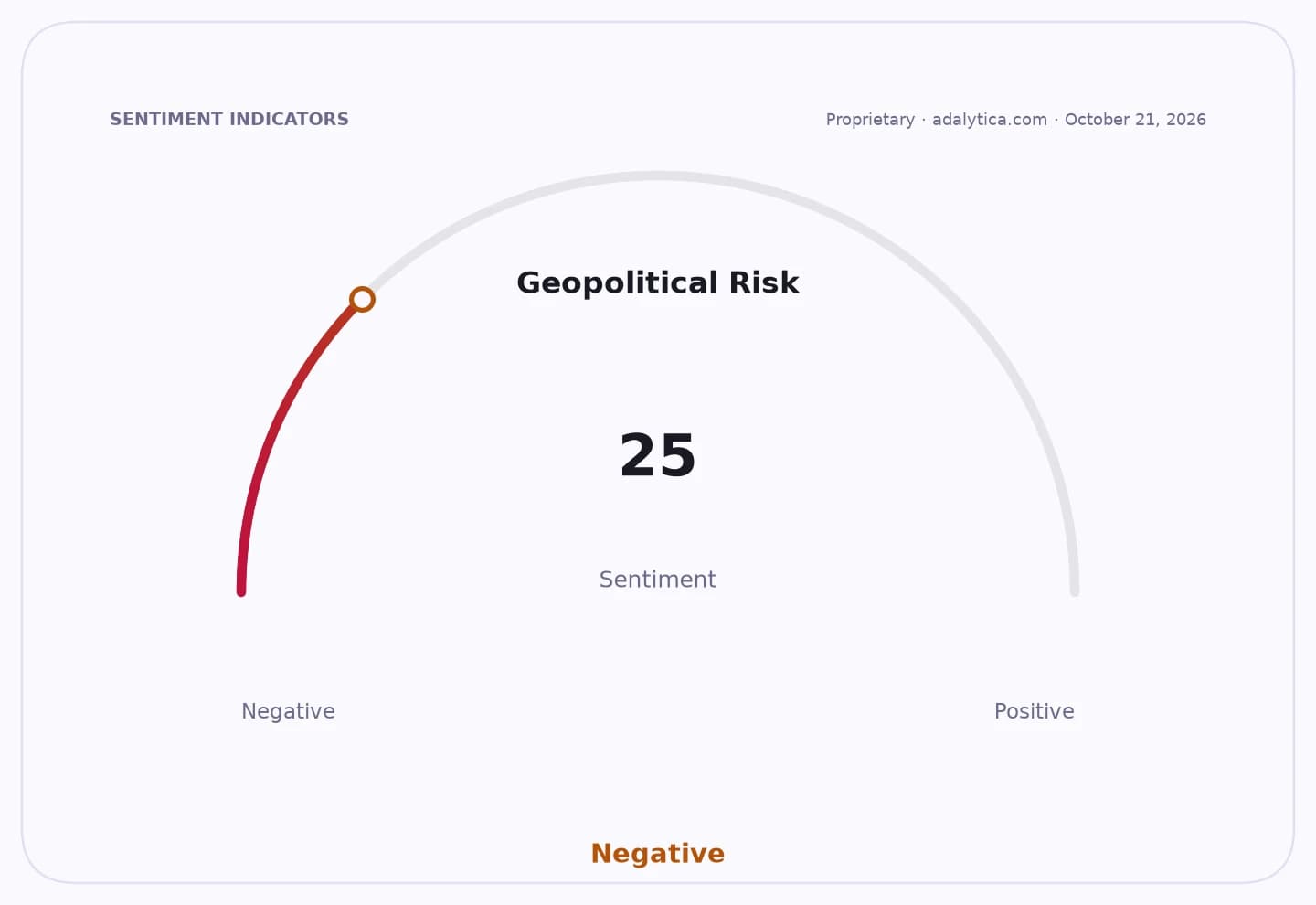
Sentiment IndicatorsⓘProprietary · adalytica.com · October 24, 2026
This is a snapshot — live sentiment, awareness and momentum for 130+ markets update continuously in the dashboard.Open AlphaPulse
The flight itself was organized by Sima-Land, the Russian retail and wholesale group founded by businessman Andrei Simanovsky, underscoring how private capital is helping drive regional ties with China. Simanovsky said he first came to Yiwu 28 years ago and now runs a Russian-Chinese office there, a reminder of how long-standing commercial links are being formalized into larger logistics and investment plans.
The trip also extended beyond trade. In Shanghai, UrFU and Shanghai University of Political Science and Law advanced a memorandum that includes the Russian university’s agreement and the Chinese institution’s move to join the SCO association of legal universities. That creates a framework for student exchanges and joint research, broadening the relationship beyond commerce into talent pipelines and institutional cooperation.
The delegation included 30 students and teachers from schools and youth organizations in Yekaterinburg, making the flight part business tour, part educational exchange. For regional officials, those programs help build familiarity with Chinese industry, logistics and culture, while for investors they signal that the region is trying to lock in longer-term ties that could support trade, warehousing and industrial partnerships.
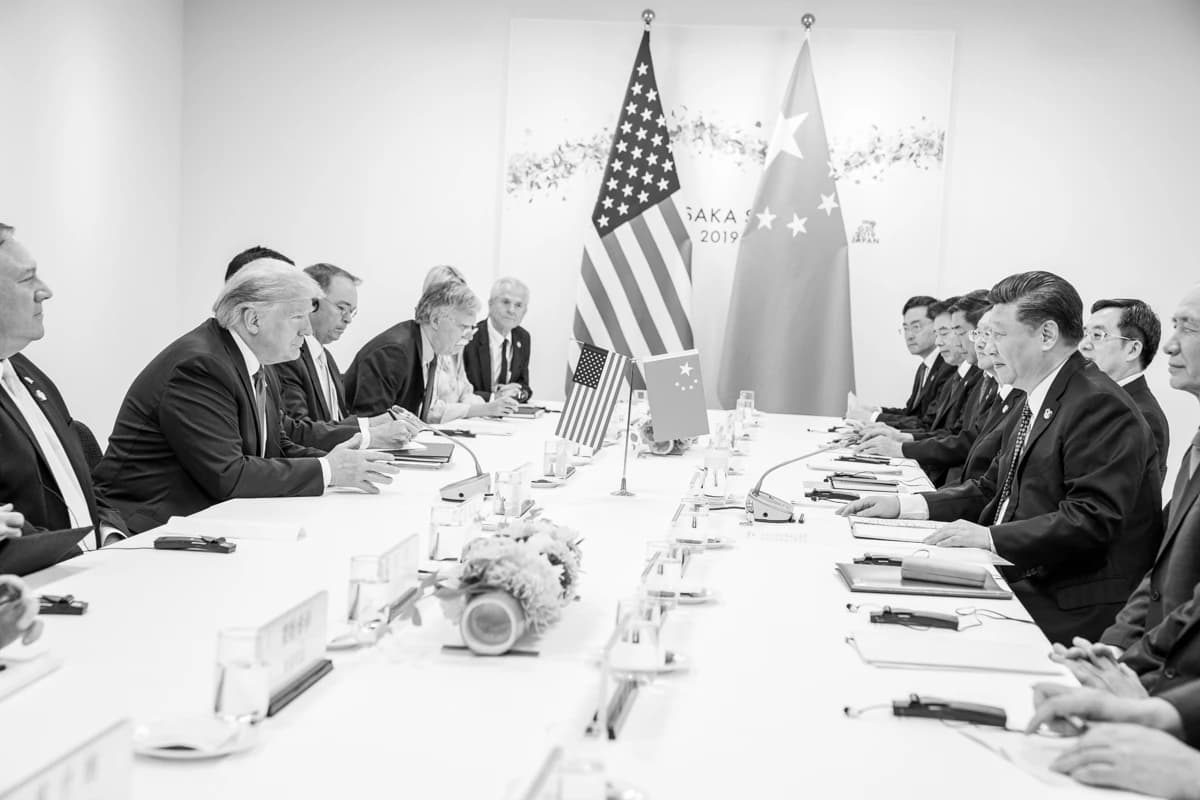
The timing also fits a wider backdrop of strained global trade relations, with China facing fresh pressure from the US and Europe over investment and trade restrictions. For companies exposed to Russia-China flows, any expansion in regional cooperation can be a partial hedge against a choppy external environment, though it also depends on how tightly Beijing and Moscow keep aligning supply chains and financing.
For investors, the key question is whether this kind of regional diplomacy translates into real freight volume, warehouse capacity and local production. The next catalyst will be whether the Yiwu talks lead to concrete projects in Sverdlovsk region, and whether Sima-Land and local authorities turn the special flight into a repeatable trade corridor rather than a one-off visit.
| Entity | Gains | Losses |
|---|---|---|
| Sverdlovsk region | ▲New trade and warehouse links | ▼Less isolation from China supply chains |
| Sima-Land | ▲Deeper China logistics reach | ▼Higher exposure to geopolitical friction |
| UrFU and Shanghai university | ▲Student and research exchanges | ▼Slower academic internationalization if ties stall |
| US/EU protectionists | ▲Domestic industry support | ▼Broader global trade stability |