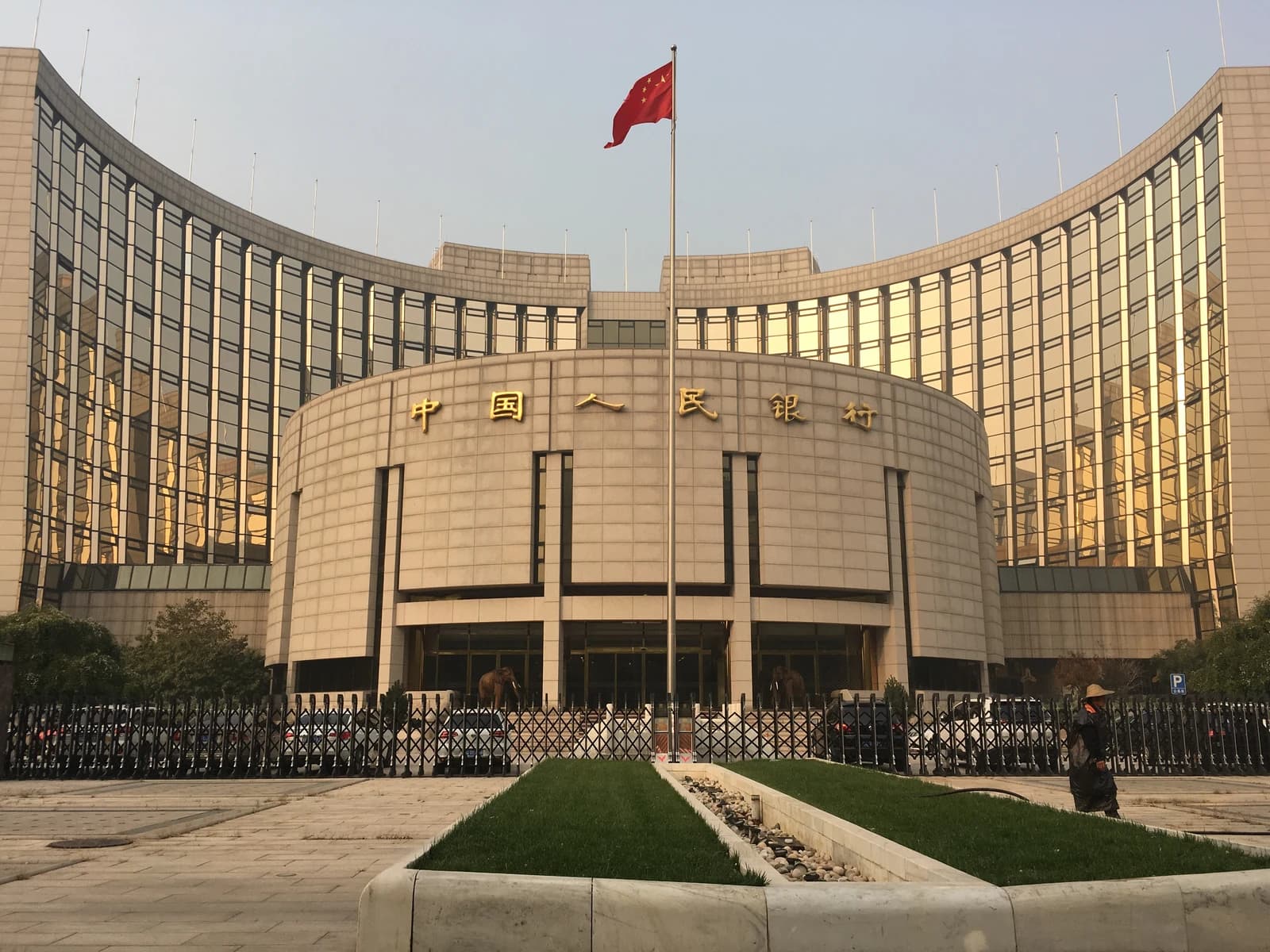
China’s yuan recovered much of an overnight drop after the central bank left its daily fixing almost unchanged, signaling policymakers are still leaning against disorderly moves even as volatility jumps.
China Yuan Fixing Steady as Volatility Jumps

The China Foreign Exchange Trade System set the Nov. 20 midpoint at 6.7131 per dollar, just three basis points weaker than the previous day’s 6.7128, while the offshore yuan and onshore market both swung sharply before stabilizing. One-month offshore implied volatility climbed to 2.6%, a four-month high, and onshore turnover topped $46 billion, about 60% above the prior session, underscoring how quickly traders moved to reposition.
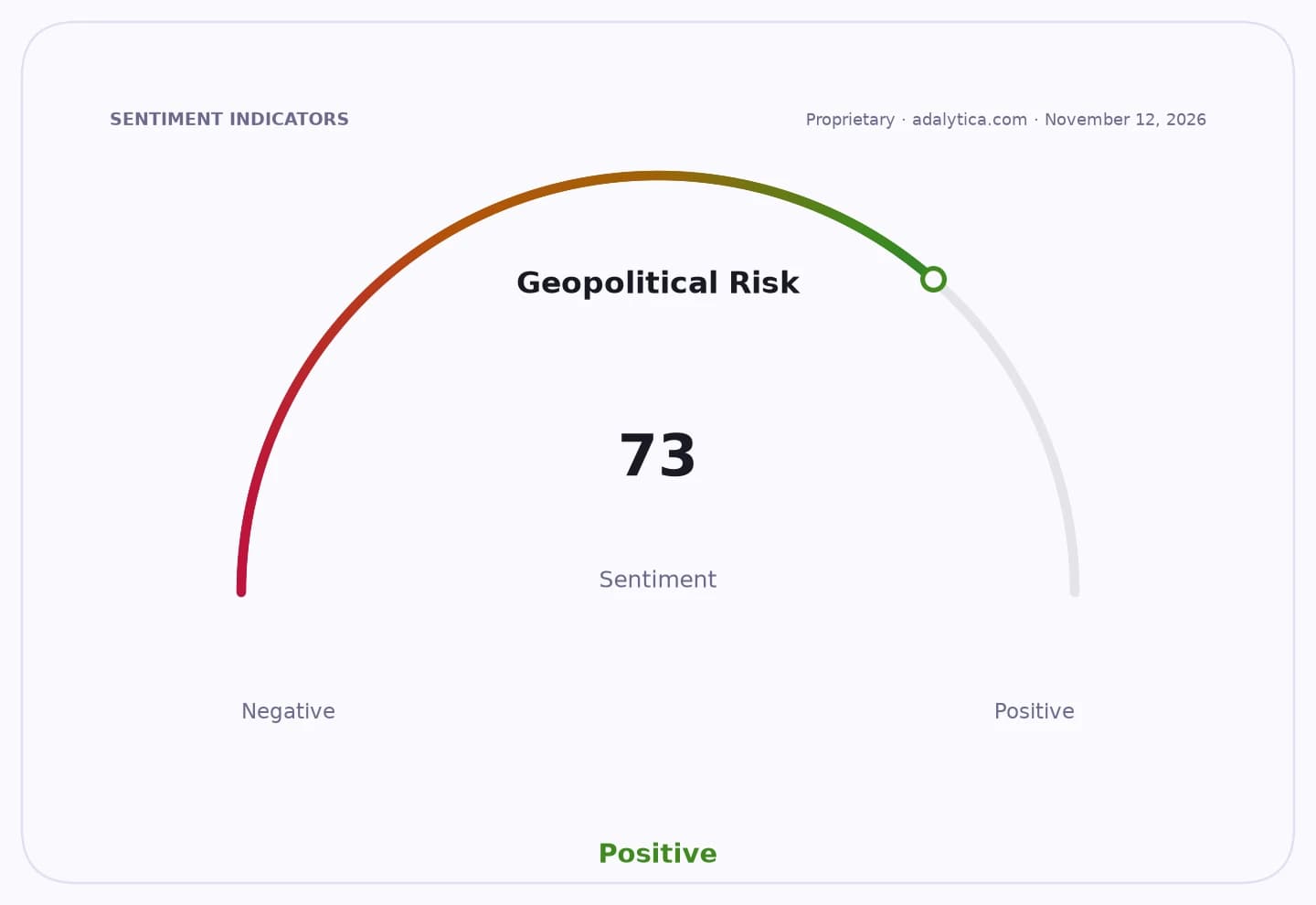
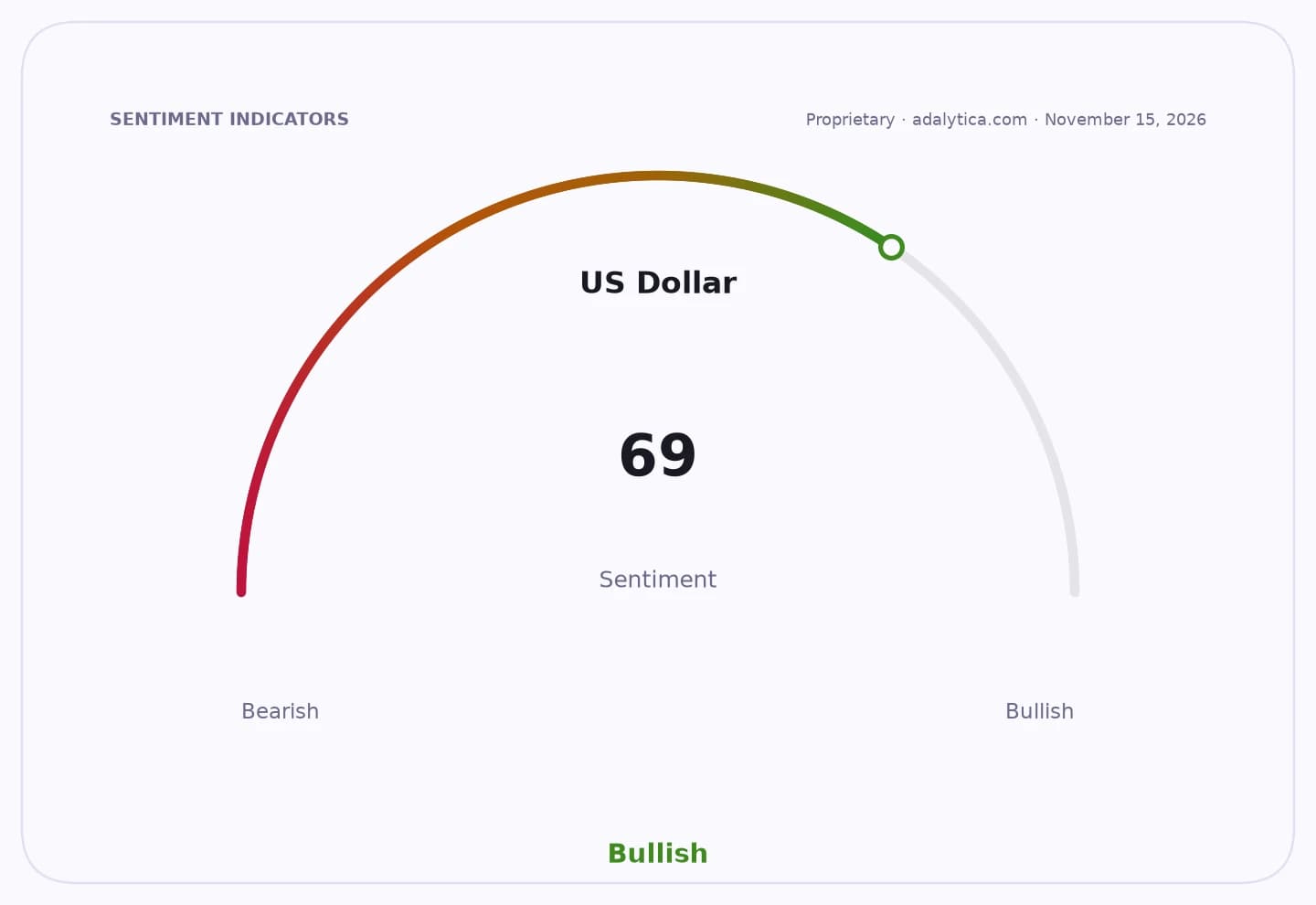
Sentiment Indicators
The episode matters because the yuan remains a key barometer for capital flows, trade competitiveness and broader confidence in China’s policy setting. A barely changed fix against a backdrop of large intraday swings suggests Beijing is trying to avoid validating one-way bets, even as traders test how much weakening officials will tolerate.
The IMF said the yuan gained about 0.3% after the fixing and recovered much of its earlier decline, with onshore and offshore trading pushing beyond 6.67 per dollar. Market participants blamed the earlier selloff on unwinding long-yuan positions and energy-related dollar buying, while Commerzbank’s Michael Pfister said the move looked unusual for a currency that is typically managed within tight parameters.
That backdrop has investors watching for any sign that China will tighten exchange-rate controls or step up intervention if volatility persists. Pfister said some traders linked the move to a trilateral summit in Shenzhen involving Xi Jinping, Vladimir Putin and Donald Trump, though neither Beijing nor Washington mentioned currency policy in their readouts.
For investors, the key issue is less the one-day rebound than whether the episode marks the start of a broader repricing in the yuan and Chinese risk assets. Persistent FX swings can feed into hedging costs, trade hedges and capital-flow assumptions, while a steadier fixing would support confidence that authorities want to prevent a disorderly slide.
FXI, the China ETF, was already under pressure in recent sessions, while the yuan itself showed signs of stress in technical terms, with conventional indicators such as the relative strength index easing from overbought levels and momentum softening after the spike. The next market test will be whether the central bank keeps holding the line on the fixing if offshore volatility stays elevated into the next sessions.
| Entity | Gains | Losses |
|---|---|---|
| China policymakers | ▲FX stability, control over expectations | ▼Pressure to allow more yuan flexibility |
| Yuan bulls | ▲Partial rebound, no sharp fixing cut | ▼Long positions unwound, volatility risk |
| Dollar buyers | ▲Better entry levels during selloff | ▼Rebound trims immediate upside |
| FXI investors | ▲Potential support if yuan steadies | ▼Near-term China risk premium rises |