China’s yuan is getting a rare pocket of stability even as the dollar firms, with seasonal foreign-exchange sales helping keep the currency from sliding and giving Beijing time to lean on its preferred message of orderly markets.
China yuan steadies as dollar firms on seasonal sales
US Dollar
That matters because a steadier yuan eases pressure on capital flows, reduces the risk of imported inflation and gives China more room to manage growth without having to choose between a weaker currency and tighter financial conditions. For investors, it also changes the near-term read-through for China assets: a controlled exchange rate can support mainland equities and dampen volatility in exporters, importers and dollar-sensitive sectors.
Sentiment Indicators
The latest market tone suggests the yuan is being anchored more by domestic flow than by broad dollar weakness. The dollar has held firm in recent sessions, but the yuan has not broken meaningfully lower, pointing to the importance of corporate and seasonal foreign-exchange sales in offsetting external pressure. In other words, the market is not seeing an uncontrolled move toward depreciation, which is exactly what policy makers want to avoid.
That stability also has implications for Chinese stocks listed in Hong Kong and in U.S.-traded vehicles tracking the mainland. The iShares MSCI China ETF, FXI, is hovering around $33.48 after losing ground from earlier in the year, while the Invesco China Yuan ETF, YCL, is at $17.69 and sitting below both its 50-day and 200-day moving averages. Those technical signals show the market still lacks conviction on a broader China re-rating, but a firmer yuan could become an early catalyst if it starts to feed into sentiment and foreign inflows.
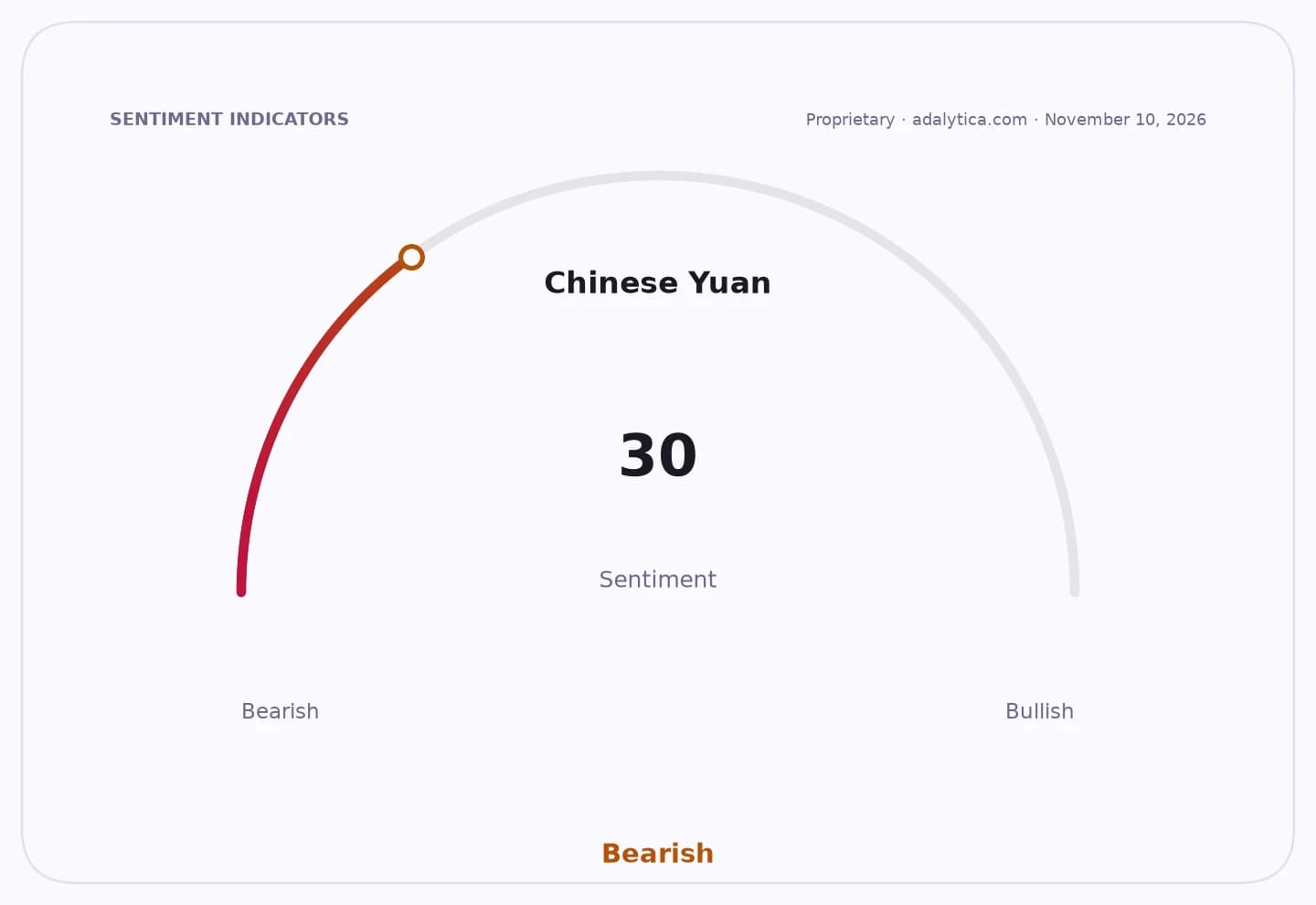
Adalytica’s Chinese yuan trade signals show sentiment at 23, in “Fear,” even as awareness is at 100, or “Extreme Greed,” underscoring how closely traders are watching the currency. The dollar, by contrast, shows neutral sentiment at 69 with awareness at 39, a reminder that the greenback remains the main external headwind — but not enough, so far, to overwhelm local FX support.
For investors, the bigger point is that currency stability itself is becoming the trade. If Beijing can keep the yuan steady through seasonal flows and targeted management, it can lower the odds of a disorderly devaluation narrative that would hit Chinese assets, pressure Asian peers and roil global risk appetite. If that anchor holds, the next move is not just about FX — it is about whether China can buy enough macro breathing room to revive confidence in its equity market and keep capital from leaking abroad.
| Entity | Gains | Losses |
|---|---|---|
| China policymakers | ▲FX stability and policy flexibility | ▼Pressure to defend growth with easing |
| Exporters | ▲Competitive currency backdrop | ▼Stronger yuan translation gains |
| Importers | ▲Lower import-cost pressure | ▼Less relief if dollar stays firm |
| FXI / China equity bulls | ▲Reduced currency volatility | ▼Bears betting on disorderly depreciation |