Russian companies in the Far East are being pulled toward Chinese industrial parks by lower taxes, cheaper funding and capex grants, a sign that Moscow’s eastern frontier is increasingly vulnerable to capital flight just as Beijing doubles down on small-business support of its own.
Chinese Industrial Parks Attract Russian Far East Firms

The most important development is not that a handful of firms may change their registration papers. It is that the economics of doing business in Russia’s Far East are being openly compared with the financing terms offered across the Amur River — and China is winning on cost. Alexander Kalinin, head of the Russian small-business group Opora Russia, said Chinese partners are offering loans at about 3%, lower tax burdens and capital expenditure grants, while some regional firms have already registered in China. That is a direct indictment of Russia’s domestic investment climate, where expensive labor, costly capital and heavy fiscal pressure are pushing companies to look for relief elsewhere.
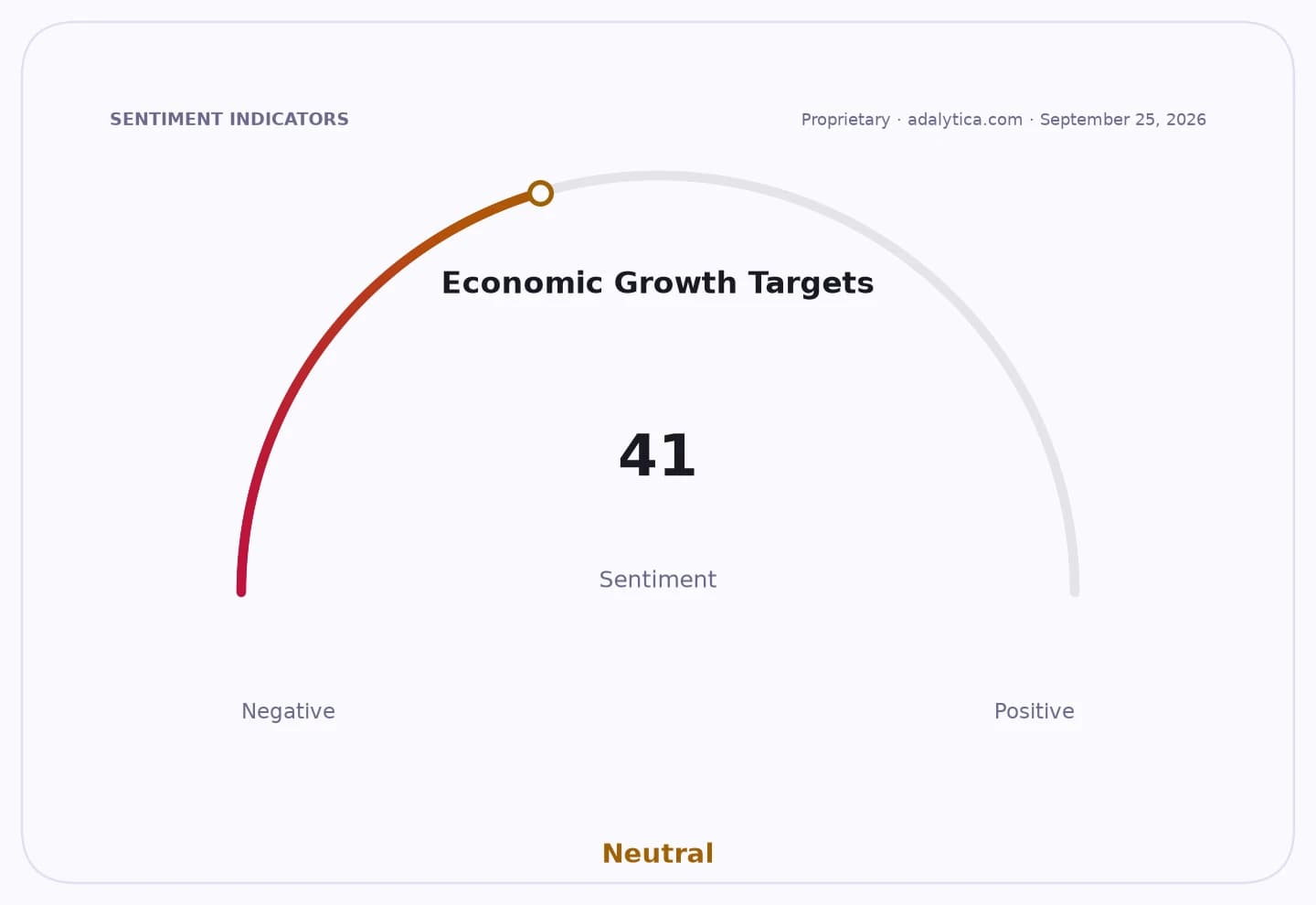
Sentiment IndicatorsⓘProprietary · adalytica.com · September 4, 2026
This is a snapshot — live sentiment, awareness and momentum for 130+ markets update continuously in the dashboard.Open AlphaPulse
For investors, the story matters because it underscores a wider realignment of regional capital flows. The Far East has been marketed by Moscow as a bridge to Asia, but if local businesses are seeking Chinese domiciles to access cheaper financing and friendlier tax regimes, the bridge starts to look one-way. That creates a longer-term drag on Russian regional growth, tax receipts and industrial capacity. It also highlights how Beijing is using policy, not just trade, to deepen its economic pull on neighboring economies.
The timing is telling. China on Friday unveiled a sweeping plan to back small and medium-sized enterprises, aiming to cultivate 22,000 technology-driven “Little Giants” by 2030. In other words, while Russia’s peripheral firms are searching for capital, China is building more of it — and in the process turning industrial parks and tech hubs into tools of economic statecraft. The result is a widening competitive gap in the real economy, especially for smaller companies that depend on cheap credit and government-backed investment incentives to scale.
The market signal is less about a single stock than a structural trade. Chinese equity vehicles tied to onshore growth and internet-linked small businesses remain the obvious beneficiaries if Beijing’s SME push translates into real earnings support, while Russian regional assets face a harder runway as capital becomes scarcer and more mobile. The Adalytica.com US–China Relations Sentiment gauge, at 96 with “Extreme Greed,” suggests investors are already leaning hard into the China re-rating narrative even as awareness remains relatively low — a combination that often marks the early part of a crowded but still unfinished theme.
China’s edge is likely to persist as long as it can pair policy support with lower funding costs. For investors, the takeaway is straightforward: follow the capital, not the rhetoric. The real opportunity sits with the jurisdictions and sectors that can offer cheap money, tax relief and industrial infrastructure at scale — and right now that points far more to China’s SME and tech ecosystem than to Russia’s Far Eastern frontier.
| Entity | Gains | Losses |
|---|---|---|
| Chinese industrial parks | ▲New firm registrations | ▼None |
| Far Eastern Russian SMEs | ▲Cheaper funding access | ▼Higher local costs |
| Russia’s regional economy | ▲— | ▼Capital outflow |
| China’s SME policy push | ▲More business inflows | ▼— |