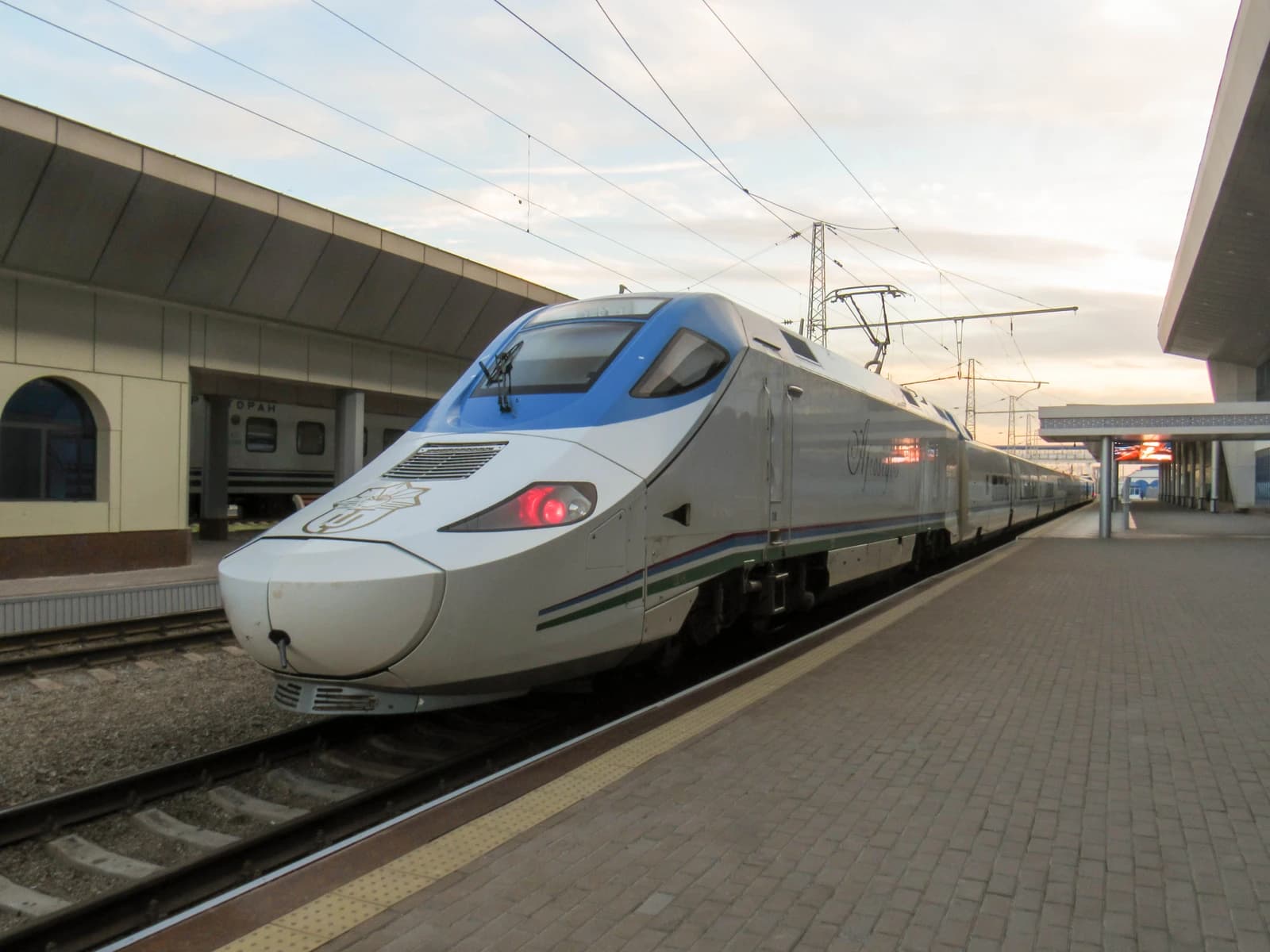
Kazakhstan’s push to place state-owned rail operator Kazakhstan Temir Zholy on the Hong Kong market by year-end is the clearest sign yet that Astana wants Chinese capital to help finance its role as a Eurasian transit hub, not just as a domestic infrastructure story.
Kazakhstan Temir Zholy Eyes Hong Kong Listing

That matters because KTZ sits at the intersection of trade, geopolitics and funding. A listing in Hong Kong would be the first by a Samruk-Kazyna portfolio company in the city and would give Kazakhstan a platform to court investors who are already exposed to mainland supply chains and cross-border logistics. Saltanat Satzhan, Samruk-Kazyna’s managing director for development and privatisation, used the Astana Finance Days forum to argue that companies looking at Hong Kong and mainland China need patience, effectively telling issuers to think beyond short-term fundraising and toward deeper strategic capital access.
Sentiment IndicatorsⓘProprietary · adalytica.com · September 13, 2026
This is a snapshot — live sentiment, awareness and momentum for 130+ markets update continuously in the dashboard.Open AlphaPulse

The economic logic is straightforward. Kazakhstan wants to monetise its position between China and Europe at a time when overland trade routes have gained strategic importance. KTZ is not simply a railway operator carrying domestic freight; it is a critical corridor asset linking Chinese goods to European markets. For a country seeking to diversify funding away from traditional Western channels and widen the investor base for state assets, Hong Kong offers a natural gateway to Asian capital, while also keeping open the possibility of a London or Astana listing.
For investors, the proposal is attractive for a different reason: it is a rare chance to buy direct exposure to Central Asia’s transit infrastructure story. KTZ would likely appeal to funds looking for asset-backed, cash-generating infrastructure with geopolitical optionality. The bull case is that rising China-Europe trade volumes and Kazakhstan’s corridor role support long-duration earnings and potential re-rating if the company gains international visibility. The bear case is that execution risk remains high, liquidity may be limited, and any valuation premium depends on whether investors believe transit flows can keep expanding despite shifting trade routes and political friction.
The broader market backdrop is mixed. Shares tied to Chinese growth have been volatile, with the FXI China ETF trading below its 200-day moving average in recent sessions and its RSI in a neutral-to-weak range, while leveraged China exposure such as YINN has also retreated sharply from earlier highs. That suggests investors remain selective on China-linked themes even as interest in strategic infrastructure persists. The Adalytica US-China relations gauge shows extreme sentiment but very low awareness, underscoring how fast the macro narrative can swing while investor conviction stays fragile.
Against that backdrop, a KTZ listing would be read less as a simple capital-raising exercise than as a test of whether Kazakhstan can translate its geopolitical position into durable market demand. If the Hong Kong deal lands by year-end, it could open the door for more Samruk-Kazyna assets to follow. If it slips, it will reinforce how difficult it is to turn Eurasian transit ambitions into pricing power in public markets.
| Entity | Gains | Losses |
|---|---|---|
| Kazakhstan / Samruk-Kazyna | ▲broader funding access | ▼dependence on single-market capital |
| KTZ | ▲higher visibility, fresh equity demand | ▼scrutiny, listing execution risk |
| Hong Kong investors | ▲exposure to transit infrastructure | ▼geopolitical and liquidity risk |
| Western listing venues | ▲potential loss of mandate | ▼fewer Kazakhstan deals |