The yuan rose to its strongest level in more than four years after China’s central bank leaned more heavily on exchange-rate guidance, while firms sold foreign currency into the market amid solid export growth.
Chinese yuan hits four-year high after policy guidance
The onshore yuan touched 6.6789 per dollar in morning trade, its highest since June 28, 2022, while the offshore yuan climbed about 0.05% to 6.6787, also the firmest in more than four years. The move reflects a tighter policy backdrop in Beijing and a market that is increasingly comfortable betting on further yuan gains.
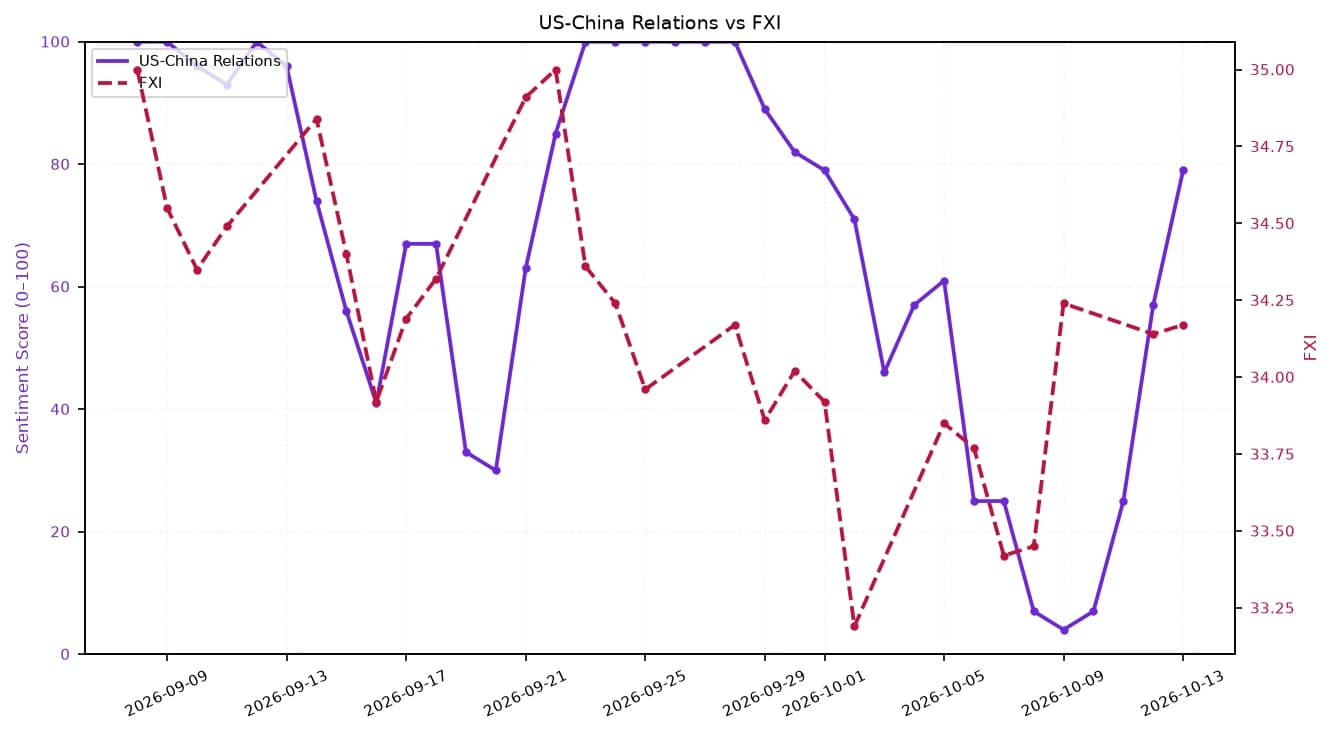
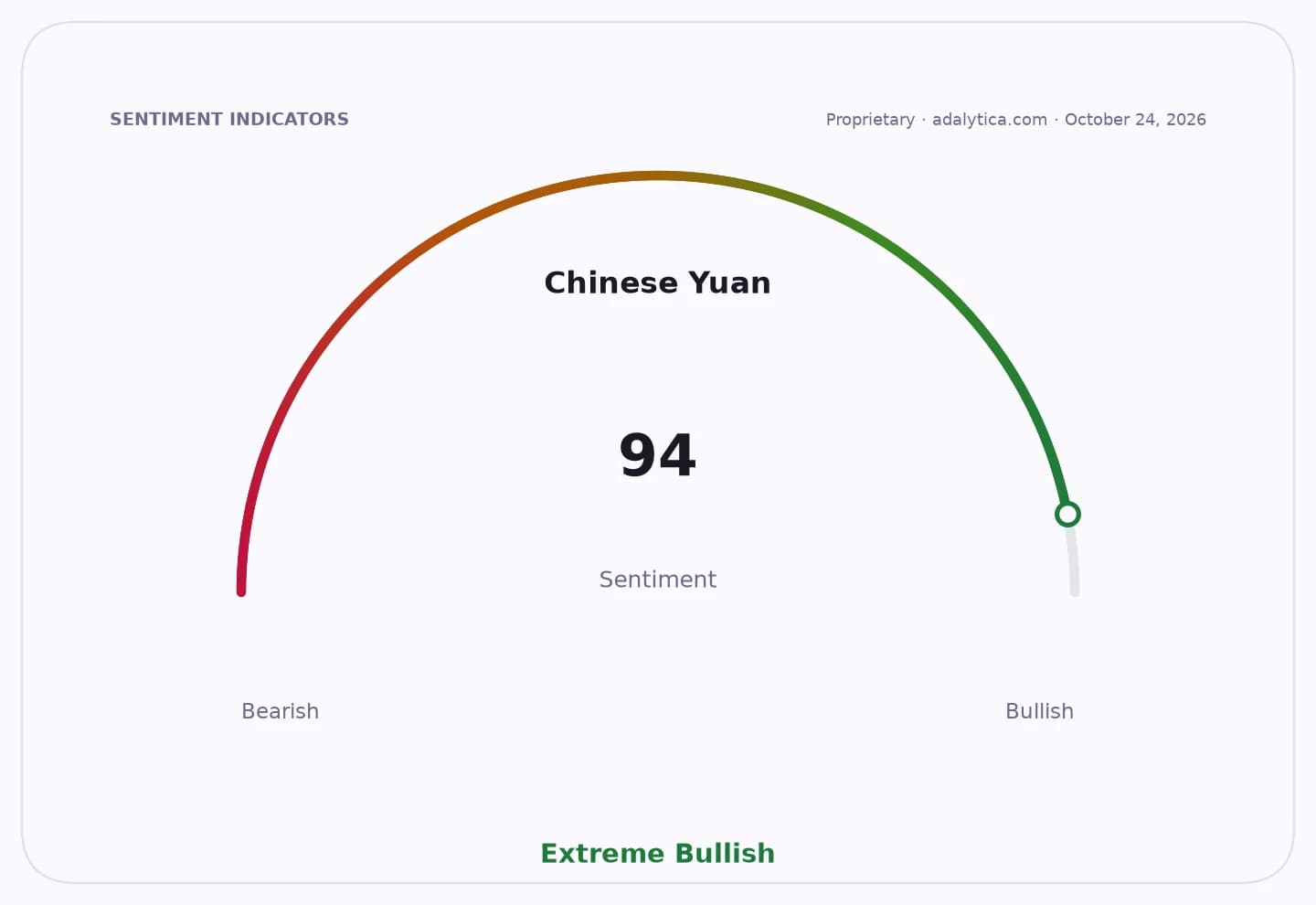
Sentiment IndicatorsⓘProprietary · adalytica.com · October 24, 2026
This is a snapshot — live sentiment, awareness and momentum for 130+ markets update continuously in the dashboard.Open AlphaPulse
The catalyst matters because a stronger yuan can ease imported inflation, support foreign investor confidence and reduce the cost of servicing dollar liabilities, but it can also squeeze exporters if the currency keeps appreciating. For China, the latest move suggests policymakers are allowing some currency strength to reinforce financial stability as growth data improve.
Official figures showed China’s economy expanded 4.5% in the previous quarter, beating forecasts as exports and industrial output offset weak domestic consumption. That backdrop helped the central bank keep its benchmark loan prime rate unchanged for a 17th straight month on Oct. 20, a sign that officials are not rushing to add more monetary easing after the better-than-expected GDP print.
Analysts at CSCI Pengyuan said the most direct driver of the yuan’s latest rise was trade-related demand, as companies accelerated sales of foreign exchange into yuan while the currency strengthened. The firm expects the yuan to appreciate moderately through the rest of 2026 and trade around 6.60 to 6.70 per dollar by year-end.
For investors, the move reinforces the view that China’s currency is being steered by a combination of policy signaling and real-economy flows rather than speculation alone. It also raises the stakes for exporters, importers and FX carry trades, which are coming under pressure as the yuan trend strengthens and market positioning shifts.
| Entity | Gains | Losses |
|---|---|---|
| Chinese yuan | ▲Stronger credibility | ▼Export margin pressure |
| China policymakers | ▲Easier FX stability | ▼Less room for easing |
| Importers/investors in China | ▲Cheaper dollar goods, confidence | ▼Rising hedging costs |
| Exporters / FX carry trades | ▲— | ▼Currency translation losses |