Circle Internet Group heads into its third-quarter earnings report with a promising new growth engine in Arc, but the bigger question for investors is whether that can offset the pressure on its core USDC economics.
Circle earnings focus on Arc and USDC margins

That tension is the real story. Circle’s stablecoin business still sits at the center of the company’s valuation, yet reserve income and other products are not guaranteed to keep expanding at the same pace as usage. The company has been broadening its platform, and its latest filing says other products contributed 24.0% of revenue in the recent period, evidence that Circle is trying to build a business beyond a single stablecoin spread. Arc, its open layer-1 blockchain network, gives Circle another way to deepen developer engagement and create a more durable ecosystem.
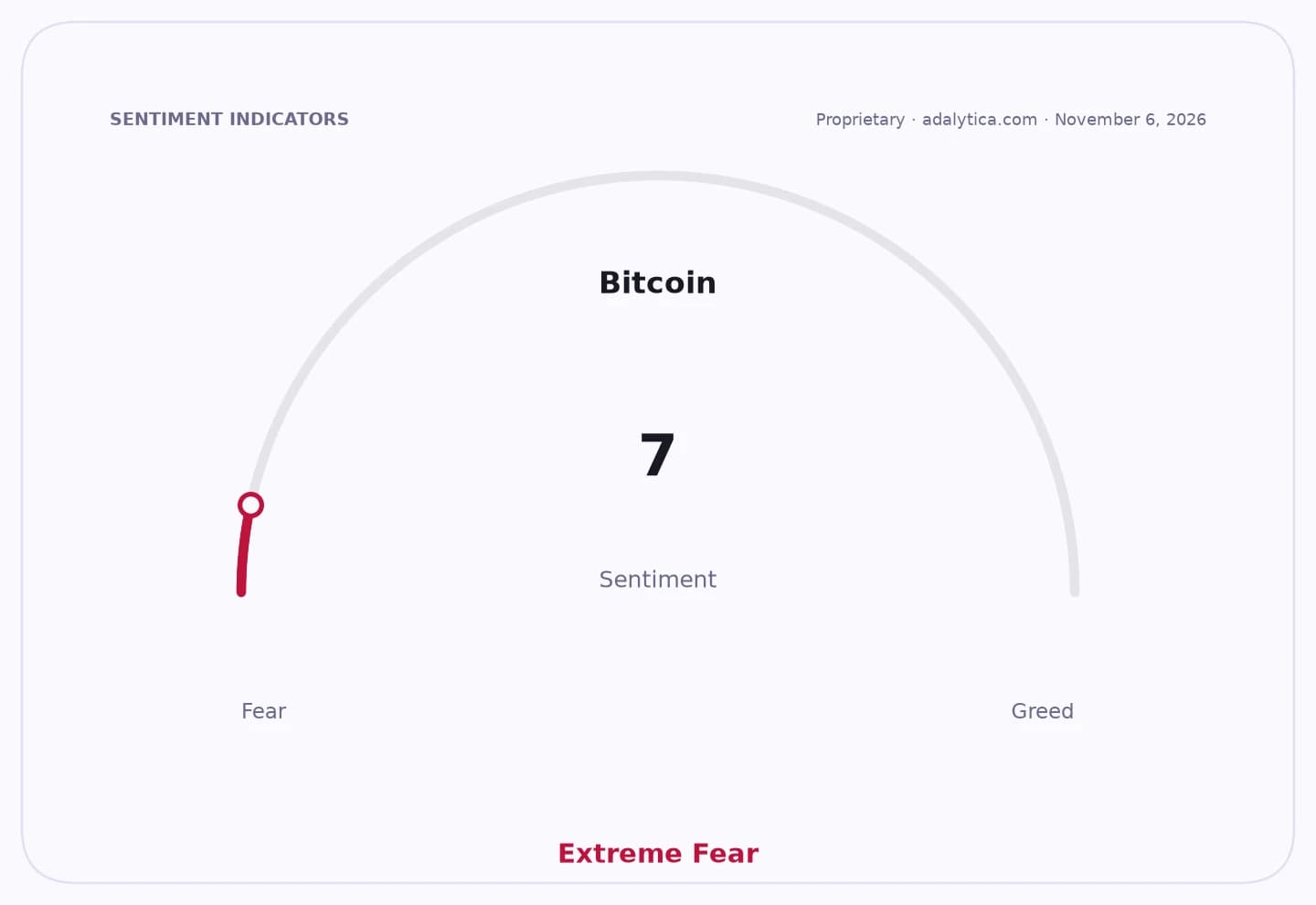
Sentiment Indicators
The market will get its first clean read on that strategy when Circle reports before the opening bell on Nov. 4. Wall Street expects adjusted earnings per share of 42 cents, but the bigger test is whether management can show that product expansion is improving the long-term earnings base rather than simply diversifying away from a maturing USDC mix. That matters because Circle’s economics depend heavily on reserve assets backing stablecoins, and any slowdown in growth or compression in yields can hit margins quickly.
Investors are also watching the stock through a more skeptical lens. Circle’s shares have been volatile, with the price around $70.57 on Nov. 5 after trading as high as $131.76 in May. Technical readings are softening, with the stock below its 50-day and 200-day moving averages and RSI readings in the mid-30s, a sign momentum has cooled ahead of the report. That doesn’t change the long-term case, but it does show expectations have become more demanding.
The broader crypto backdrop adds another layer. Coinbase, one of Circle’s most important distribution partners, said in its latest filing that average USDC held in Coinbase products hit an all-time high and that it renewed its arrangement with Circle. That is encouraging for adoption, but it also underlines how much Circle still relies on a handful of powerful partners to drive stablecoin usage. At the same time, PayPal’s expansion around PYUSD highlights how competitive the stablecoin race is becoming as more large platforms chase the same payments and settlement opportunity.
For long-term investors, the narrative is straightforward: Circle is trying to turn a high-quality stablecoin franchise into a broader digital-asset infrastructure platform. Arc could become a valuable lever if it attracts developers and creates real network effects. But for now, the most important thing is whether USDC can keep growing fast enough to support the business while Circle proves it can earn more than just spread income from reserves. If that combination comes through, the recent share weakness could look like an opportunity for patient investors. If not, the market is likely to keep treating Circle as a one-product story with a still-untested second act.
| Entity | Gains | Losses |
|---|---|---|
| Circle | ▲Arc adoption, platform diversification | ▼Margin pressure from USDC reliance |
| USDC holders/users | ▲Wider utility and ecosystem growth | ▼Lower sensitivity if growth slows |
| Coinbase | ▲Higher USDC activity on platform | ▼Dependence on Circle partnership |
| PayPal/PYUSD | ▲Stablecoin competition and market validation | ▼Harder share gains in a crowded field |