Coinbase has been fined 3.25 million euros by Ireland’s central bank after regulators said the crypto exchange failed for five years to properly calculate and protect customer funds, a reminder that compliance risk remains one of the biggest overhangs on the digital-asset industry.
Coinbase fined 3.25 million euros in Ireland
The penalty matters because Coinbase is not just another trading venue — it is one of the few large crypto companies trying to build a durable, regulated business across the U.S. and Europe. When a top-tier exchange is found to have relied too heavily on a parent group’s controls, that raises questions about whether the industry’s push for legitimacy is keeping pace with its growth. For investors, that translates into a simple but important risk: crypto revenue can rise quickly, but so can regulatory costs, reputational damage and the expense of building institutional-grade controls.
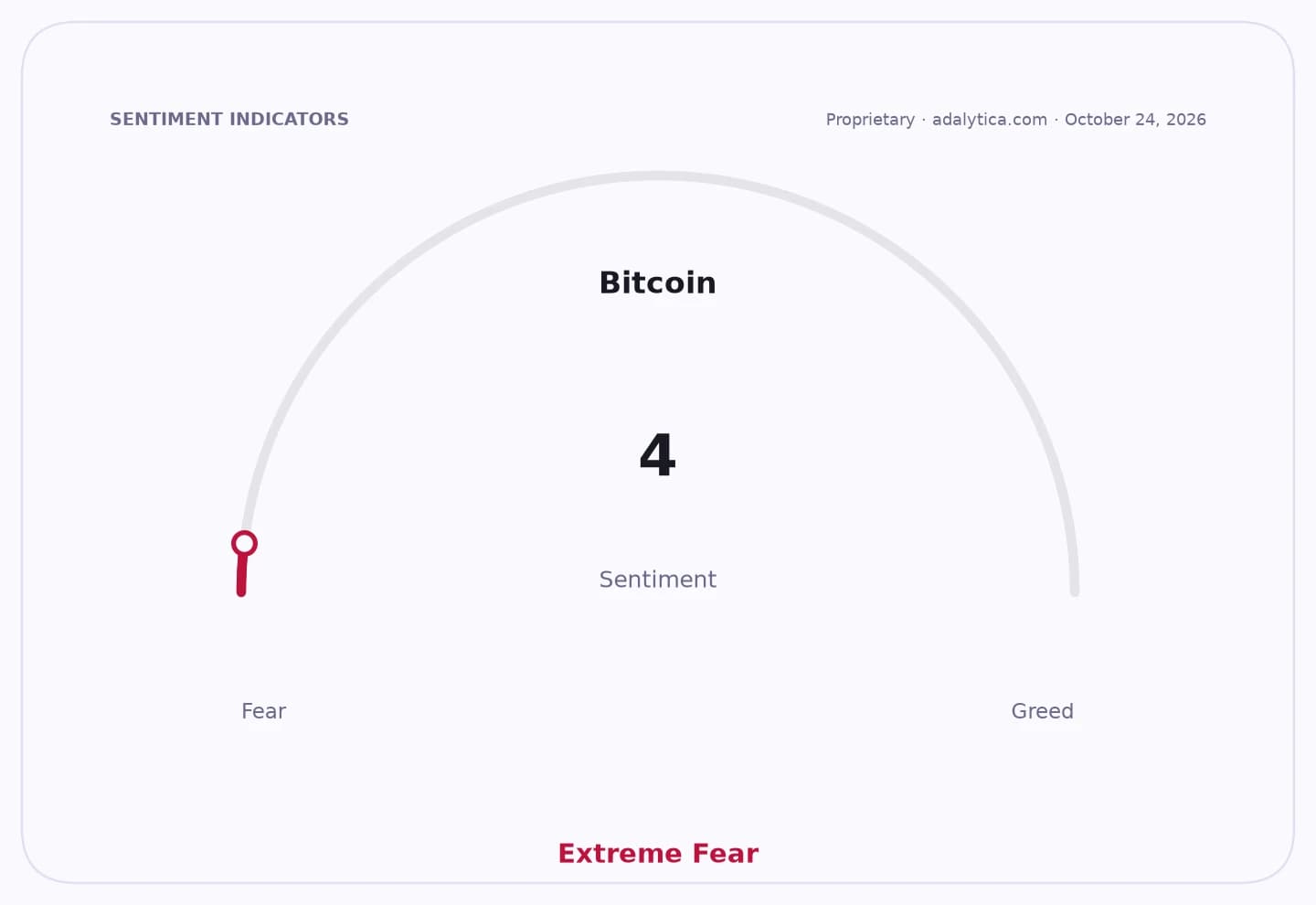
Sentiment Indicators
The Irish Central Bank said the breaches ran from November 2020 through August 2025 and involved Coinbase’s Irish entity, which is registered as an electronic money institution. Regulators said the company used accounts outside Coinbase Ireland to receive customer deposits before transferring them into safeguarding accounts, and that it did not accurately calculate or fully protect client money during the period. Coinbase said the issue caused no loss to customers and did not restrict access to funds.
The fine was cut 30% from an initial 4.65 million euros after a settlement. That discount helps, but it should not obscure the broader point: Europe is moving to tougher supervision of crypto firms just as they try to expand under the bloc’s new licensing regime. Coinbase already received a European licence in Luxembourg, so the market is effectively watching whether its compliance framework can support a larger, cross-border operation without repeated enforcement actions.
For long-term investors, the story is less about one fine and more about the business model Coinbase is trying to build. Exchanges with credible compliance records are more likely to win institutional custody, stablecoin, and trading flows. But every regulatory misstep makes that path harder, especially in a sector where trust is the product. Coinbase remains a beneficiary of the industry’s maturation, yet its valuation and growth case depend on proving it can scale without recurring lapses in oversight.
The key takeaway is that crypto’s winners will not just be the companies with the most users or the biggest volumes, but the ones that can survive and adapt to stricter global rules. Coinbase still has that opportunity, but investors should expect regulation to remain a permanent cost of doing business — and a recurring test of management execution.
| Entity | Gains | Losses |
|---|---|---|
| Coinbase | ▲Keeps customer assets intact | ▼Pays fine and takes reputational hit |
| Irish Central Bank | ▲Proves enforcement muscle | ▼Must keep policing crypto firms |
| Long-term Coinbase investors | ▲Closer scrutiny may force better controls | ▼More compliance costs and headline risk |
| Crypto industry | ▲Higher standards could build trust | ▼Tighter oversight and higher operating costs |