Crypto trading is entering a harder, more selective phase, and that makes the broker set more important than the coin itself.
Interactive Brokers, Coinbase, Schwab in Crypto Selloff
Bitcoin
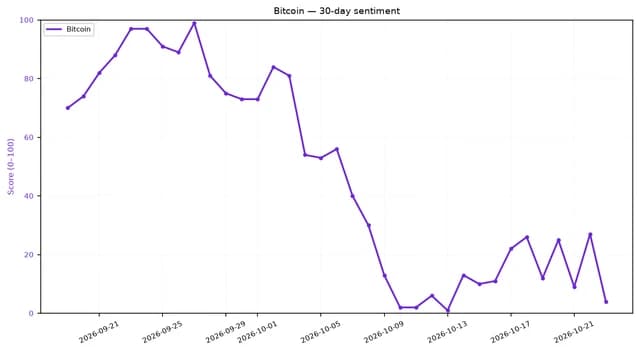
With Bitcoin sinking into “extreme fear” on Adalytica’s gauge and broader risk appetite collapsing, the real question for investors is no longer who offers the flashiest app, but which brokers can keep trading costs low, execution reliable and regulatory risk contained when volatility spikes. That shift matters because crypto trading volumes tend to migrate quickly toward platforms that can absorb stress, while weaker venues lose flow just when customers are most active.
Sentiment Indicators
Interactive Brokers, Coinbase and Charles Schwab are all positioned to capture different slices of that demand. IBKR’s stock has remained above both its 50-day and 200-day moving averages, even after a recent pullback, a sign the market still assigns value to its low-cost, multi-asset platform and global reach. Coinbase, by contrast, has been hit harder, sliding below both key moving averages as traders punish crypto-exposed names amid the selloff. Schwab has also weakened, with its shares trading under the 50-day and 200-day averages as investors reassess how much incremental crypto activity really lands in traditional brokerage channels.
That divergence is the story. In a market where Bitcoin sentiment has fallen to 4 out of 100 and the S&P 500 is flashing extreme fear, the brokers that win are not necessarily the ones most closely tied to the hype cycle. They are the firms with scale, compliance muscle and the ability to serve both active traders and long-term allocators when fear pushes customers to hedge, rebalance or simply wait. That is why crypto trading is becoming less of a speculative side bet and more of a strategic capability inside full-service brokerage.
The investment case is straightforward: if crypto remains a volatile but persistent asset class, then the highest-quality brokers can turn that churn into recurring activity, margin balances and cross-sold products. Coinbase offers the most direct beta to crypto volume, but it also carries the most obvious downside when sentiment turns. IBKR looks like the cleaner infrastructure play, while Schwab is more of a distribution and wallet-to-brokerage story than a pure crypto proxy. For investors, the opportunity is to favor the platforms that can monetize the asset class without depending on euphoria.
Security and regulation only reinforce that view. Fresh reports of exchange thefts, compliance pressure in Asia and tighter oversight across jurisdictions are exactly the kind of developments that push users toward larger, better-capitalized brokers. The market underestimates how often trust, not just token prices, determines where trading flow ends up.
My takeaway: if you want exposure to crypto trading, don’t chase the most speculative venue after a selloff. Own the brokers with the balance sheets, compliance systems and customer reach to survive the next washout and capture the next rebound.
| Entity | Gains | Losses |
|---|---|---|
| Interactive Brokers | ▲Flight to quality flow | ▼Riskier crypto-only venues |
| Coinbase | ▲Direct trading volumes | ▼Weak sentiment, fee pressure |
| Charles Schwab | ▲Existing customer base | ▼Pure crypto specialists |
| Bitcoin traders | ▲Better execution options | ▼Smaller, less trusted exchanges |