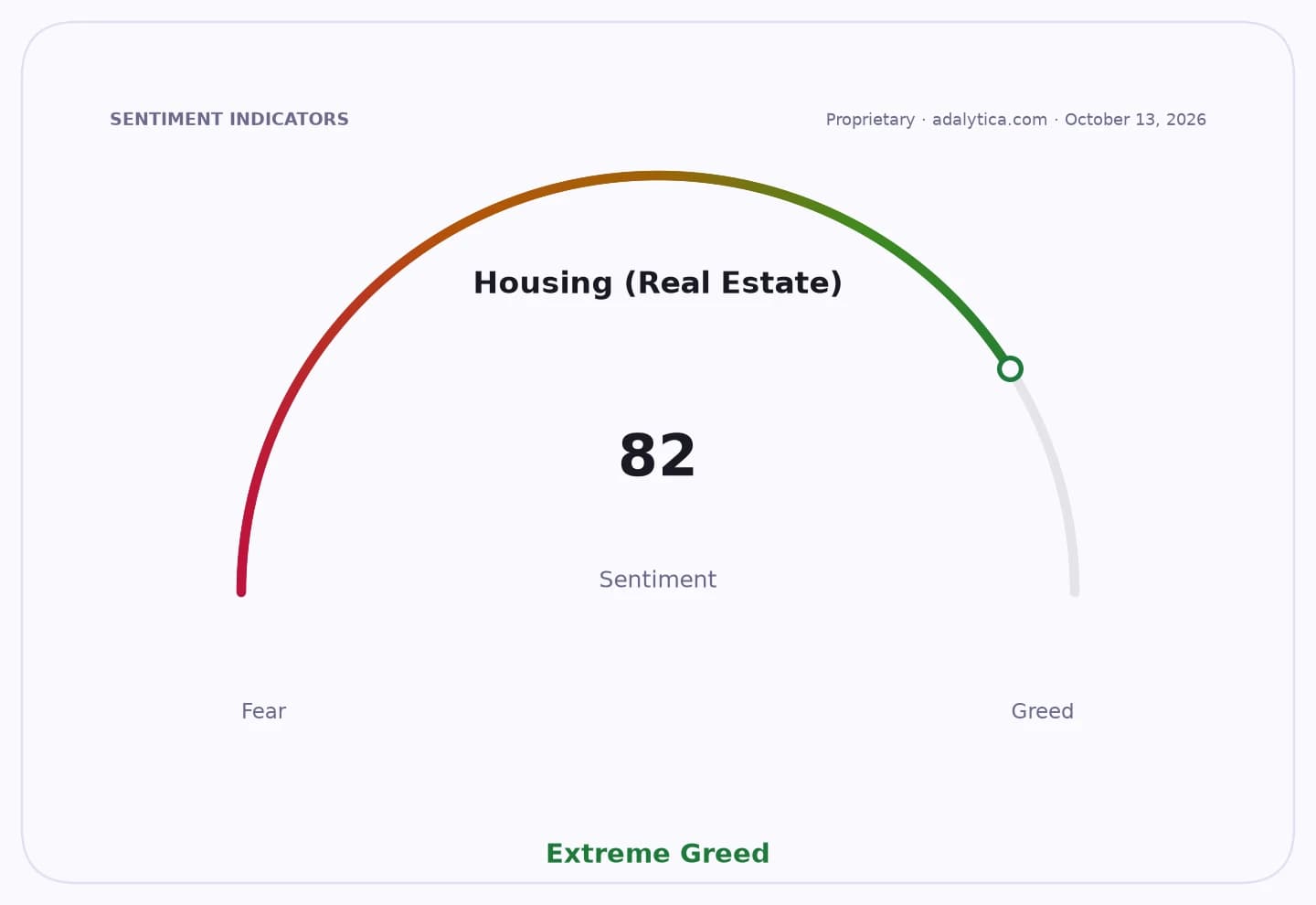
New housing launches are giving buyers more ways to own property, from tourism-focused apartments in Santa Marta to lower-cost VIS homes near Bucaramanga, as Colombia’s developers lean on smaller units, shared amenities and staggered delivery dates to keep demand moving.
Colombia Housing Projects Target Buyers and Investors
That matters because housing has become both a shelter market and a capital-allocation decision. In a period when families are still weighing affordability against rising living costs, developers are packaging projects to appeal to end users and investors at the same time. For buyers, that expands the menu of entry points. For builders, it helps clear inventory and support cash flow without relying on a single type of customer.
Sentiment IndicatorsⓘProprietary · adalytica.com · October 19, 2026
This is a snapshot — live sentiment, awareness and momentum for 130+ markets update continuously in the dashboard.Open AlphaPulse

The clearest example is NAKUA in Don Jaca, Santa Marta, where Connecta Ingeniería is pitching 29.12-square-meter units from 170 million pesos as both a personal-use home and a short-term rental play. The project’s location near the airport and the city’s Caribbean tourism corridor is meant to capture investors who want income-producing real estate rather than a traditional family apartment. Amenities such as coworking, a cine bar, pools and jacuzzis are part of that strategy, underscoring how residential projects increasingly compete on lifestyle and rental potential, not just square footage.
In the Bucaramanga metropolitan area, the logic is different but the same investment theme runs through it. Lagos del Mardel Etapa 2 in Floridablanca, priced from 371.526 million pesos, targets non-VIS buyers with 63.9-square-meter apartments and a more conventional residential pitch: natural light, ventilation, family-friendly layouts and proximity to schools, transport and retail. Meanwhile, Ciudadela Verde on the Bucaramanga–Girón corridor and Palmeras de la Cuesta in Piedecuesta widen access with VIS offerings starting at 225 million pesos and 154.8 million pesos, respectively. One offers immediate and scheduled deliveries out to 2027 and 2028; the other gives buyers the option of finished or unfinished units.

For investors, the important point is that Colombia’s housing market is segmenting rather than disappearing. Projects aimed at tourism income, middle-income buyers and VIS households are all being marketed at the same time, which tells you developers are trying to match different pockets of demand instead of betting on a single cycle. That is healthy for the sector because it reduces dependence on one buyer profile and gives builders more ways to sell through inventory in a choppy market.
The broader backdrop still matters. U.S. housing and rent inflation remain elevated enough to keep real estate on investors’ radar, while REIT exchange-traded funds have been volatile this year, reflecting uncertainty about rates and property valuations. In that kind of environment, developers with clear locations, flexible unit sizes and credible delivery schedules are better positioned than generic projects hoping demand simply shows up.
For long-term investors, the takeaway is straightforward: the housing story is not just about buying a roof over your head. It is about where demand is durable, which projects can generate cash flow, and whether the market is rewarding practical, well-located developments over speculative ones. That makes this wave of mixed housing and investment offerings worth watching.
| Entity | Gains | Losses |
|---|---|---|
| Developers | ▲Broader buyer pool | ▼Margin pressure from competition |
| Tourism-focused buyers | ▲Rental income potential | ▼Vacancy and seasonal risk |
| VIS and mid-income buyers | ▲More housing options | ▼Fewer ultra-cheap choices |
| Traditional landlords | ▲More property supply | ▼Pricing power and scarcity premium |