Colombia’s inflation rebound is likely to lift the starting point for 2027 minimum wage talks, with a 7% increase emerging as the base case and the risk of a larger adjustment if prices keep rising into year-end.
Colombia minimum wage talks may start at 7%

That matters because the wage floor in Latin America’s fourth-largest economy is set through a highly sensitive negotiation that affects millions of workers, consumer demand, business costs and the government’s broader anti-inflation stance. The latest data from Colombia’s statistics agency, DANE, showed annual inflation rose again to 6.29%, while year-to-date consumer prices reached 5.74%, keeping the government, employers and unions on track for a more contentious round of wage-setting later this year.
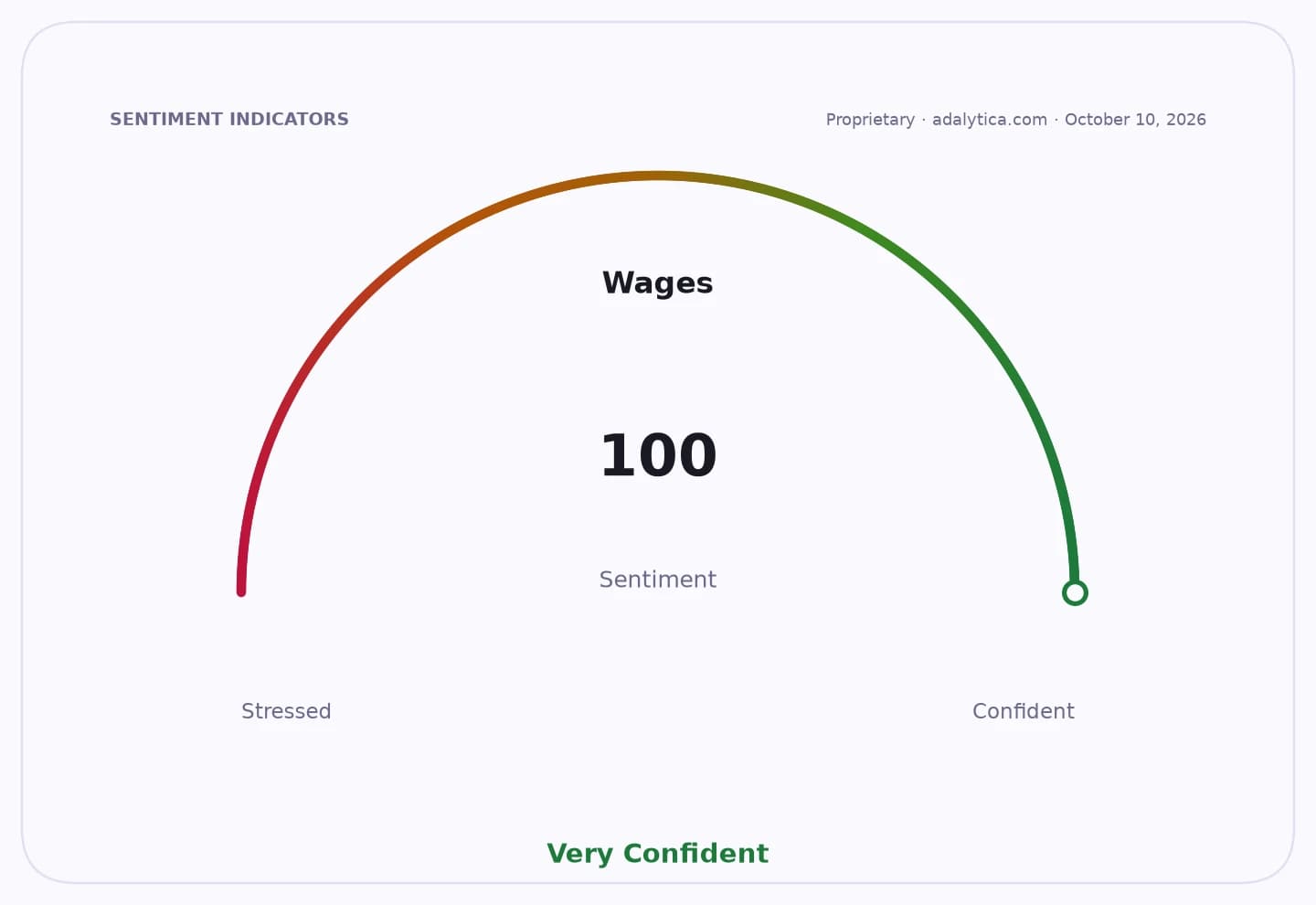
Sentiment IndicatorsⓘProprietary · adalytica.com · October 10, 2026
This is a snapshot — live sentiment, awareness and momentum for 130+ markets update continuously in the dashboard.Open AlphaPulse
Analysts cited in the local report say the 7% figure is the likely opening reference point for the salary discussion, assuming no fresh shock pushes inflation higher. Under the De la Espriella administration, the wage debate is expected to follow technical criteria rather than political bargaining alone, with the adjustment capped in principle by the sum of inflation and labor productivity.
That framework matters for investors because Colombia’s minimum wage is a key transmission mechanism for inflation expectations. A higher-than-expected increase would feed directly into payroll costs for retailers, service companies, restaurants and informal-sector-linked businesses, while also lifting the nominal income of lower-paid households, which could support consumption in the short term. The trade-off is familiar: stronger household spending versus stickier price pressures and weaker margins for labor-intensive firms.
The risks tilt to the upside. El Niño is seen as the main inflation wildcard, especially for food prices and regulated utility tariffs. Those categories tend to carry outsized political and social weight in Colombia and could force unions to press for a bigger wage increase if purchasing power erodes further before the formal talks begin.
There is also a scenario in which the final adjustment could approach 10% if policymakers decide to lean harder on restoring real wages and if food inflation stays elevated. That would be materially above current inflation and would likely trigger pushback from business groups worried about second-round effects on costs and hiring, particularly in a labor market where formal-sector margins are already tight.
The first meetings of the wage-setting commission are expected to begin at the end of November, when more concrete proposals should emerge. For markets, the key question is whether Colombia’s next minimum wage settlement reinforces price stability or adds another layer of inflation pressure heading into 2027.
| Entity | Gains | Losses |
|---|---|---|
| Low-wage workers | ▲Higher nominal pay | ▼If inflation outpaces the raise |
| Consumers | ▲Stronger household spending | ▼Higher prices for goods and services |
| Businesses | ▲Clearer wage-setting rules | ▼Higher payroll costs |
| Government | ▲Technical wage framework | ▼Pressure if inflation accelerates |