Colombia’s finance ministry is preparing to launch its first tokenized sovereign bond, a move that could broaden the investor base, improve liquidity in the country’s public debt market and lower funding costs over time.
Colombia plans first tokenized sovereign bond
The bigger story is not the blockchain label itself, but what it says about Colombia’s effort to make its government bond market more efficient and more investable. For a country that relies on steady access to domestic and international financing, even modest gains in market depth and trading efficiency can matter for fiscal flexibility and for the price the government pays to borrow.
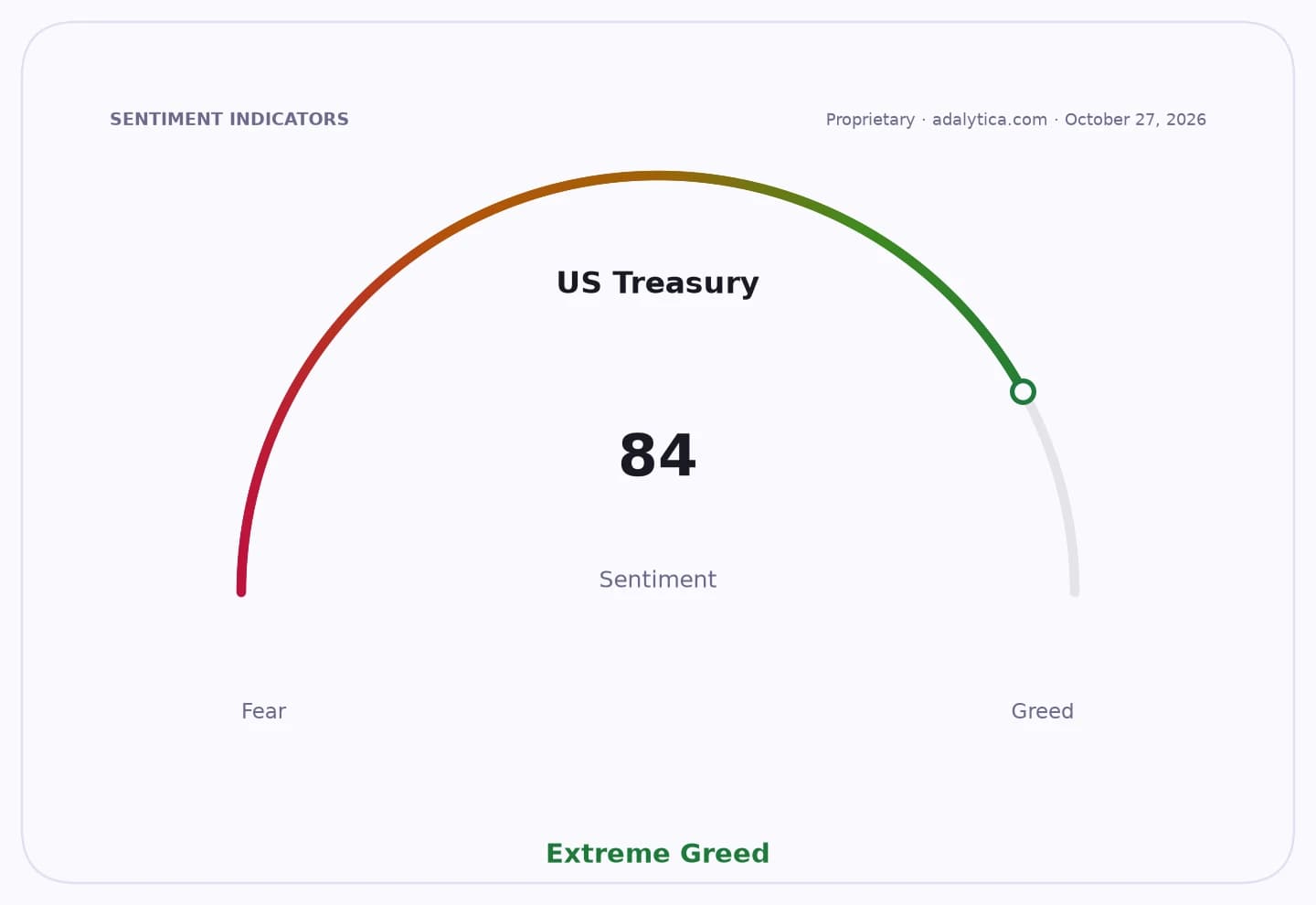
Sentiment Indicators
The Ministry of Finance said the plan rests on three measures: diversifying the investor base, changing how the 13 market makers are ranked and testing a sovereign bond registered digitally through blockchain. The ministry said the program is designed to improve competitiveness, transparency and liquidity, while reducing intermediation costs and opening the market more widely to retail and institutional investors.
That investor diversification already has some momentum. The ministry said foreign investment in TES, Colombia’s local sovereign bonds, reached a record 10 trillion pesos in October. It also highlighted a recent $5.2 billion global bond sale that drew participation from a broad mix of investors across regions, with banks, brokerages, pension funds and insurers making up 10% of the buyers. For investors, that is an important sign that demand for Colombian debt remains broad enough to support new market infrastructure.
The market-maker overhaul is the other key plank. Colombia plans to add two criteria to the ranking system for the 13 firms that place and distribute government debt: participation in TES debt exchanges and trading in short-term Treasury bills, known as TCO. In practice, that should reward firms that help keep the market active in both longer-dated bonds and the short-end of the curve, where liquidity often matters most.
The tokenized bond pilot is the most eye-catching part of the plan, but its real significance lies in whether it can make sovereign issuance cheaper and faster rather than simply more novel. Tokenization could, in theory, make settlement and recordkeeping more efficient while giving the government a new tool to attract smaller investors. Hong Kong has issued tokenized sovereign debt since 2023, giving Colombia a working reference point rather than a blank slate.
For investors, the implications go beyond one pilot. A deeper, more transparent sovereign market can support tighter financing spreads, improve secondary-market trading and strengthen the benchmark curve used by banks, pension funds and asset managers to price other Colombian debt. If the government can widen participation and boost turnover, that is typically supportive for bondholders and for the sovereign’s funding profile.
The timing also matters. Colombia is trying to maintain market confidence while navigating fiscal pressure and a still-active borrowing program. Steps that improve demand and trading conditions could help absorb issuance more smoothly, especially if global risk appetite wobbles. Even in a world where U.S. Treasury yields and the dollar remain powerful forces, local market structure still counts.
For long-term investors, this is best viewed as an institutional upgrade story rather than a short-term trading catalyst. If the pilot works, Colombia could end up with a more modern sovereign debt market and a wider pool of buyers. That is the kind of change that tends to compound quietly over years, not days, and it is worth watching closely.
| Entity | Gains | Losses |
|---|---|---|
| Colombia government | ▲Broader demand, lower borrowing costs | ▼Higher execution risk |
| Foreign and local investors | ▲More access, better liquidity | ▼Adjustment to new trading structure |
| Market makers | ▲Clearer incentives for active trading | ▼Tougher ranking criteria |
| Traditional bond market intermediaries | ▲Efficiency gains | ▼Fee pressure from disintermediation |