China’s return to the dollar bond market drew strong orders for a $2 billion sale that was priced broadly in line with US Treasuries, underscoring that global investors are still willing to fund Beijing even as borrowing costs stay elevated and geopolitics remain tense.
China dollar bond sale draws strong demand

The deal matters because it shows China can still access offshore dollar funding at a time when US rates are keeping the benchmark for global borrowing near multi-year highs. The 10-year Treasury yield is holding above 5%, while the two-year note remains elevated after traders priced in the possibility of tighter Federal Reserve policy. Against that backdrop, pricing a sovereign deal close to US government debt suggests investors are demanding relatively little additional spread for China’s credit risk, at least in the size and tenor offered.
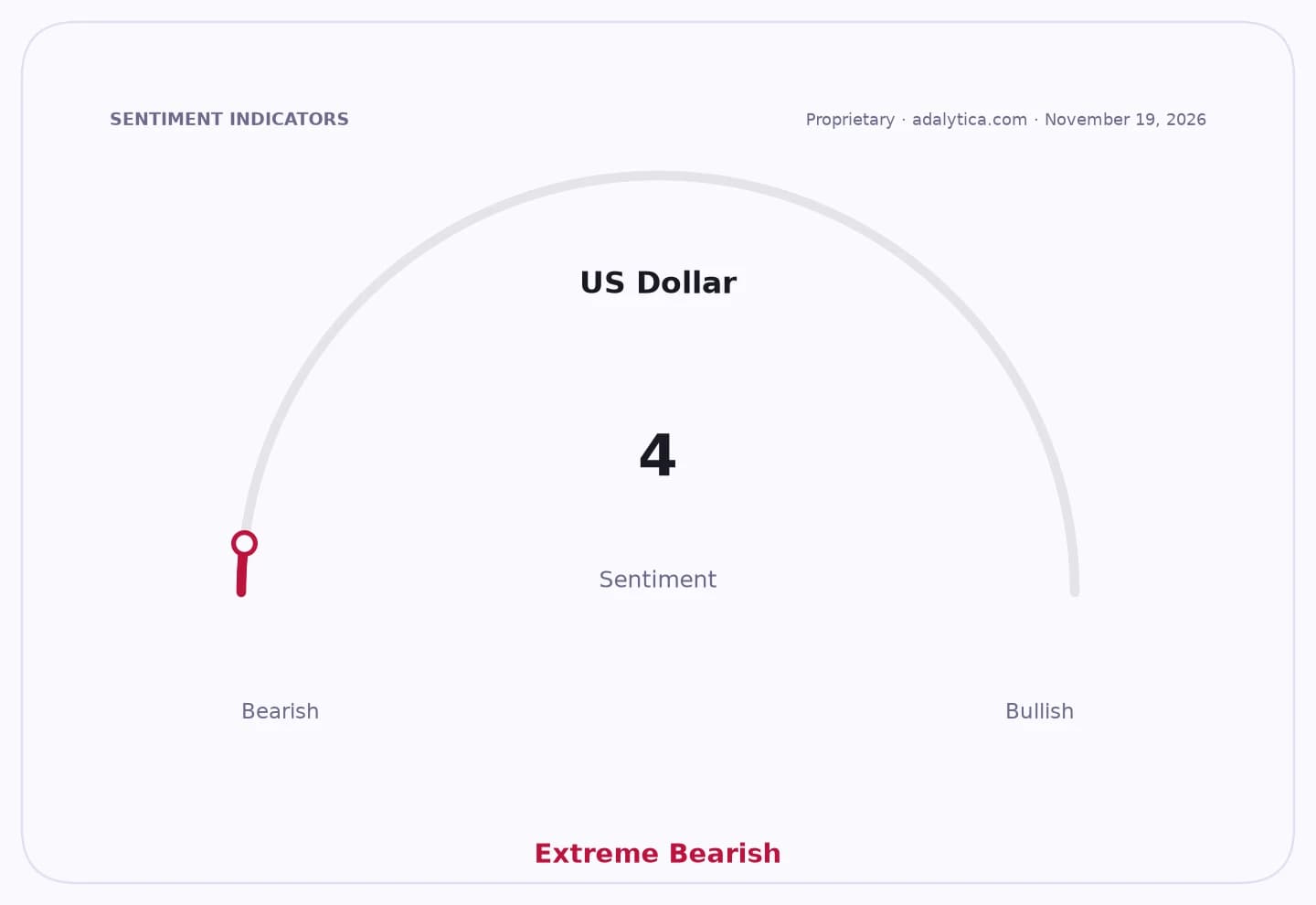
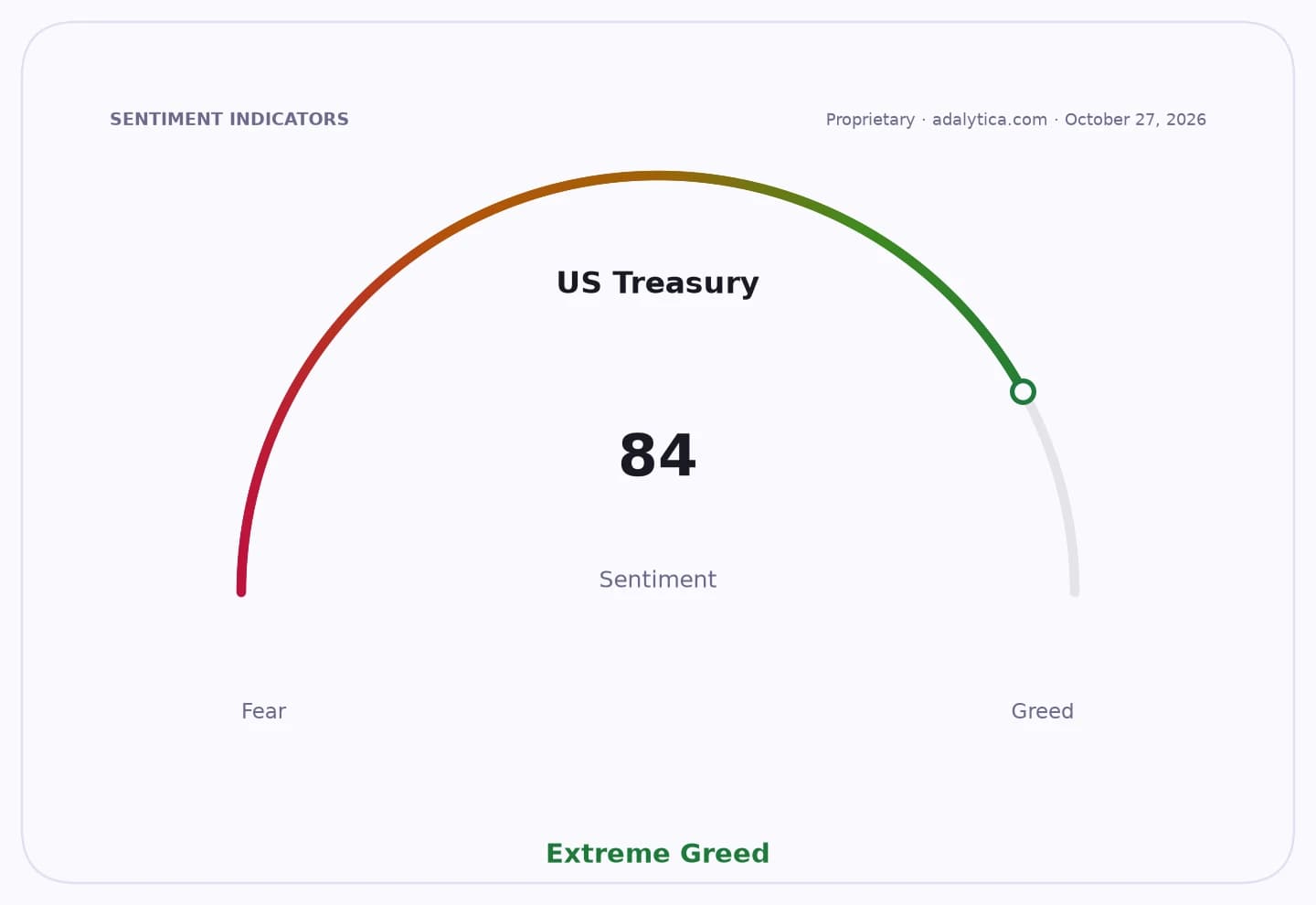
Sentiment Indicators
That demand is notable for both macro and market reasons. For China, the transaction helps diversify funding and reinforces the country’s ability to tap international capital markets despite slower growth, a weak property sector and lingering concerns over official policy support. For global bond investors, it offers a liquid sovereign alternative that still carries the implied backstop of a large reserve economy, even as many portfolios remain underweight China risk because of regulatory, trade and political uncertainty.
The comparison with US Treasuries also highlights a shift in the pricing environment. In a world where the Federal Reserve is not yet clearly done tightening, dollar issuers face a higher base cost of capital. That typically filters through to emerging-market sovereigns and corporates alike, raising the bar for new issuance and favoring borrowers with stronger market access. Heavy order books on China’s sale suggest that, for now, investors are still willing to absorb size when the pricing is close enough to benchmark US debt.
The message for investors is less about enthusiasm for China and more about the persistence of yield hunger and benchmark discipline. If the deal clears with tight spreads, it could support broader expectations that Asian sovereign and quasi-sovereign borrowers can still print paper, though likely only if they accept pricing that reflects the higher-rate regime. Any renewed rise in US yields would quickly tighten conditions again and force borrowers to pay up.
For now, the takeaway is straightforward: China remains a credible borrower in dollar markets, and investors are still buying, but only within a rates environment that keeps global funding costs anchored to the Federal Reserve.
| Entity | Gains | Losses |
|---|---|---|
| China | ▲Cheaper offshore funding | ▼Less pricing flexibility |
| Global bond investors | ▲Access to sovereign yield | ▼Higher duration risk |
| US Treasuries | ▲Benchmark status reinforced | ▼Demand pressure from new supply |
| Other dollar borrowers | ▲Pricing reference point | ▼Tighter spread expectations |