Red is covering the commodity market, and the biggest message for investors is simple: higher U.S. yields and a stronger dollar are squeezing metals first, but the pressure is rippling across the wider complex.
Commodities Fall on Higher Yields and Stronger Dollar
The MXV-Index, Vietnam’s commodity benchmark, fell 2.81% as the metals group led the retreat, with both precious and base metals under heavy selling. That matters because commodities are not moving in isolation here — the same bond-market shock that pushed U.S. Treasury yields to multiyear highs is making non-yielding assets less attractive and tightening financial conditions around the world.
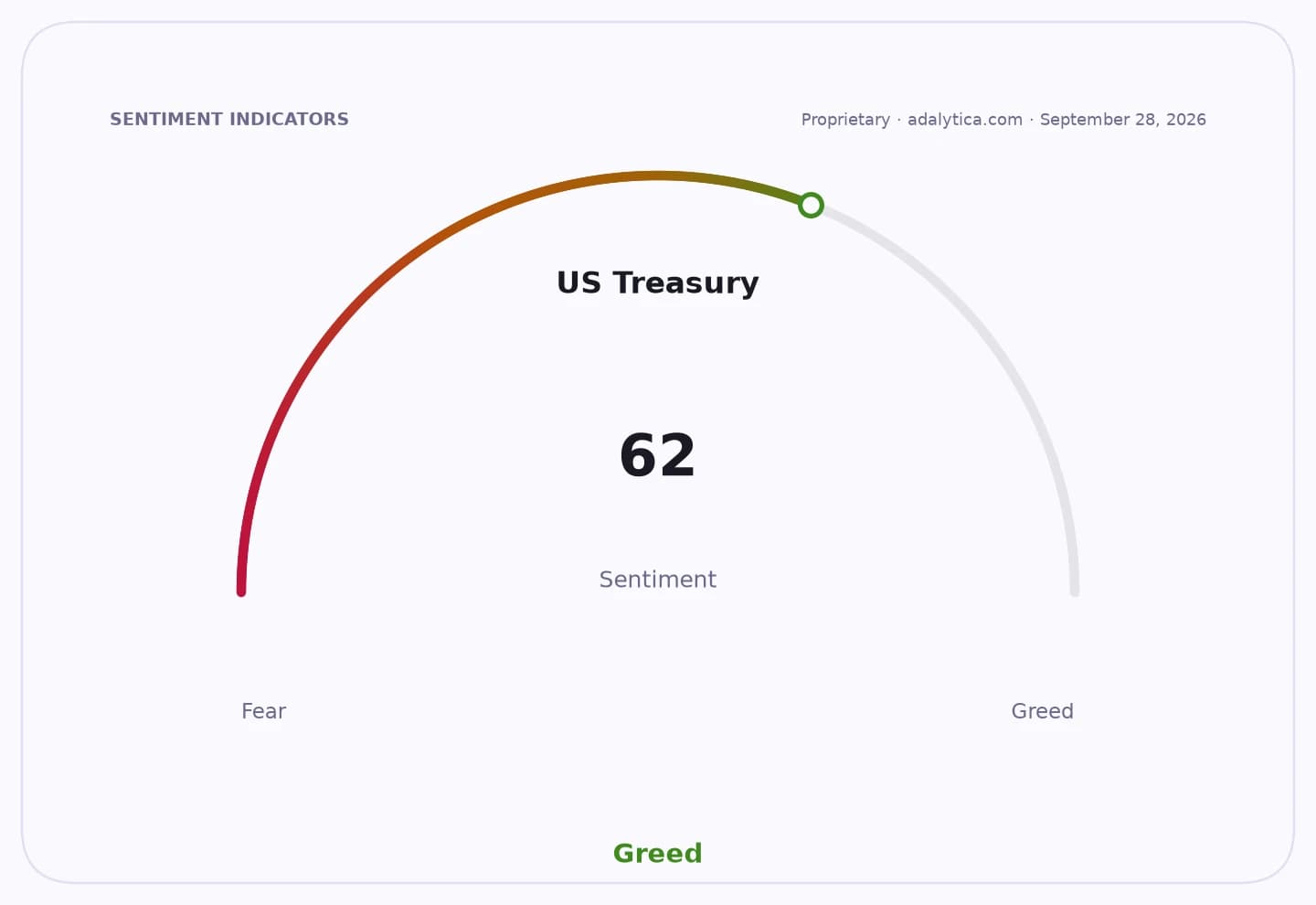
Sentiment IndicatorsⓘProprietary · adalytica.com · October 5, 2026
This is a snapshot — live sentiment, awareness and momentum for 130+ markets update continuously in the dashboard.Open AlphaPulse
Silver was the hardest hit in the metals pack, dropping 6.77% for the week, while platinum slid 5.45% and copper lost 3.21%. The common denominator was a surging dollar and rising yields, with the U.S. 10-year Treasury briefly topping 5.3%, its highest level since 2007, and the 30-year reaching 5.62%, a level not seen since 2002. When cash and bonds start offering more return, it becomes harder for metals to justify rich valuations unless industrial demand or safe-haven buying is powerful enough to offset the drag.
Gold and silver are especially exposed in this environment because they do not pay interest, so the higher the risk-free rate, the steeper the opportunity cost of holding them. That is why the Dollar Index’s third straight weekly gain mattered so much. It was not just a currency story; it was a direct hit to commodities priced in dollars, making them more expensive for buyers outside the United States.
Platinum’s decline has an extra layer that long-term investors should watch. The World Platinum Investment Council sees the market moving toward a 265,000-ounce surplus in 2026, driven by steady mine supply, more recycling and weaker investment demand. Industrial demand is still expected to grow, and future uses tied to advanced manufacturing and AI infrastructure could support the metal over time, but for now the market is telling a more cautious story about near-term pricing power.
Corn also joined the selloff, and here the catalyst was more fundamental than macro. December corn on the CBOT dropped 5.8% for the week after the U.S. Department of Agriculture reported Sept. 1 stocks at 2.10 billion bushels, well above market expectations of about 1.92 billion. That is a classic supply shock: when inventories come in far larger than traders expected, prices have to adjust quickly.
The corn market is now staring at a familiar tug-of-war between abundant supply and solid demand. Harvest is progressing at a normal pace, weather has been favorable, and private forecasters are already talking about a bigger crop if yields come in above USDA estimates. At the same time, export demand has held up, ethanol use remains significant and Mexico continues to buy U.S. corn. The next major test is the USDA’s October WASDE report, which could force another reset of supply and demand assumptions.
For investors, the larger takeaway is that this is not just a short-term price dip in one commodity. It is what happens when macro stress, higher real yields and stronger dollar conditions collide with specific supply-side surprises. That combination is rarely friendly to commodity funds, producers or any portfolio leaning too heavily on inflation hedges.
Longer term, commodities still matter as a diversification tool, especially for investors building patient portfolios across cycles. But this week’s move is a reminder that even “real assets” can trade like risk assets when bond markets are in charge. For now, the selloff in metals and corn is worth watching, not fighting blindly.
| Entity | Gains | Losses |
|---|---|---|
| U.S. dollar | ▲Stronger pricing power | ▼Commodity importers |
| U.S. Treasury yields | ▲Higher returns for bond buyers | ▼Gold and silver holders |
| Commodity consumers | ▲Lower input costs | ▼Metals and grain producers |
| Long-term diversified investors | ▲Better entry points | ▼Concentrated commodity bets |