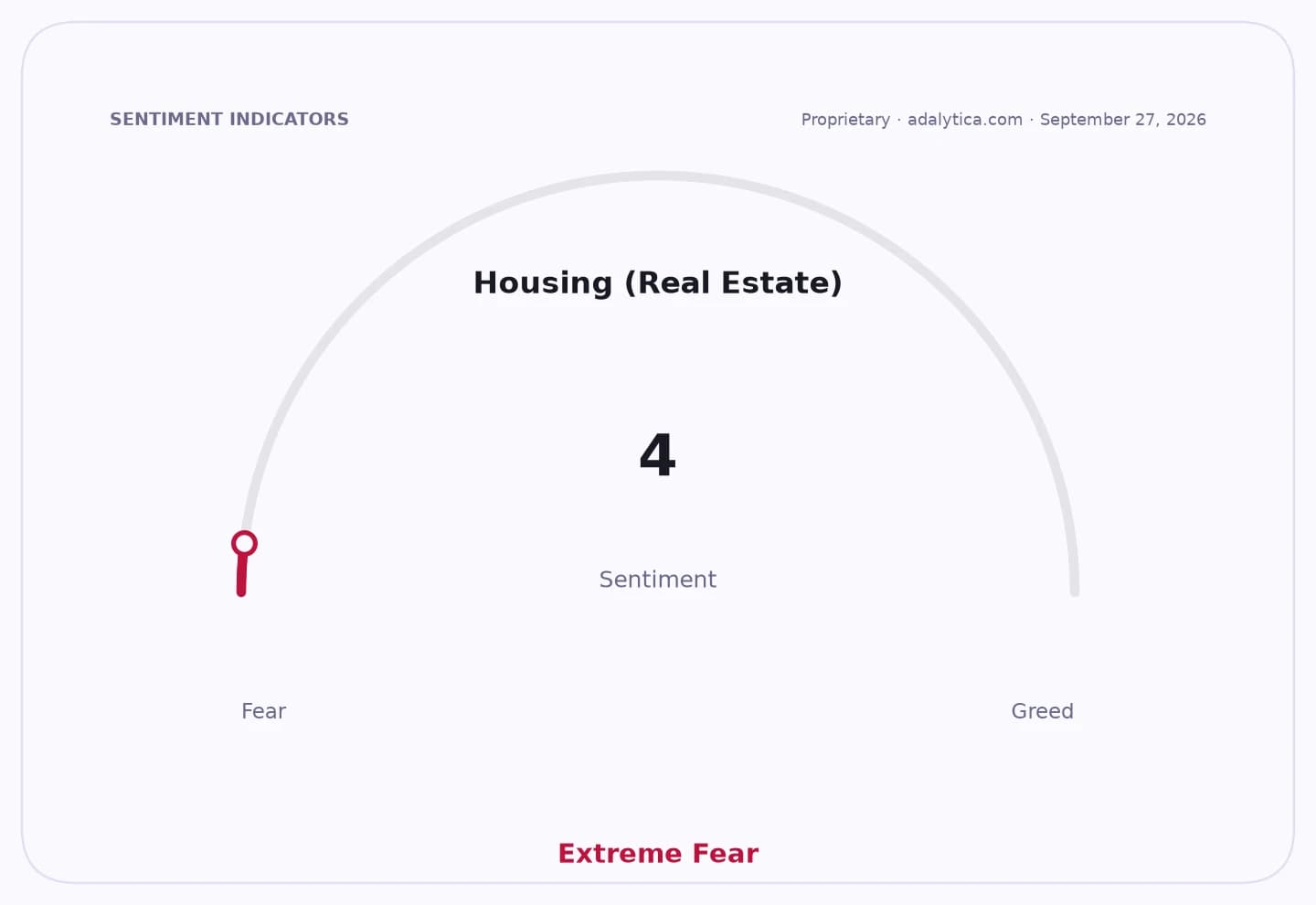
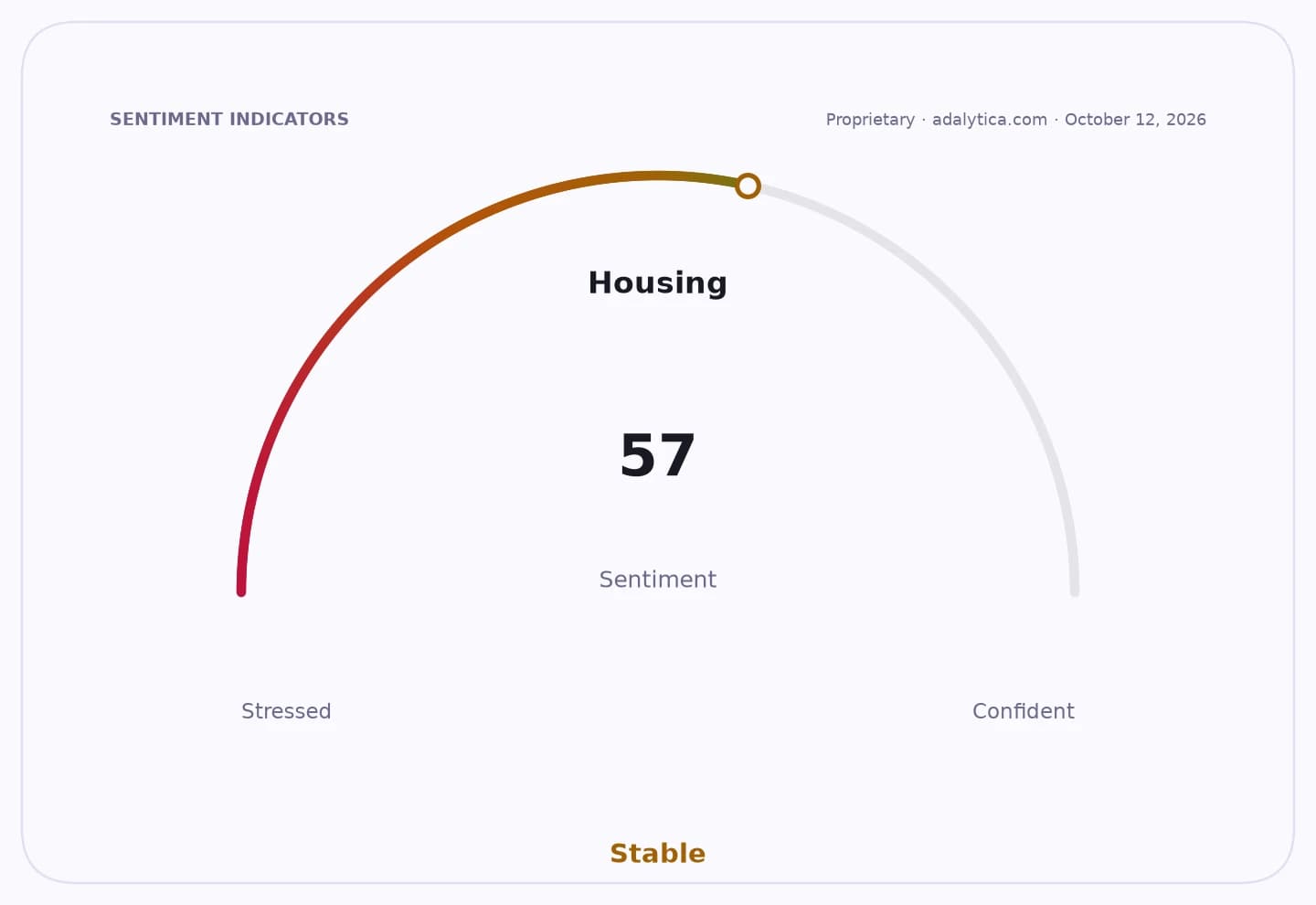
Concepción’s housing shortage just gained a new flashpoint as the Biobío environmental commission approved a US$30.7 million social housing project beside the Paicaví Wetland, setting up a test of how far Chile will push emergency housing construction before environmental concerns force a reset.
Concepción social housing project approved near wetland
The decision matters because it pits two public priorities against each other: accelerating low-income housing supply in the Biobío region and preserving a protected wetland ecosystem that neighbors and environmental groups say could be damaged by denser settlement around its perimeter. With the regional housing deficit still politically sensitive, the approval underscores how land-use decisions are increasingly shaping the pace and cost of social housing delivery, not just in Concepción but across Chile’s urban corridors.
Sentiment IndicatorsⓘProprietary · adalytica.com · October 7, 2026
This is a snapshot — live sentiment, awareness and momentum for 130+ markets update continuously in the dashboard.Open AlphaPulse
The project, called Parque Solidario Sandra Oliva I and II, was filed in December 2024 and will be built on 3.4 hectares at Fundo Laguna Redonda. It will be developed in three sequential stages, each lasting 20 months, and ultimately comprise 13 five-story towers with 500 apartments, 424 parking spaces, commercial units and green areas. It is being advanced under the Fondo Solidario de Elección de Vivienda program, part of the regional emergency housing plan.
Its approval was not straightforward. The environmental service paused the review this year to request technical clarifications on groundwater management, flood risk and protection of local wildlife, including the coipo. That detail is important for investors and policymakers alike: it shows that even projects tied to social policy face rising compliance and engineering hurdles when they are near sensitive ecosystems, adding execution risk, possible delays and potential legal challenges.
For the broader housing market, the ruling is a reminder that supply-side relief may increasingly depend on whether developers can secure permissions on politically and environmentally contested land. If the project proceeds as approved, it could help expand social housing stock in a region where demand remains acute. But if opposition intensifies, it may also become a template for more expensive mitigation requirements, narrowing margins for developers and raising the bar for future developments near wetlands and other protected areas.
The key question now is whether the project’s public-benefit case outweighs the ecological objections in practice. The answer will matter well beyond one neighborhood in Concepción: it will help define how Chile balances housing urgency with environmental safeguards, and how much that balance costs in time, capital and political capital.
| Entity | Gains | Losses |
|---|---|---|
| Credyhogar / project sponsor | ▲Approval momentum | ▼Higher scrutiny |
| Low-income homebuyers | ▲New housing supply | ▼Potential delays |
| Concepción housing agenda | ▲Faster construction pipeline | ▼Environmental conflict |
| Paicaví Wetland defenders | ▲None | ▼Development pressure |