U.S. consumer confidence rose to its highest level since February in July, a meaningful sign that households are still willing to spend even as inflation remains a nagging concern and businesses stay cautious.
Consumer Confidence Rebounds, Favoring Discretionary Stocks

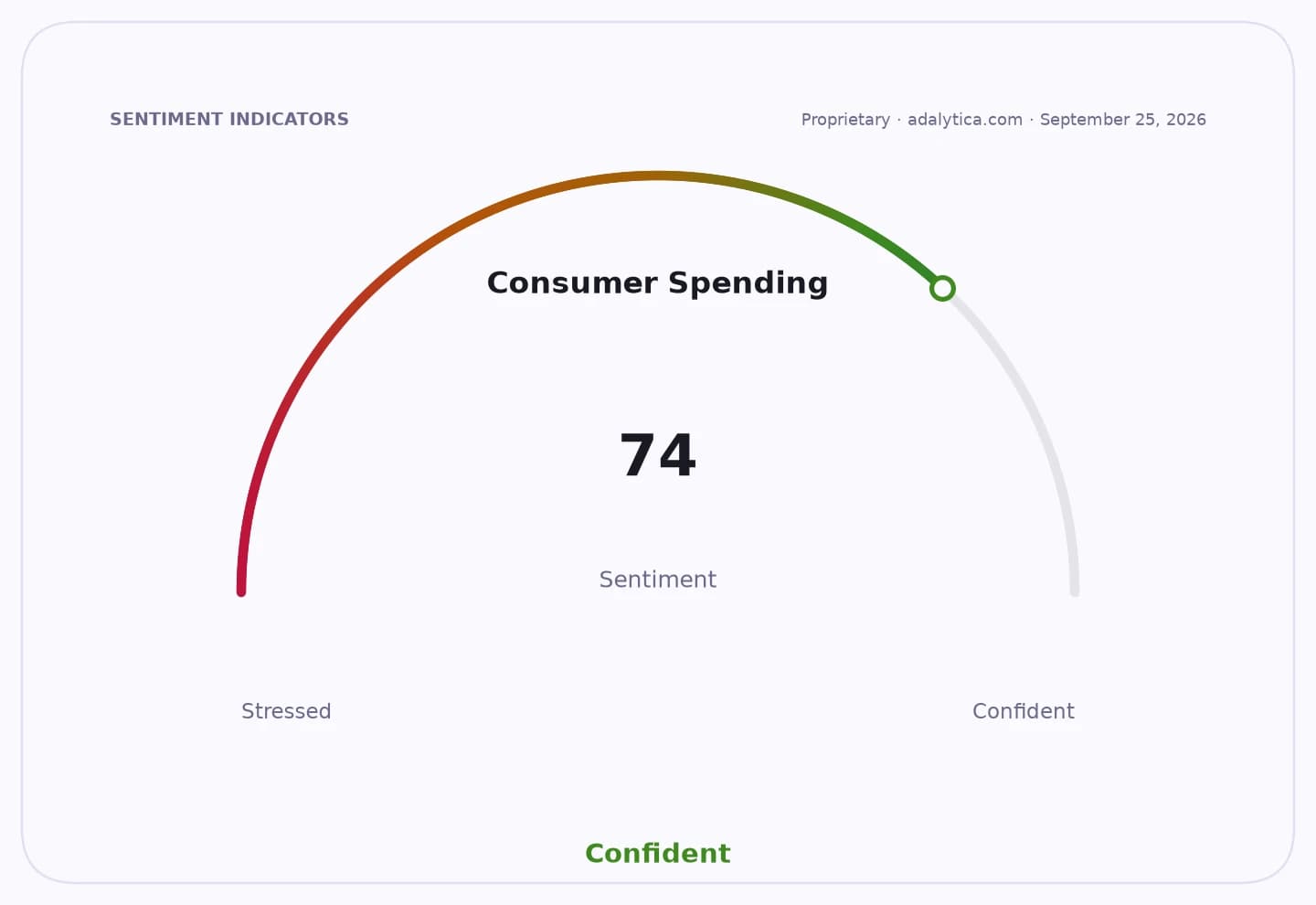
That matters because consumer attitudes are one of the clearest early signals for the U.S. economy, which still leans heavily on household demand. The Michigan consumer sentiment index climbed to 54.4, up from recent lows, while longer-run expectations also improved. The message for markets is that the consumer is not rolling over, even after a period of weak confidence and stubborn price pressures.
Sentiment IndicatorsⓘProprietary · adalytica.com · July 20, 2026
This is a snapshot — live sentiment, awareness and momentum for 130+ markets update continuously in the dashboard.Open AlphaPulse

The improvement is notable against the backdrop of a sharp decline earlier this year. The University of Michigan index had fallen to 44.8 in May, its weakest level in the current stretch, before rebounding in the latest reading. Even with the recovery, confidence remains well below levels associated with a healthy expansion and far from the highs seen when inflation was fading and real incomes were improving. That suggests the consumer is stabilizing, not surging.
For investors, the immediate implication is mixed. Better confidence supports discretionary spending and reduces the odds of a sudden pullback in consumption, which would be a risk for growth, corporate earnings and credit quality. At the same time, firmer household sentiment can complicate the Federal Reserve’s inflation fight if it helps keep spending firmer than expected. That is especially relevant with Treasury yields still elevated, with the 10-year near 4.56%, leaving rate-sensitive assets vulnerable to any rebound in growth expectations.
Consumer Spending — 30-day sentimentadalytica.com
Explore this data interactively — full history, time series and cross-market comparisons.Open AlphaPulse

The market reaction so far appears consistent with that balance. Consumer-discretionary shares remain more sensitive to the prospect of stronger spending, while defensive staples have seen steadier demand as investors continue to hedge against a softer economy. XLY has recovered back toward its 50-day and 200-day moving averages after a spring drawdown, while XLP has held up better, reflecting a market still split between growth optimism and caution over household purchasing power.
The broader narrative is that U.S. consumers remain the anchor of the economy, but the foundation is thinner than it looked during the post-pandemic boom. Retail spending sentiment has improved only modestly, and businesses are still signaling uncertainty around pricing, tariffs and demand. Companies such as Walmart, Costco and Target have all pointed in recent filings to the importance of consumer health and the challenge of navigating changing buying patterns.
The next test is whether better confidence translates into actual spending. If it does, it would help support third-quarter growth and keep earnings estimates intact for retailers, travel, restaurants and other consumer-facing names. If confidence proves to be only a sentiment rebound, investors may quickly revert to favoring defensives and shorter-duration assets. For now, the latest reading says the American shopper remains cautious — but still engaged.
| Entity | Gains | Losses |
|---|---|---|
| Consumer-discretionary stocks | ▲Better demand outlook | ▼Less recession fear premium |
| Defensive staples | ▲Relative safe-haven appeal | ▼Less rotational inflow |
| Retailers and restaurants | ▲Higher traffic potential | ▼Margin pressure from pricing limits |
| Bond bulls | ▲Softer inflation-risk narrative | ▼Higher growth/yield expectations |