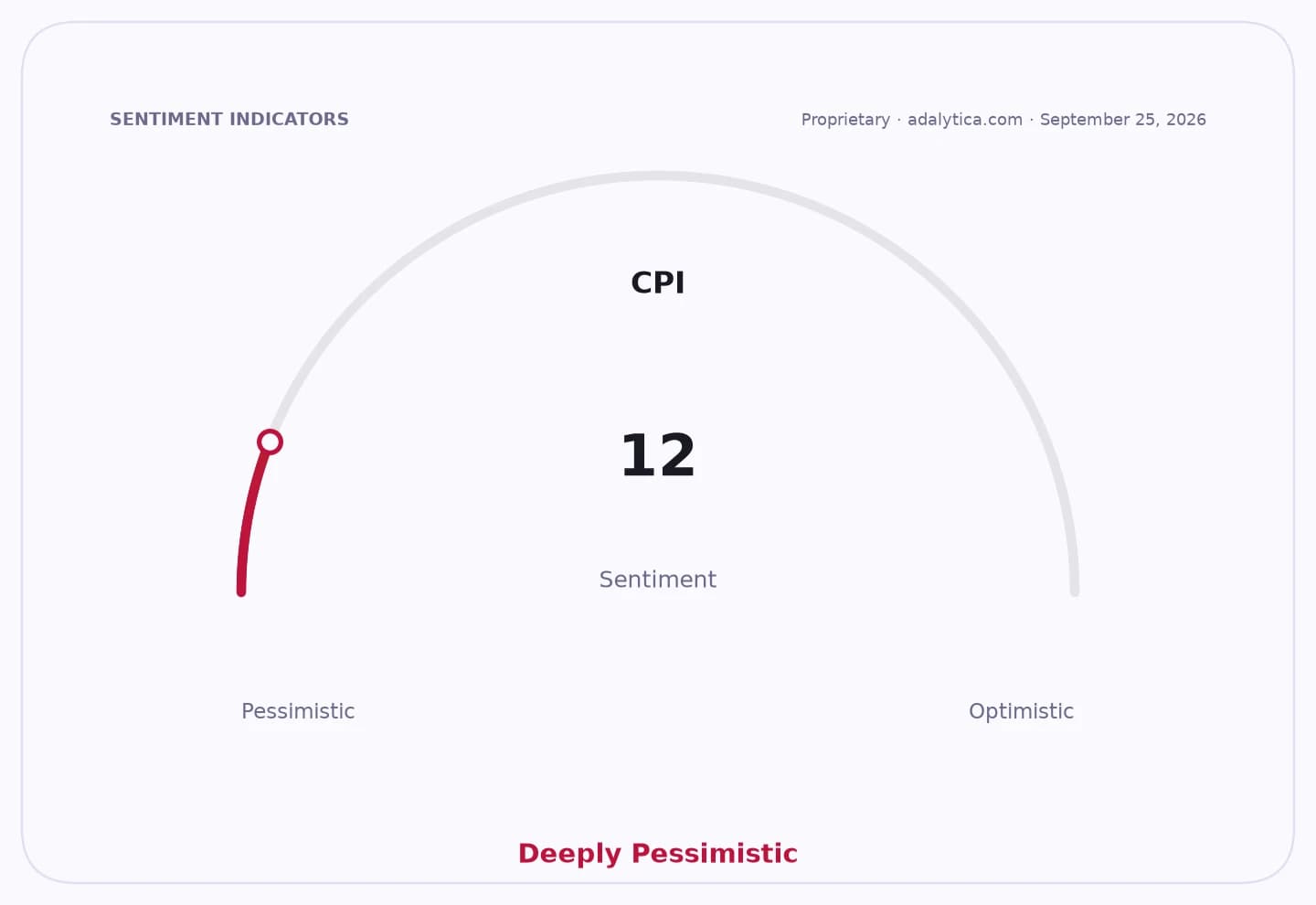
A sharper squeeze on indebted households is turning into a market story for lenders, debt collectors and investors in consumer credit, as rising bad loans, falling credit-card usage sentiment and a growing willingness to walk away from unpayable debts point to a more selective repayment environment.
Consumer Credit Stress Hits Enova, Synchrony, Capital One
That matters because consumer finance depends on the assumption that most borrowers will keep paying even when balances become uncomfortable. When more households decide the debt is no longer worth servicing — or simply cannot — lenders face higher charge-offs, tighter underwriting and lower recoveries, while firms built around collecting and financing consumer debt must absorb a more volatile loss profile.
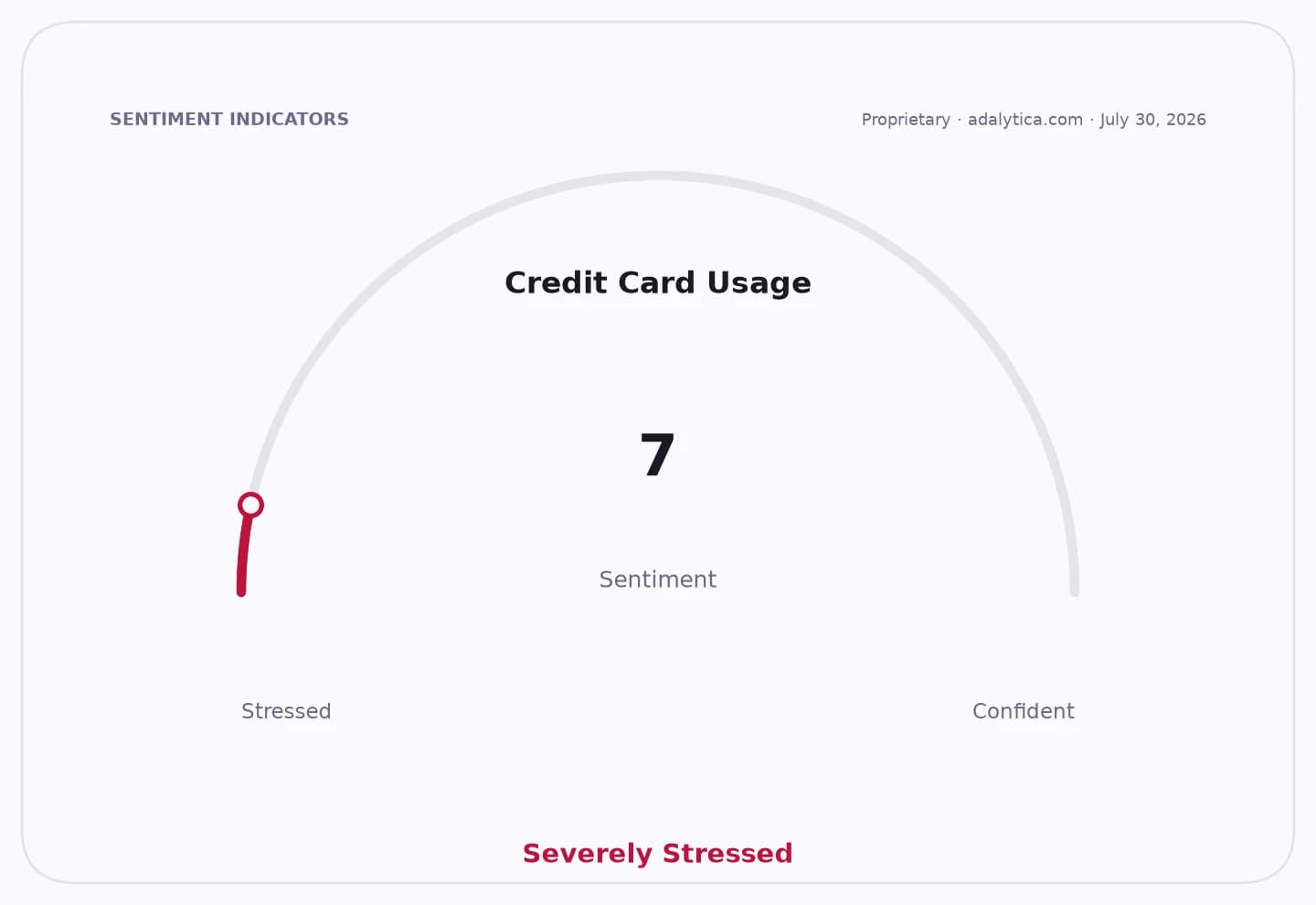
The warning signs are showing up across the credit chain. Adalytica’s Credit Card Usage Sentiment gauge has collapsed to 7, or “Extreme Fear,” after a 39-point one-day fall and an 85-point drop over 30 days, a sign that consumers are pulling back from revolving credit. At the same time, its Household Debt Stress Sentiment stands at 79, even after a recent dip, suggesting pressure remains elevated even if households have become more accustomed to it.
The sector backdrop is consistent with that stress. Eximbank reported bad debt above 3% of total outstanding loans and said bad loans reached nearly VND 5,800 billion, helping drive a 48.2% slump in second-quarter pre-tax profit as provisions rose. Elsewhere, debt burdens have become severe enough to force restructuring or shutdowns, including Al-Nasr’s debt topping 187 million euros and Brescia closing with more than 20 million euros in liabilities. The common thread is not just leverage, but the point at which repayment stops being rational for borrowers and becomes a loss for creditors.
Credit Card Usage vs ENVAadalytica.com
Explore this data interactively — full history, time series and cross-market comparisons.Open AlphaPulse
For investors, the implications are clearest in consumer-finance and collections names such as Enova International, OneMain, Synchrony and Capital One, where returns depend on spread income holding up against credit losses. If borrowers are more willing to default strategically or simply cannot keep up, collections efficiency falls, loss reserves rise and earnings become more dependent on funding costs and portfolio seasoning than on loan growth. That can compress valuations even when headline revenue looks solid.
The technical picture in some of those stocks shows how quickly sentiment can change. Enova has rallied to $255.05, well above its 50-day and 200-day moving averages, with RSI readings above 60 and price holding near its upper Bollinger Band, a sign of strong momentum but also stretched positioning. Synchrony has recovered to $77.04 from spring lows, yet its RSI near 65 suggests the rebound may already be priced against a still-fragile consumer backdrop. By contrast, Credit Acceptance has slipped to $555.67 from a recent peak near $573.64, with RSI at 24 and the MACD deeply negative, reflecting investors’ concern that a tougher repayment environment could hit the economics of subprime auto lending.
The bull case is that lenders have already tightened standards, charge-offs are manageable and higher delinquencies are being offset by better pricing and stronger servicing technology. Enova, for example, says it continues to manage the credit quality of its loan and finance receivables portfolios while using technology to differentiate its platform. The bear case is that stress in unsecured credit tends to arrive late and linger, especially when borrowers rotate between cards, installment loans and collections accounts rather than curing cleanly.
For now, the economic message is straightforward: as household debt stress persists, the bargaining power shifts toward borrowers with the weakest balance sheets and away from lenders that rely on timely repayment. That raises the odds of more conservative lending, weaker recovery rates and wider dispersion among credit stocks, with investors likely rewarding balance-sheet discipline and punishing any sign that losses are outrunning pricing.
| Entity | Gains | Losses |
|---|---|---|
| Borrowers under stress | ▲Debt relief / cash-flow flexibility | ▼Credit score damage |
| Lenders and card issuers | ▲Tighter underwriting discipline | ▼Higher charge-offs |
| Debt collectors | ▲More inventory to collect | ▼Lower recovery rates |
| Credit investors | ▲Better risk pricing | ▼Volatile returns |