The number of paid employees rose 0.5% from a year earlier in May, signaling that the U.S. labor market is still expanding even as investor anxiety around jobs, consumption and the growth outlook intensifies.
Cooling Labor Market Still Supports Quality Stocks
That matters because payroll growth is the economy’s core transmission mechanism: when more people are earning wages, households keep spending, businesses keep hiring and recession odds stay contained. The latest reading on paid employees, alongside June unemployment at 4.2%, says the labor market is not breaking — but it is losing some momentum, with payrolls rising only 0.08% in May after an 11.4% jump in April in the data set provided.

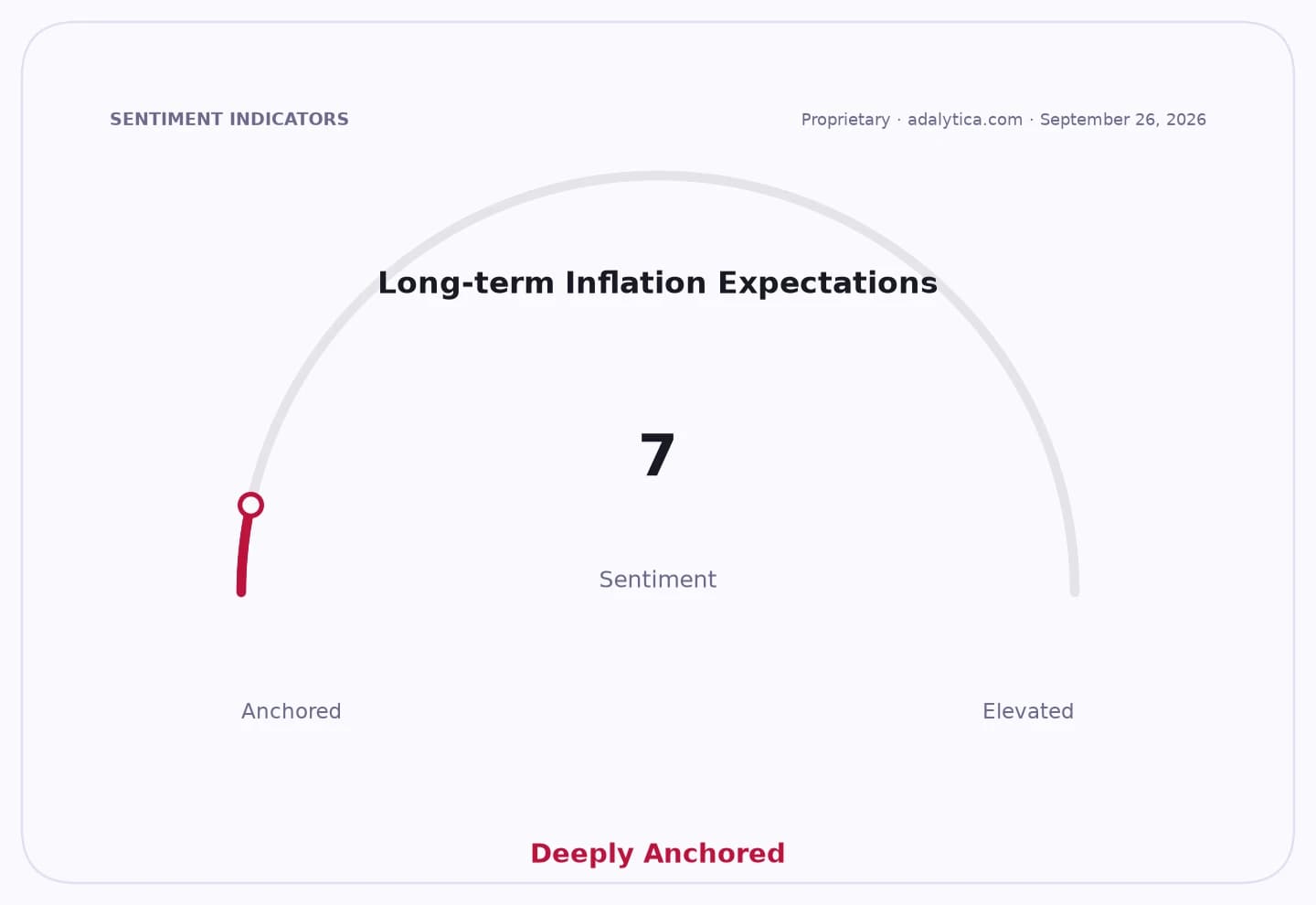
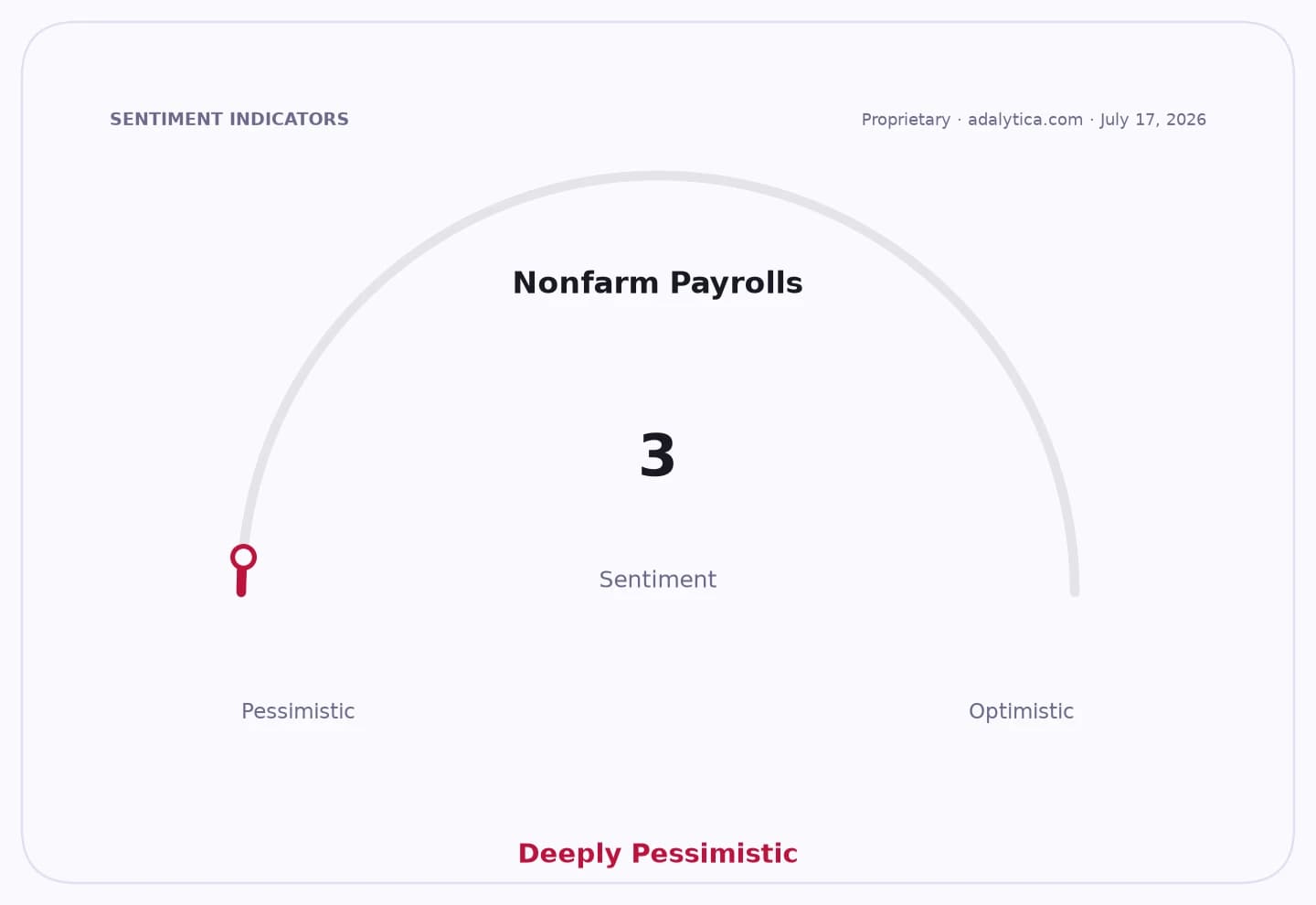
The real market message is not simply that employment is growing, but that it is growing at a pace consistent with a late-cycle economy. Total personal consumption expenditures climbed to 22,059.8 in May from 21,903.7 in April, showing demand is still alive. Yet the broader mood is sharply defensive. Adalytica’s Nonfarm Payrolls Sentiment gauge is in “Extreme Fear” at 3, while its consumer confidence recession measure is also in “Extreme Fear” at 7, pointing to a market that is bracing for a slowdown even as the hard data has not yet rolled over.
For investors, that combination is crucial. A labor market that is still adding jobs but with fading momentum tends to favor companies with recurring revenue, pricing power and exposure to non-discretionary spending. It is less friendly to cyclicals that need a strong reacceleration in hiring and wages to justify upside. In practice, that means the market may be underestimating the durability of select consumption, healthcare, software and infrastructure names while overpricing a broad collapse in earnings.
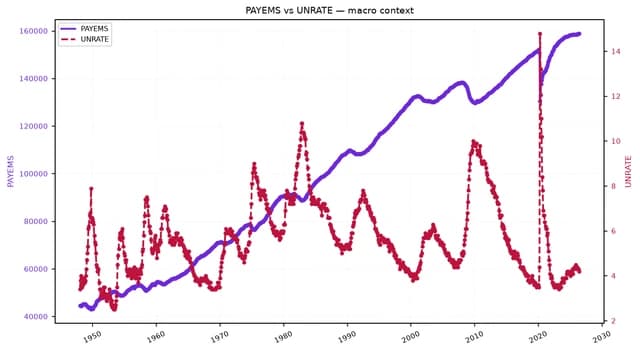
The opportunity, in my view, lies in treating this as a transition, not a trend break. The job market is cooling from strength, not entering freefall, and that distinction matters for Fed policy, bond yields and equity leadership. If payrolls keep expanding near this pace and unemployment stays near the low-4% range, the central bank has room to remain patient rather than rush into aggressive easing. That is a favorable backdrop for quality equities and for sectors levered to ongoing capex rather than a euphoric labor boom.
The investors who win here will be those positioned for a slower but still expanding economy: defensive compounders, AI infrastructure suppliers tied to data-center buildouts, and industrial beneficiaries of continued hiring and investment. The losers are the most levered consumer cyclicals and highly valued names dependent on a rapid revival in labor demand. The message from this payroll print is simple: don’t confuse deceleration with deterioration. The labor engine is still running, and that keeps the asymmetric upside in companies built for steady, not explosive, growth.
| Entity | Gains | Losses |
|---|---|---|
| Quality defensives | ▲Steady demand | ▼Broad slowdown fear |
| AI infrastructure stocks | ▲Ongoing capex | ▼Rate-volatility spikes |
| Consumer staples/healthcare | ▲Wage-supported spending | ▼Cyclical demand bets |
| High-beta cyclicals | ▲— | ▼Slower hiring momentum |