Copper is rising despite weak downstream demand because export restrictions from the Democratic Republic of Congo are squeezing global availability, widening the spread between nearby and later-dated contracts and keeping traders focused on supply risk.
Copper rises on Congo export restrictions
The tighter market is important because copper is a bellwether for industrial activity and a critical input for power grids, construction and electrification. When supply is restricted, prices can climb even if manufacturing demand is not firing, turning a demand story into a scarcity story that can ripple through miners, smelters and consumers.
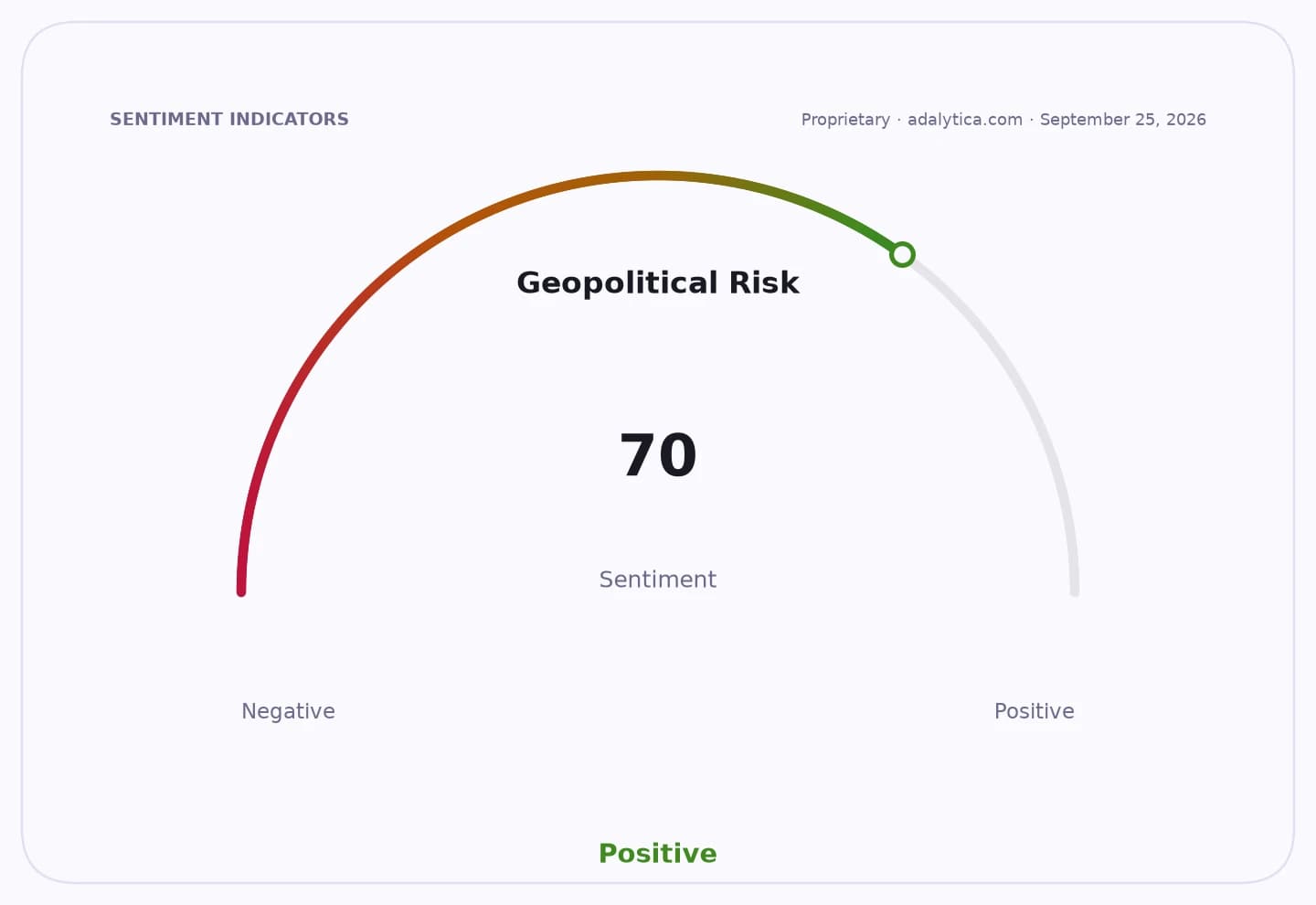
Sentiment IndicatorsⓘProprietary · adalytica.com · August 17, 2026
This is a snapshot — live sentiment, awareness and momentum for 130+ markets update continuously in the dashboard.Open AlphaPulse
U.S. benchmark crude in the data rose to $84.77 a barrel and is forecast at $87.05, while the 10-year Treasury yield eased to 4.63%, leaving commodities supported by a softer dollar backdrop and expectations around key U.S. inflation data. Adalytica’s U.S. dollar trade signal shows “Extreme Fear,” a setup that can help dollar-denominated metals extend gains, while its industrial production sentiment sits at “Extreme Greed,” underscoring how divided the macro backdrop remains.
The move matters for miners with direct copper exposure. Freeport-McMoRan closed at $66.49 on Aug. 14 after touching $69.22 two sessions earlier, Southern Copper ended at $184.61, and Teck Resources finished at $63.53, all well above their longer-term trend lines even after recent pullbacks. The stocks are benefiting from the higher price deck, but the market is also signaling that earnings support may depend more on constrained supply than on a broad demand recovery.
The supply squeeze also has broader investment implications. Producers with existing copper output gain pricing power, while smelters, fabricators and downstream users face higher input costs and less visibility on replenishment. That dynamic can keep the copper curve tight and sustain volatility until there is clearer evidence of easing Congolese restrictions or a stronger pickup in end-market demand.
Investors will be watching whether the price gap keeps widening into the next set of U.S. inflation readings and whether the supply disruption spreads beyond Congo. Any sign that the deficit is lasting longer than expected would likely keep copper-linked equities supported, while a firmer dollar or weaker industrial data could quickly test the rally.
| Entity | Gains | Losses |
|---|---|---|
| Copper producers | ▲Higher realized prices | ▼Limited supply leverage fades |
| Freeport-McMoRan, Southern Copper, Teck | ▲Better margins | ▼Demand-driven pullback risk |
| Fabricators and industrial buyers | ▲— | ▼Higher input costs |
| Congo exporters / restricted supply | ▲— | ▼Lost sales volumes |