CoreWeave slid after unveiling plans to raise about $3 billion in convertible debt and an additional share sale, a move that underscores how expensive it is to keep funding the AI infrastructure buildout even as demand for compute remains strong.
CoreWeave Drops on $3 Billion Convertible Debt Plan
The stock closed at $79.88, down 4.16%, after trading volume surged to 78.3 million shares, about 176% above its three-month average of 28.4 million. The move came despite a broader risk-on session, with the S&P 500 and Nasdaq Composite both closing higher, highlighting that investors were reacting specifically to dilution and financing risk rather than a weak market backdrop.
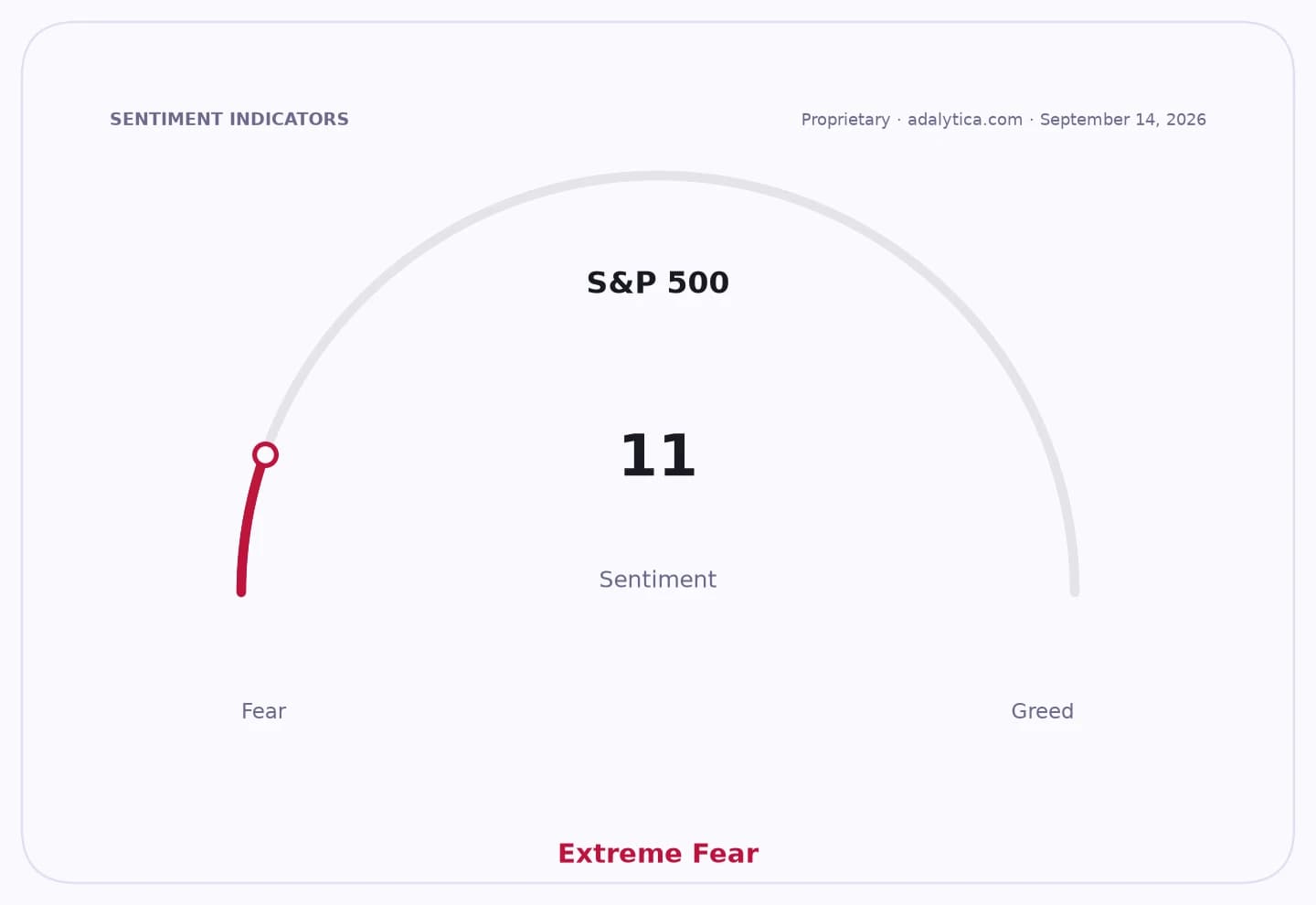
Sentiment IndicatorsⓘProprietary · adalytica.com · September 19, 2026
This is a snapshot — live sentiment, awareness and momentum for 130+ markets update continuously in the dashboard.Open AlphaPulse
For CoreWeave, the message is straightforward: growth is still being bought with capital. The GPU-accelerated cloud provider said the proceeds will help fund expansion, including the cost of capped call transactions tied to the notes, while also supporting general corporate purposes. But convertible debt and equity issuance both pressure existing shareholders, especially for a company that went public only in 2025 and has already doubled from its listing price.
That tradeoff matters because CoreWeave sits at the center of one of the market’s most crowded themes: the race to supply compute for artificial intelligence. Investors have been willing to reward companies that can secure scarce GPU capacity and sign long-dated contracts, but they are increasingly discriminating on balance-sheet strength and funding structure. CoreWeave also said it is raising prices on compute cloud contracts, which supports revenue growth but does not eliminate the need for heavy capital spending.
The market reaction suggests shareholders are focused on the cost of scaling, not just the opportunity. A sharp jump in volume alongside the decline points to a reassessment of how much dilution investors are willing to tolerate for continued expansion. By comparison, peers such as Iren rose on the day, with investors favoring businesses seen as better capitalized. Nebius also advanced, reflecting the same demand for AI infrastructure exposure but without the same immediate financing overhang.
The bond market backdrop adds another layer. Higher-for-longer rates would increase the penalty for aggressive borrowing, while any widening in credit spreads would make future funding more expensive for capital-intensive AI infrastructure names. That makes CoreWeave’s financing mix especially important: if growth slows, debt service and dilution become a larger issue; if AI demand keeps outpacing supply, the company may be able to grow into the capital it is raising.
For investors, the key question is whether CoreWeave is buying durable earnings power or just extending a cash-burning expansion cycle. Near term, the stock is likely to remain sensitive to any sign of further capital raises, but the bull case remains intact as long as contract pricing, utilization and demand for high-performance cloud capacity stay strong. The bear case is that each new round of financing lowers the reward for existing holders, even if the underlying business keeps growing.
| Entity | Gains | Losses |
|---|---|---|
| CoreWeave | ▲Funds AI expansion | ▼Faces dilution pressure |
| Existing shareholders | ▲— | ▼Hold less upside per share |
| AI compute customers | ▲More capacity availability | ▼Higher contract prices |
| Cash-rich peers like Iren | ▲Relative valuation boost | ▼Lose less capital-market scrutiny |