A Cornell-led team has won a $10 million moonshot grant to develop auditable AI tools aimed at restoring trust in online civic discourse, a bet that matters far beyond academia because the next phase of AI will be judged less by raw intelligence than by whether people can verify what it does and why.
Cornell Wins $10M Grant for Auditable AI Tools
That is the real economic story here: trust is becoming infrastructure. As AI agents move into comment sections, group chats, customer service and moderation, the value chain shifts from model building alone to verification, governance and platform control. The market has spent years pricing AI as a compute and software race; this project argues the next durable moat may be the layer that makes AI safe enough to deploy at scale in public-facing systems.
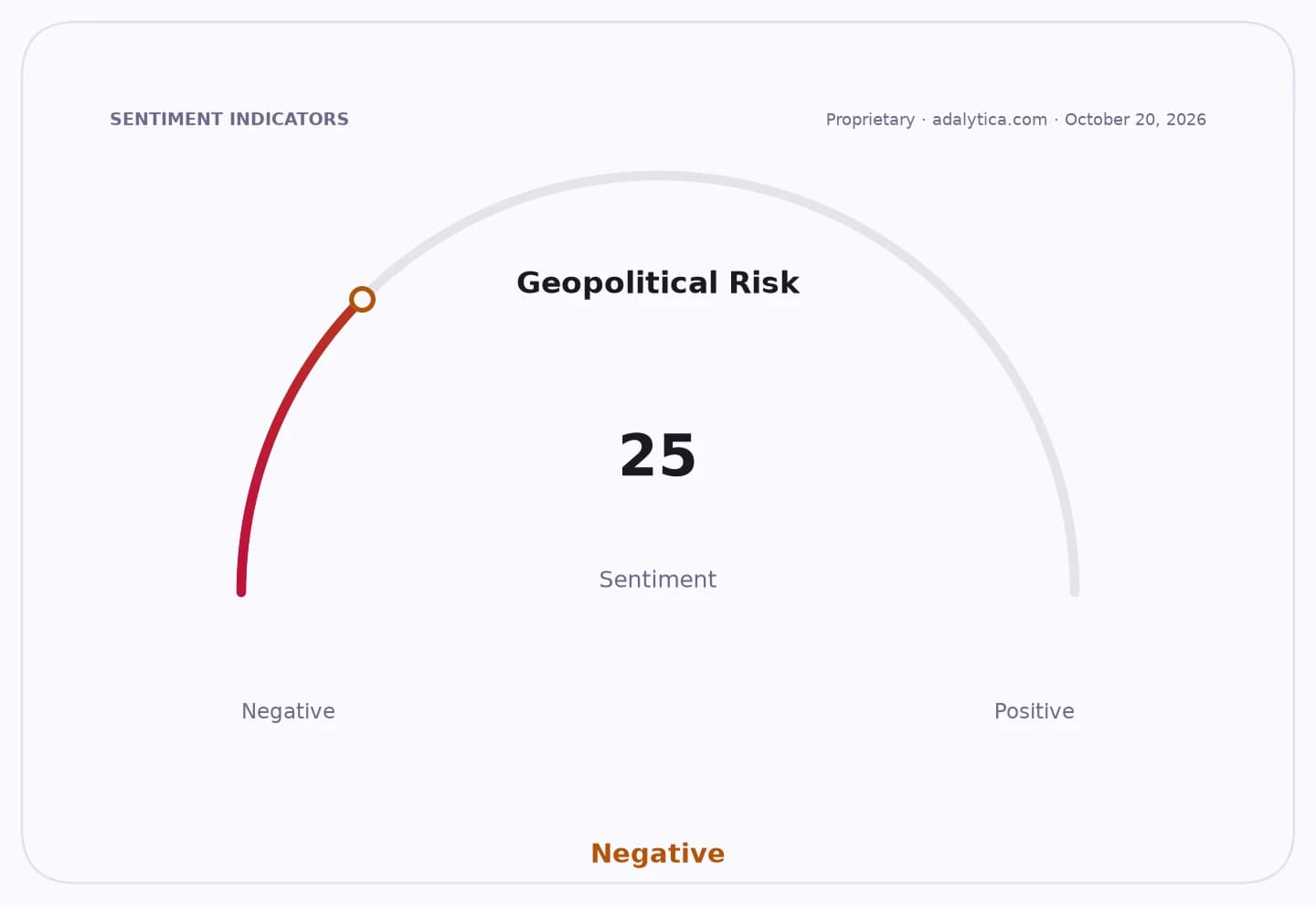
Sentiment Indicators
Cornell’s proposal, backed by the Laude Institute, is designed around “Rebuilding Trust in Civic Discourse: An Infrastructure for Auditable AI.” The team will build tools that let online communities configure their own assistants, test how they behave in live or simulated discussions, and audit whether the agents follow declared rules. That includes an Assistant Toolkit for community-built AI, ConvoCompass for editors and moderators, and an Auditing Benchmark that compares independent verifiers. In other words, the project is not trying to make AI louder — it is trying to make AI accountable.
That distinction matters because the downside case for AI adoption is no longer theoretical. Deepfakes, impersonation and manipulation have already made online discourse harder to trust, and that raises costs for platforms, newsrooms, civic groups and enterprises that rely on digital communication. If auditable AI becomes a standard, it could create a new category of compliance, moderation and identity products layered on top of existing AI infrastructure — a potential opening for cybersecurity firms, workflow-software vendors and governance platforms that can help enterprises prove what their models did.
Investors should see this as part of a broader shift in AI capex. The market still loves chips, cloud and model training, but the next spending wave will likely include verification, auditing, provenance and policy tools as organizations try to keep AI from becoming a liability. That is especially relevant as the industry confronts rising concern over AI-driven cyberattacks and manipulation, reinforcing demand for systems that can both deploy AI and document its behavior.
The investable takeaway is straightforward: the biggest beneficiaries of the AI era may not be the companies that make the most powerful models, but the ones that make those models trustworthy enough to use. That puts a spotlight on AI-security names, governance software, identity infrastructure and cloud platforms with strong enterprise control layers. The market underestimates how quickly trust becomes a budget line item.
For now, Cornell’s win is a research award. But strategically, it is also a map of where the next trillion dollars of AI adoption has to go: from intelligence to legitimacy. The investors who position early in the trust stack could be the ones with the cleanest upside when the market finally prices in the cost of making AI safe.
| Entity | Gains | Losses |
|---|---|---|
| Cornell-led team | ▲$10M funding | ▼Research execution risk |
| AI governance tools | ▲Faster adoption | ▼Status quo moderation models |
| Enterprise users | ▲Verifiable AI controls | ▼Unchecked deployment risk |
| Ad hoc AI platforms | ▲Credibility lift | ▼Trust premium erosion |