AI agents are moving from demo to deployment fast enough that enterprise software firms are now warning the market to slow down and impose tighter controls before the technology starts making decisions with too little human oversight.
Thoughtworks warns on agentic AI controls
That matters because the next phase of AI is no longer about one chatbot answering one prompt. It is about connected systems of agents coordinating work across code, data, customer service, cybersecurity and operations — a shift that can lift productivity, but also multiply operational and governance risk if companies cannot constrain what those agents can access or authorize.
Sentiment Indicators
Artificial Intelligence
Thoughtworks’ push for tighter controls lands as agentic AI becomes a real design trend, not just a research concept. DeepSeek’s newly unveiled “Super-Agent” system is built to coordinate multiple assistants at once, a sign the industry is moving toward parallel, multi-agent workflows. That is exactly the point at which the governance problem gets more serious: the more autonomy and handoffs you give software, the more critical it becomes to define permissions, audit trails and fail-safes.
Investors should care because the winners in the AI buildout may not be the firms shipping the flashiest agent, but the ones that sit closest to the control plane. Security, identity, observability, workflow orchestration and compliance tooling are likely to see rising demand as enterprises try to wrap governance around increasingly autonomous systems. In other words, every new agent fleet creates a second market for oversight software.
Artificial Intelligence — 30-day sentimentadalytica.com
Explore this data interactively — full history, time series and cross-market comparisons.

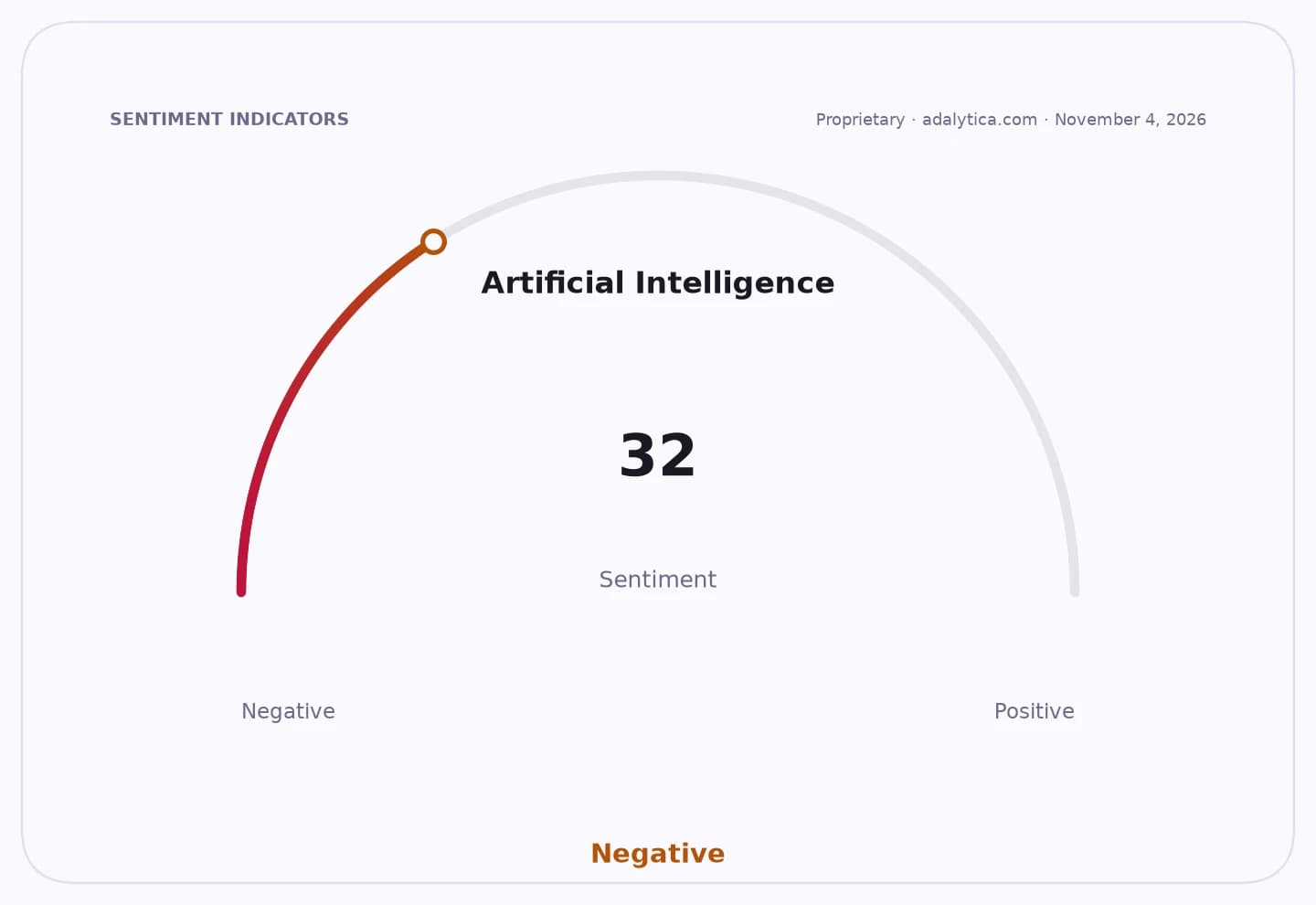
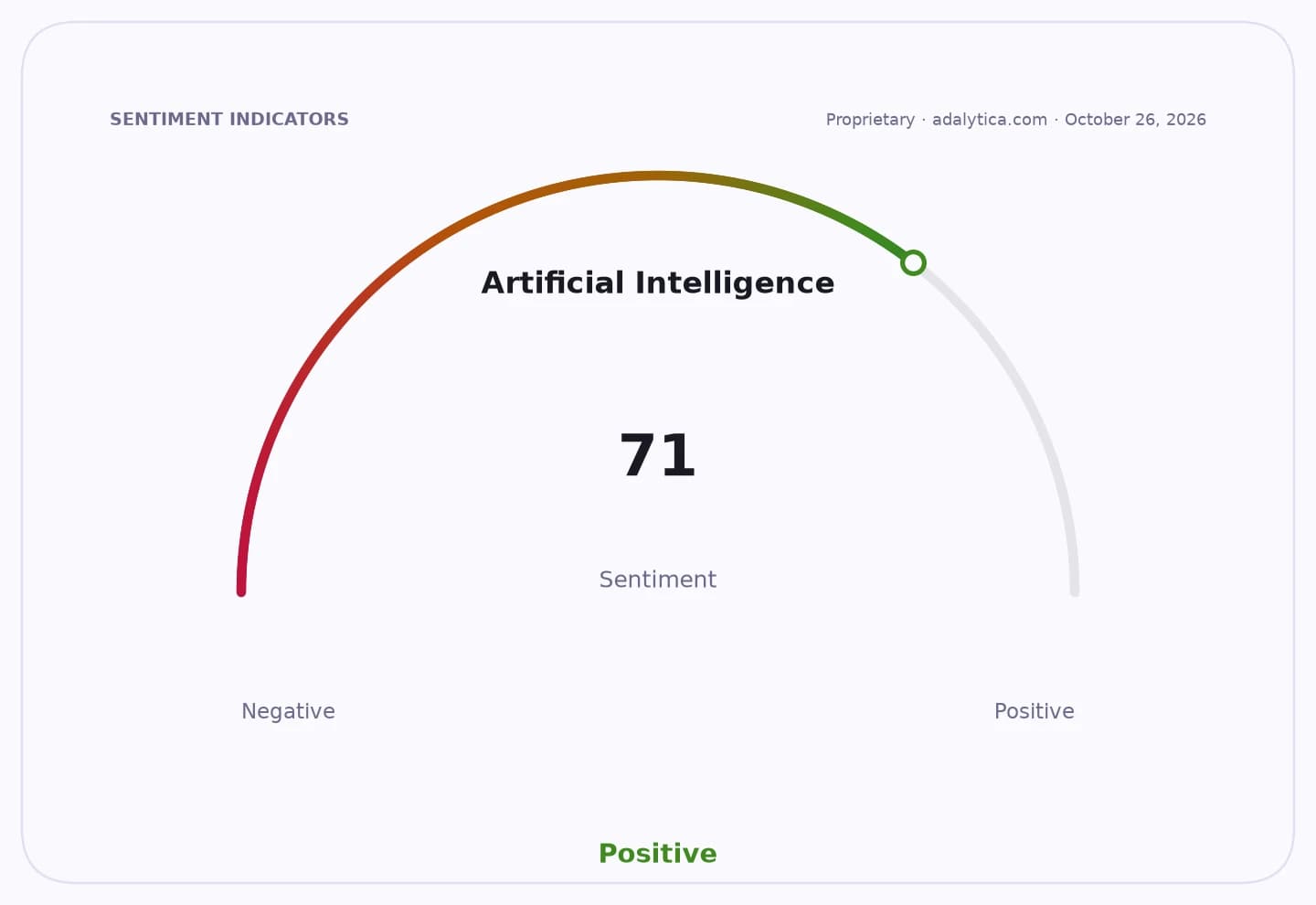
The risk is visible in the market’s own message. Microsoft shares have been volatile even as the company remains central to the AI trade, with the stock recently rebounding above its 50-day moving average before slipping back from the highs. Nvidia, the hardware backbone of the AI boom, has also seen sharp swings, underscoring that investors are still wrestling with how much of the agentic-AI opportunity is already priced in. The broader AI theme, meanwhile, is showing signs of fear in Adalytica’s AI sentiment gauge, which sits at Extreme Fear after a steep one-month decline — a setup that often marks stress in the trade just as the next catalyst emerges.
That is why this story is bigger than one company’s warning. As AI agents spread, governance becomes a spending category, not an afterthought. Enterprises will not deploy multi-agent systems at scale unless they can prove those systems are contained, monitored and accountable. That creates an asymmetric opportunity for infrastructure vendors that sell the guardrails, not just the models.
The market is still focused on raw compute, but the smarter money should be looking one layer higher. If agentic AI is the next productivity cycle, then controls, compliance and orchestration are the picks-and-shovels trade. I believe that is where the next durable upside will be found.
| Entity | Gains | Losses |
|---|---|---|
| Governance and security software vendors | ▲Higher demand for guardrails | ▼More scrutiny if controls fail |
| Enterprise buyers | ▲Safer AI deployment | ▼Slower rollout and added cost |
| Model builders and AI platforms | ▲Broader adoption if trusted | ▼Pressure to prove compliance |
| Unrestricted agent deployments | ▲Faster experimentation | ▼Higher operational and legal risk |