Costco Wholesale’s latest quarter showed that its rarely promoted e-commerce channel is doing more than supplementing warehouse traffic — it is increasingly helping drive the company’s overall growth.
Costco Digital Sales Rise 19.5% in Fourth Quarter

The retailer said digitally enabled comparable sales rose 19.5% in the fiscal fourth quarter, or 19.8% after foreign exchange, a sharp gain that stood out even against Costco’s unusually strong operating performance. That matters because Costco is still built around its warehouse model and seldom highlights online commerce, yet members are clearly using digital channels for a growing share of their shopping.
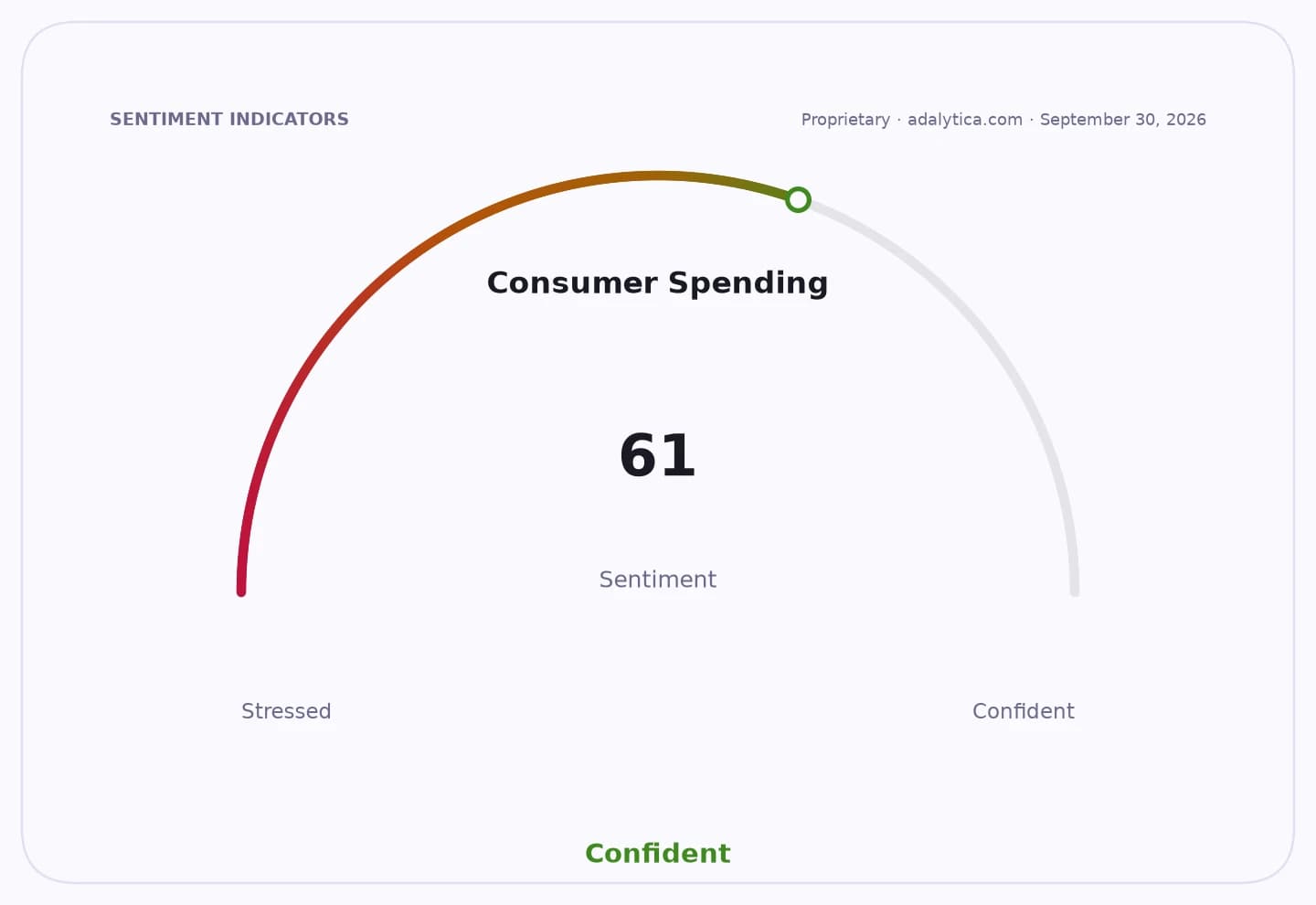
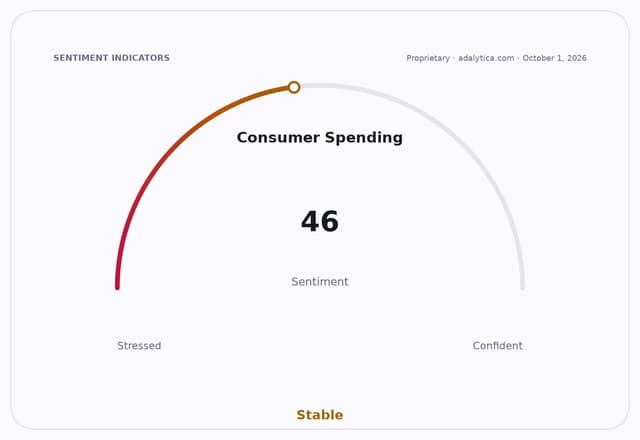
Sentiment IndicatorsⓘProprietary · adalytica.com · October 1, 2026
This is a snapshot — live sentiment, awareness and momentum for 130+ markets update continuously in the dashboard.Open AlphaPulse
The result helped underpin a quarter in which revenue rose 11% to $95.7 billion and comparable sales increased 6.7% excluding gasoline and currency effects. Net income rose nearly 15% to just under $3 billion, or $6.75 a share, though part of the earnings beat reflected tariff refunds tied to a Supreme Court ruling. Even after stripping out that one-time benefit, adjusted EPS growth was still a healthy 12%, and both top- and bottom-line results beat analyst estimates.
The bigger message for investors is that Costco’s growth is becoming less dependent on pure warehouse traffic and more on a hybrid shopping model. Management does not disclose the dollar value of online sales, but it does show where digital demand is concentrated: pharmacy, home furnishings, small electronics, hardware, housewares and domestics. That mix suggests members are using e-commerce for items that are bulkier, less frequent or easier to replenish online, while preserving the warehouse trip for groceries and tactile purchases.
That split is economically important. It implies Costco can deepen wallet share without abandoning its low-cost, high-traffic store model. It also gives the company a way to capture more spending from younger, digitally native households as they move deeper into the membership base. For a retailer that still relies heavily on physical stores, a nearly 20% digital comp gain is a sign of optionality, not just convenience.
The market’s reaction was more restrained than the numbers might suggest, with the shares trading near flat in after-hours trade after the report. That reflects high expectations: Costco already trades on a premium valuation, so investors often need exceptional quarters to re-rate the stock. Still, the combination of solid core comps, resilient membership income and fast-growing digital demand argues that the company’s long-run earnings power remains intact even if membership fee growth has moderated to 7%.
The comparison with other big-box retailers also matters. Amazon is the obvious digital giant, while Walmart and Target are still pushing omnichannel scale; Costco’s position is more unusual because it is growing online without making e-commerce its public identity. That could be a strength if the company can keep using digital as an extension of its warehouse ecosystem rather than a margin-dilutive standalone business.
For investors, the key question is whether digitally enabled sales can keep compounding fast enough to support Costco’s premium multiple as warehouse growth normalizes. If digital continues to expand across higher-ticket categories and replenishment items, it could become one of the company’s most durable growth levers. If not, the stock may remain vulnerable whenever expectations outrun the underlying pace of comparable sales.
| Entity | Gains | Losses |
|---|---|---|
| Costco | ▲Higher digital sales mix | ▼Less room for execution misses |
| Costco members | ▲Easier access to bulk and refill buys | ▼Fewer pure-store traffic advantages |
| Long-term shareholders | ▲Better growth durability | ▼Risk of valuation disappointment |
| Amazon/Walmart/Target | ▲— | ▼Costco becomes a stronger omnichannel rival |