Free samples are not just a perk at Costco — they are a conversion engine, and the strategy helps explain why the warehouse club can keep selling more even when consumers are more selective and retail rivals are fighting for traffic.
Costco sampling helps drive traffic and sales
The bigger investment story is that Costco’s sampling culture reinforces one of retail’s most durable moats: habit. Shoppers come for value, but the tastings turn a quick trip into a higher-ticket basket, nudging members toward unplanned purchases and strengthening the renewal cycle that underpins the company’s recurring-fee model. In a consumer environment where households are hunting for bargains, that kind of low-cost persuasion matters more than ever.
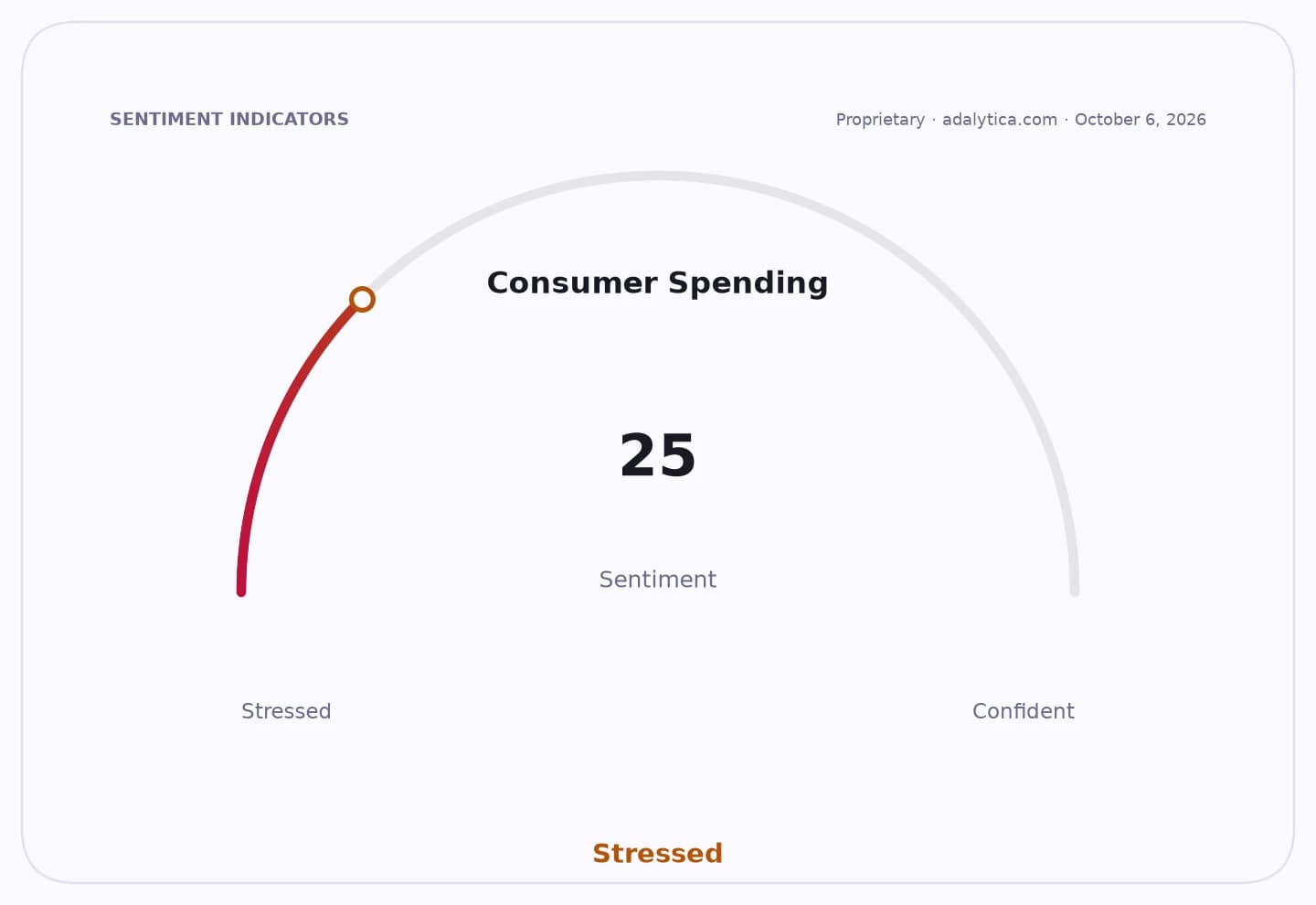
Sentiment IndicatorsⓘProprietary · adalytica.com · October 20, 2026
This is a snapshot — live sentiment, awareness and momentum for 130+ markets update continuously in the dashboard.Open AlphaPulse
The anecdotal evidence is powerful. One Long Island shopper quoted in the source said she ends up buying the products she samples eight times out of 10, a reminder that the economics of “free” are often highly profitable for the seller. Costco’s model already relies on getting members through the door and keeping them loyal; tastings deepen that loyalty by making the trip feel like a discovery experience rather than a chore. That is exactly the sort of behavior that supports traffic, basket size and renewal rates over time.
The stock’s recent price action suggests investors are still underestimating how resilient the model is. Costco shares have climbed back near the $1,000 level after a sharp swing earlier in the year, with the latest close at $995.33. The 50-day moving average sits around $935.60, and the stock’s RSI reading of 90.5 points to an overextended short-term move, but the broader message is that buyers continue to pay up for quality, even after volatility. That premium is not just about grocery inflation or defensive demand; it is about a business that knows how to turn a shopping trip into a profitable ritual.
Walmart and Target are competing for the same value-conscious consumer, but Costco’s edge is different. Walmart can win on convenience and scale. Target can win on merchandising. Costco wins on membership psychology. Its samples, bulk pricing and treasure-hunt layout create a habit loop that is hard to replicate and easier to monetize than it looks from the outside. That is why the market keeps rewarding Costco with a valuation that reflects more than retail sales — it reflects customer behavior.
For investors, the takeaway is straightforward: the market often treats samples as a cost. Costco treats them as a sales lever. If consumers keep leaning into value and discovery, that lever should keep working, and Costco’s combination of traffic, renewal power and pricing discipline remains one of retail’s most attractive long-term compounding stories.
| Entity | Gains | Losses |
|---|---|---|
| Costco | ▲Higher conversion rates | ▼Sampling costs |
| Members | ▲Free food and discovery | ▼More impulse buys |
| Walmart | ▲Value-seeking traffic | ▼Some basket share |
| Target | ▲Shoppers drawn to retail experiences | ▼Costco-style loyalty |