China’s new anti-drone shield may turn more heads on a parade ground than on a battlefield, and that is the key takeaway for investors: counter-drone demand is real, but the best long-term businesses are likely the ones selling practical, scalable defenses rather than flashy all-in-one systems.
Counter-Drone Demand Favors RTX, Lockheed, Kratos
The footage circulating on social media shows a Chinese robotic platform fitted with a large protective screen, smoke-deployment capability and unmanned support vehicles. On paper, it looks like a neat answer to one of modern warfare’s biggest problems: cheap drones carrying explosives. In practice, military observers are skeptical that a big physical shield and smoke screen would hold up against the thermal cameras, radar and target-recognition tools now used on the battlefield.
Sentiment IndicatorsⓘProprietary · adalytica.com · September 6, 2026
This is a snapshot — live sentiment, awareness and momentum for 130+ markets update continuously in the dashboard.Open AlphaPulse
That matters because the war in Ukraine and conflicts in the Middle East have made one thing clear: drone defense is becoming a permanent line item for armies, police forces and homeland-security agencies. The threat is no longer theoretical. Small, inexpensive UAVs have changed how forces move, how they are spotted and how they protect exposed vehicles and personnel. Even when a system is not combat-proven, the need it is designed to address can still drive spending across the sector.
For investors, the story is less about whether this Chinese system wins in combat and more about what it says about the market. Counter-UAV technology is moving from niche to necessity, and that supports companies with credible sensing, jamming, interception and integrated command-and-control capabilities. U.S. defense names with deep relationships and broad product lines, such as RTX, Lockheed Martin and Kratos Defense, are positioned to benefit if militaries keep layering on protection around bases, convoys, ships and critical infrastructure.
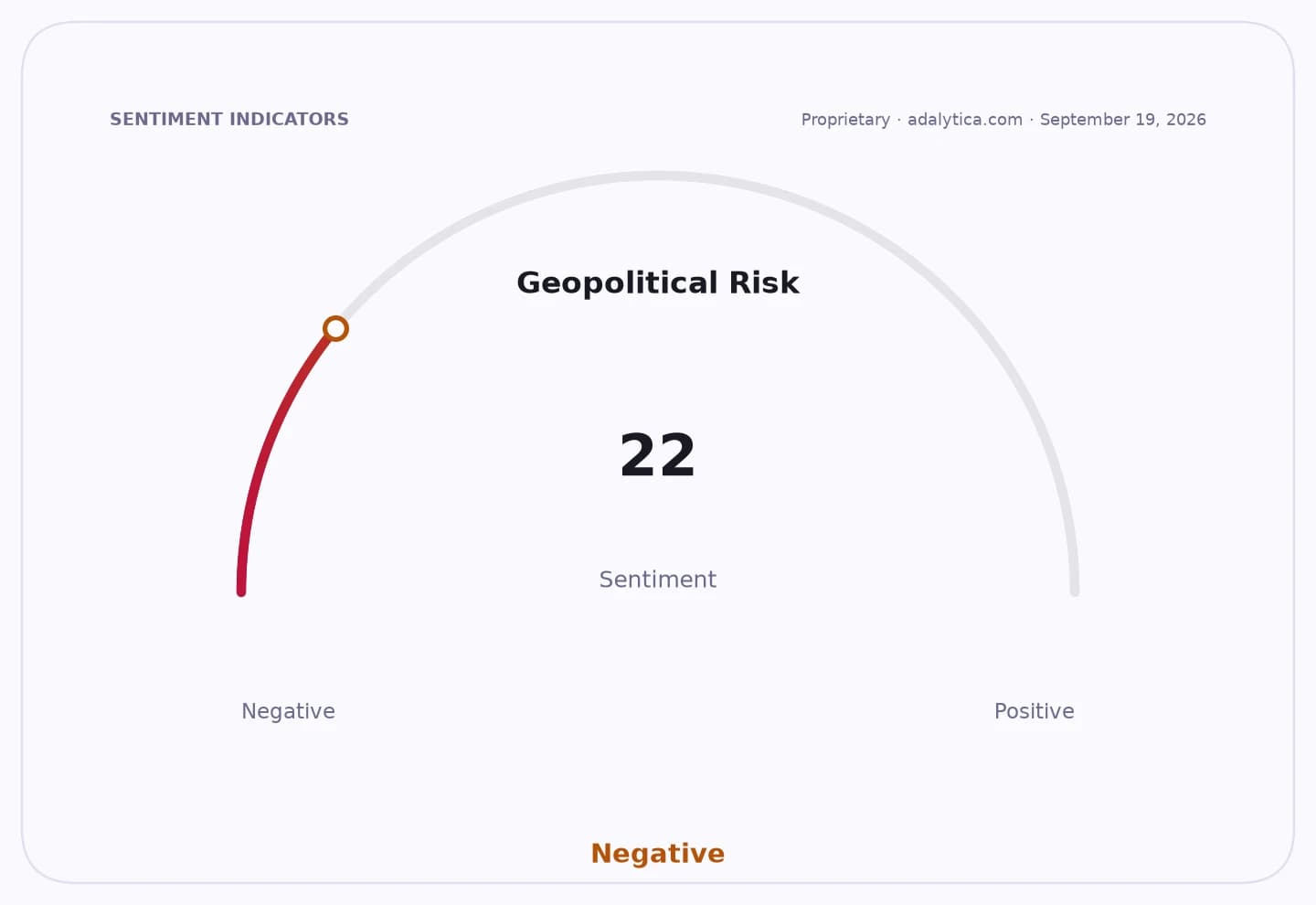
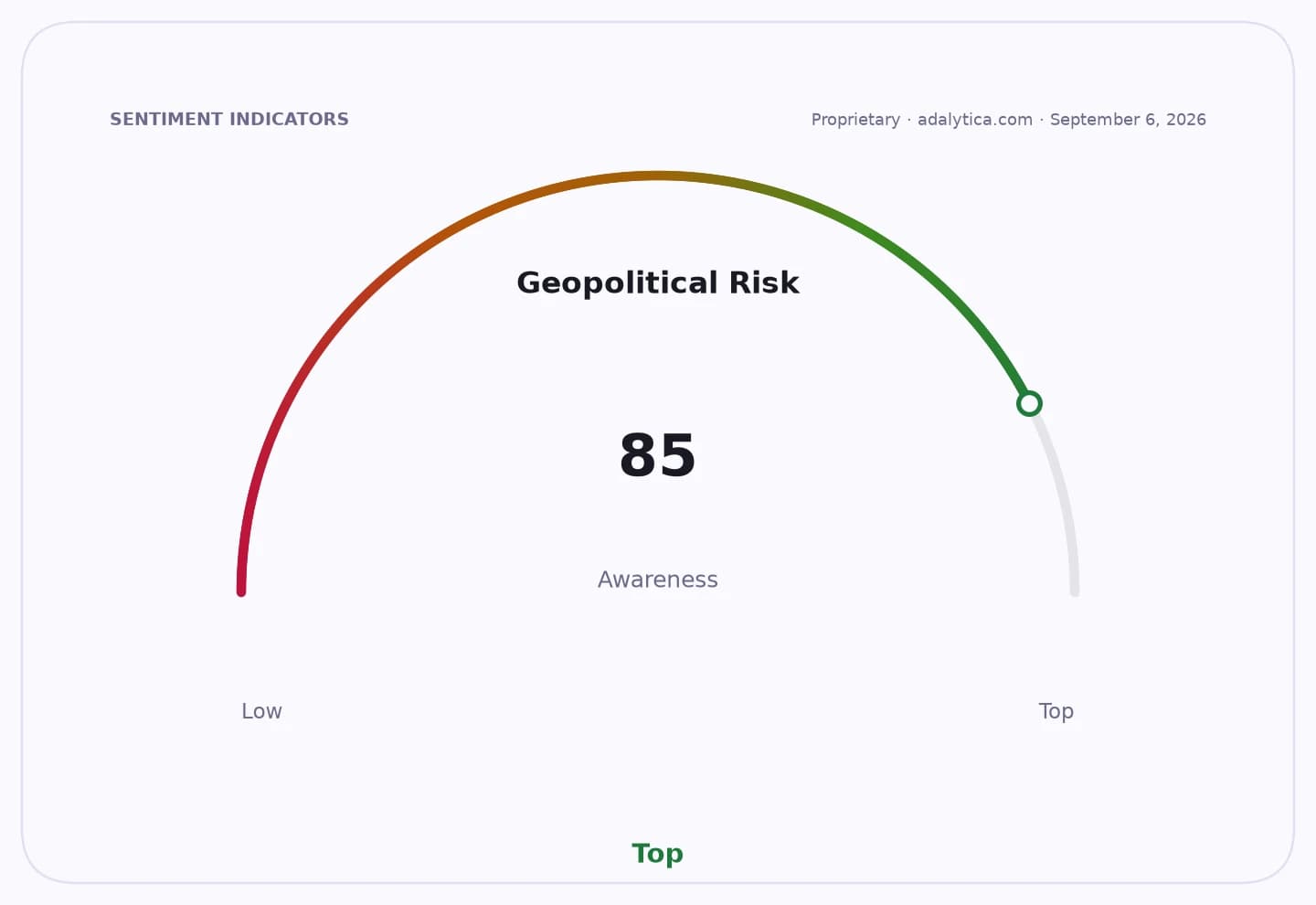
Geopolitical Risk — 30-day sentimentadalytica.com
Explore this data interactively — full history, time series and cross-market comparisons.Open AlphaPulse
The market is already reflecting that. RTX has climbed to around $200 a share after a strong run this year, while Lockheed Martin has been volatile but remains far above its lows. Kratos, a more speculative unmanned-systems name, has been much choppier, underscoring the difference between established defense contractors and smaller companies trying to prove they can turn demand into durable profit. The conventional technical indicators in the price data also show that recent weakness has not erased the broader move higher in the defense group, though some names have pulled back from overbought levels.
Still, the Chinese system highlights an important risk: not every impressive prototype becomes a profitable program. In defense, the winners are often the companies that can mass-produce systems, integrate them with existing platforms and survive the grind of procurement cycles. Simple solutions may be more useful to police and crowd-control agencies than on a contested battlefield, which means some of the near-term value may sit outside traditional military contracts.
For long-term investors, the big picture is encouraging. Drone warfare is not a passing trend; it is reshaping defense budgets, procurement priorities and battlefield doctrine. That creates a durable opportunity for companies that can detect, disrupt and destroy UAVs at scale. The smartest move is not to chase the flashiest concept, but to own the firms with real execution, real contracts and the balance sheets to compound through years of rising security spending. This is a sector worth watching closely and, for patient investors, a reasonable place to keep on the watchlist.
| Entity | Gains | Losses |
|---|---|---|
| Counter-drone suppliers | ▲More demand | ▼Harder competition |
| Established defense contractors | ▲Larger budgets | ▼Prototype hype |
| Small UAV makers | ▲Faster adoption fears | ▼More interception risk |
| Law enforcement agencies | ▲Better crowd control tools | ▼Higher procurement costs |