Taiwan has carried out its first military exercise combining attack drones with missile systems, underscoring how quickly the island is adapting its defenses as China steps up pressure and Xi Jinping prepares for a planned U.S. visit.
Taiwan holds first drone-missile military exercise

The exercise in southern Pingtung used different types of attack drones alongside air defense, anti-ship and amphibious defense missiles, President Lai Ching-te’s office said. Taipei did not say which drones were deployed, but described the drill as reflecting how unmanned systems are being folded into conventional weapons for modern warfare.
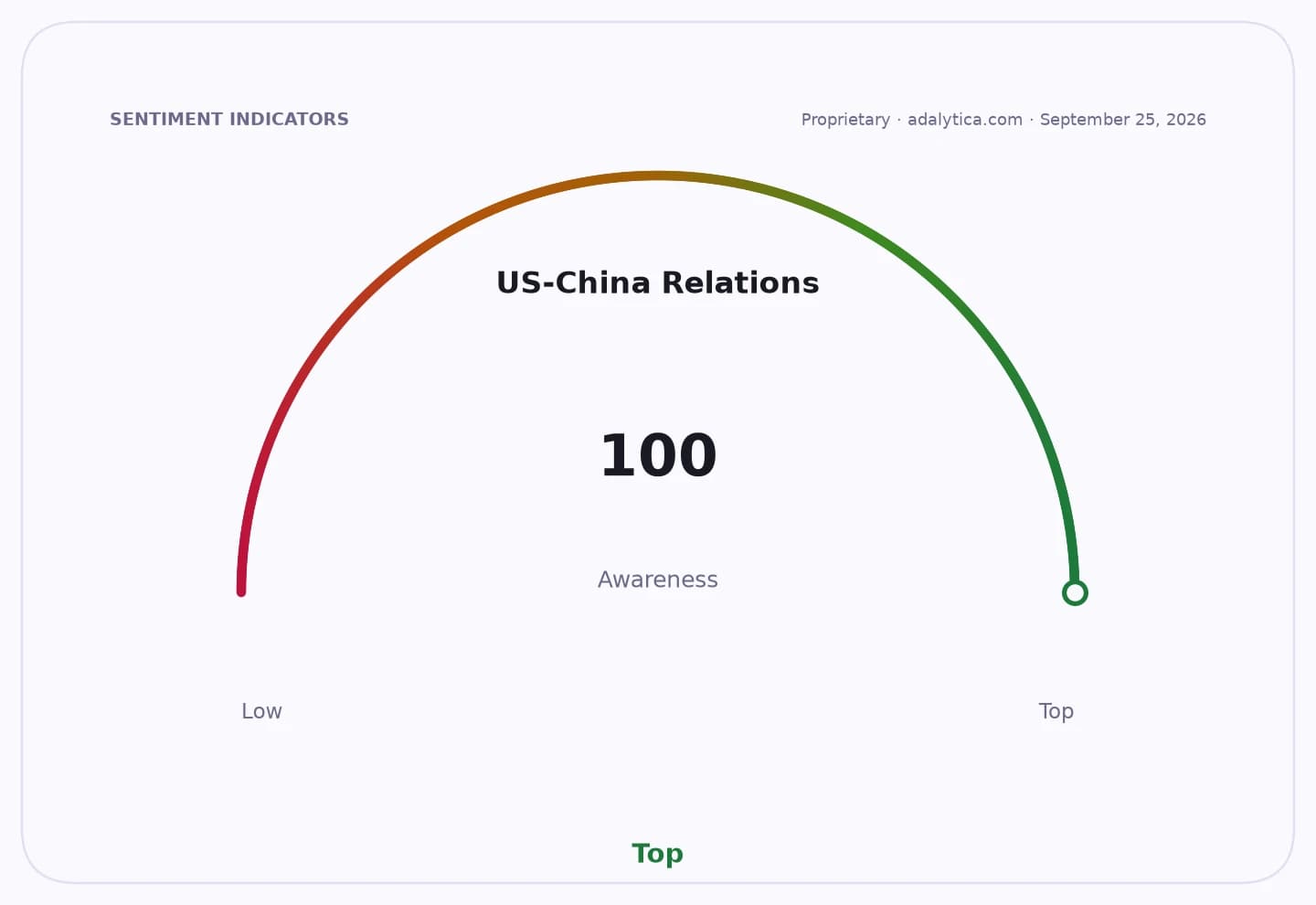
Sentiment IndicatorsⓘProprietary · adalytica.com · September 21, 2026
This is a snapshot — live sentiment, awareness and momentum for 130+ markets update continuously in the dashboard.Open AlphaPulse
The timing matters for investors and policymakers because Taiwan sits at the center of the U.S.-China security standoff and any escalation raises the odds of more defense spending, more weapons orders and more geopolitical risk premia across the region. Taiwan has been accelerating military purchases from the United States and expanding its own defense budget as Beijing keeps up pressure and refuses to rule out force to achieve reunification.
The drill also reinforces the broader shift in defense planning toward lower-cost, harder-to-defend unmanned systems paired with longer-range missile firepower. That combination is increasingly attractive to militaries that need to complicate an adversary’s targeting and improve resilience without relying solely on expensive fighter jets or large surface assets.
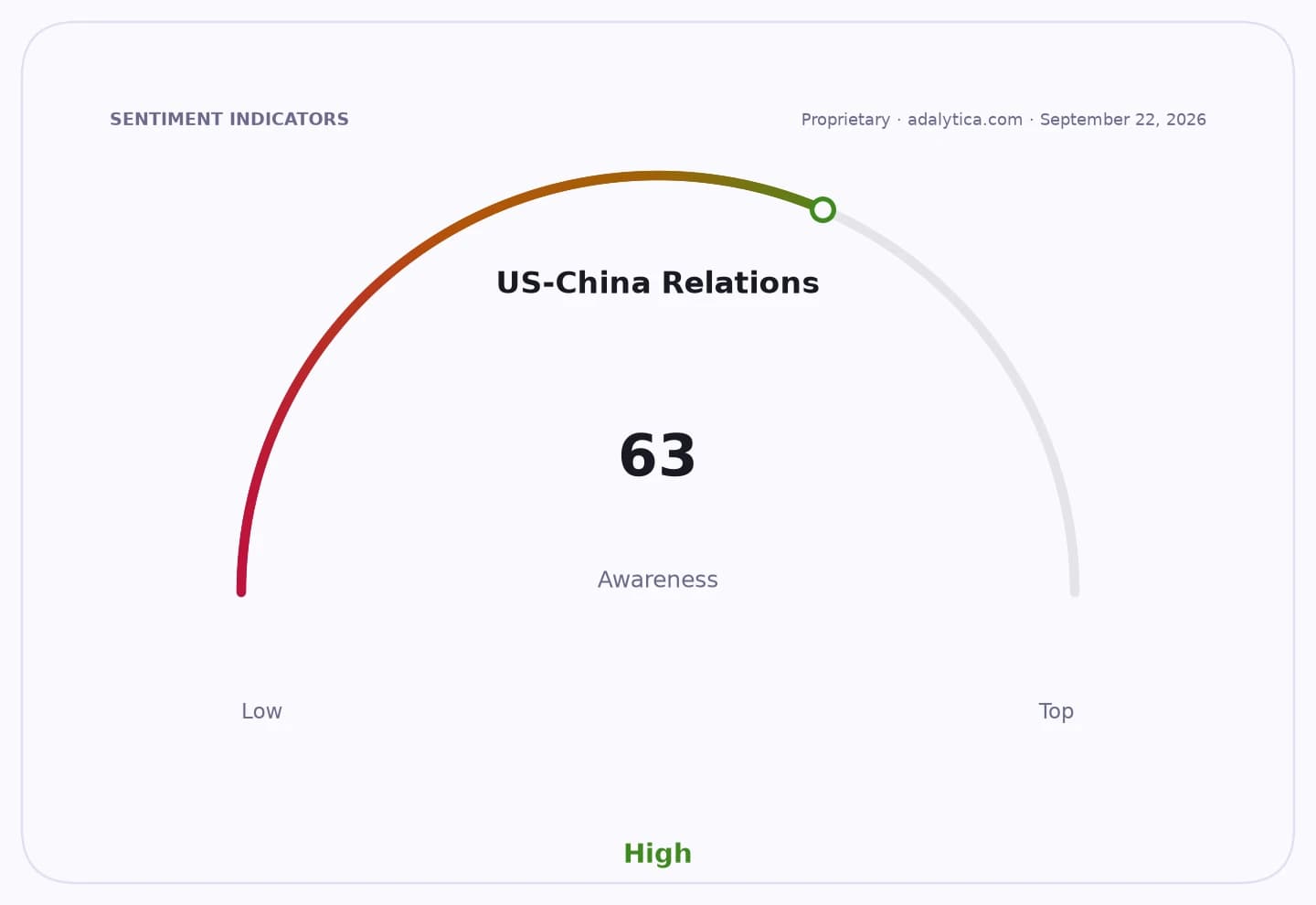
Geopolitical Risk — 30-day sentimentadalytica.com
Explore this data interactively — full history, time series and cross-market comparisons.Open AlphaPulse
For defense contractors, the message is straightforward: demand for integrated air defense, missiles, sensors, command systems and drones remains firm as Taiwan and its partners prepare for more frequent drills and faster procurement cycles. Northrop Grumman, Lockheed Martin and RTX are among the U.S. suppliers that could benefit if Taiwan continues to prioritize missile defense and strike capability.
Markets are not likely to trade the drill in isolation, but repeated signs of military modernization around Taiwan tend to support the defense sector and keep a floor under risk aversion in Asia whenever cross-strait tensions flare. Adalytica’s global stability gauge remains neutral, but its awareness reading sits in fear territory, reflecting how quickly geopolitical shocks can move from headline risk to portfolio risk.
The next catalyst is whether Beijing responds with its own military activity or whether Taiwan follows up with more drills and additional procurement, both of which would keep the security premium in focus for defense investors.
| Entity | Gains | Losses |
|---|---|---|
| Taiwan defense planners | ▲Better deterrence | ▼Higher military spending |
| U.S. defense contractors | ▲More missile and drone orders | ▼Exposure to procurement delays |
| China | ▲Demonstrated leverage over regional risk | ▼Less strategic ambiguity |
| Asia-Pacific risk assets | ▲Less none | ▼Higher geopolitical volatility |