Credit card debt becomes too much when the monthly payment starts growing faster than wages, and the latest mix of rates, inflation and unemployment suggests that threshold is easier to cross than it looks.
Credit Card Debt Pressure Rises as Rates Stay High

The economic backdrop is doing the damage. The Federal Reserve’s policy rate is still around 3.63%, consumer prices are about 334 on the CPI index, and unemployment is holding near 4.1%. That is not recession territory, but it is not a cushion either. For households carrying revolving balances, borrowing costs remain high enough to keep interest charges punitive while prices for essentials stay elevated. Even a small rise in unemployment can quickly turn “manageable” card balances into persistent debt, because credit card rates reset fast and balances compound monthly.
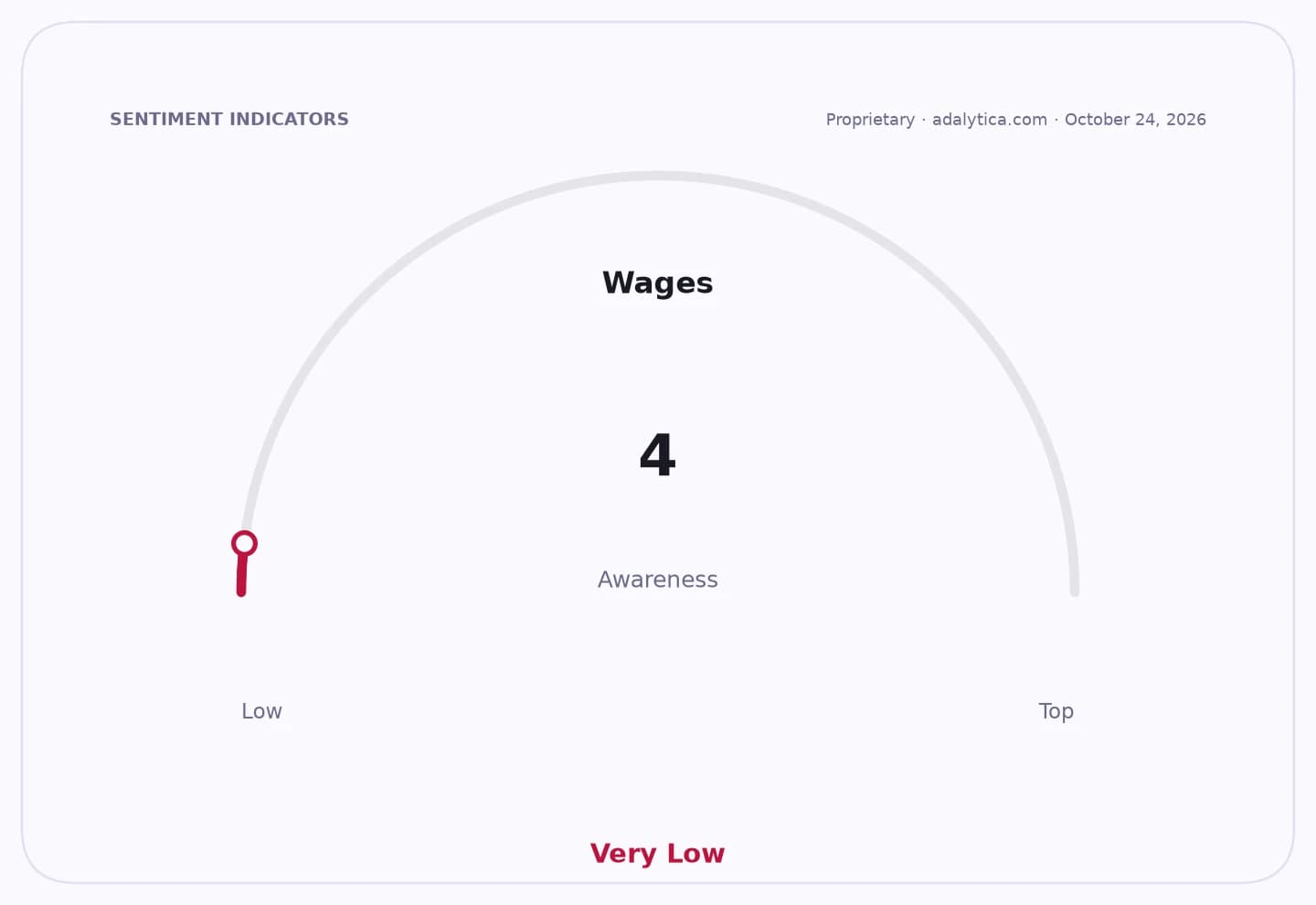
Sentiment IndicatorsⓘProprietary · adalytica.com · September 27, 2026
This is a snapshot — live sentiment, awareness and momentum for 130+ markets update continuously in the dashboard.Open AlphaPulse
That matters because credit card debt is often the most expensive debt on the household balance sheet. Unlike mortgages or auto loans, it is unsecured and variable-rate for most borrowers. When inflation remains sticky, consumers lean on cards to bridge gaps in spending. But if income growth slows or work hours are cut, the debt can snowball. The practical limit is not a fixed dollar amount; it is the point at which minimum payments no longer reduce principal and borrowers begin revolving month after month.
Markets are already pricing that stress into consumer lenders. American Express, Capital One and Synchrony have all seen recent share-price pressure, with AmEx trading around $308.89, Capital One near $200.20 and Synchrony around $72.94 in the latest data. Each sits below recent highs, and standard technical indicators show weak momentum, including depressed RSI readings and MACD lines still below signal in the latest sessions. That reflects investor concern that credit quality can deteriorate quickly if labor-market conditions soften or if consumers keep drawing on cards to absorb inflation.
FEDFUNDS vs CPIAUCSL — macro contextadalytica.com
Explore this data interactively — full history, time series and cross-market comparisons.Open AlphaPulse
The bank results and disclosures also point to a more selective borrower environment. Recent SEC filings from American Express and Capital One show ongoing monitoring of delinquencies and charge-offs, underscoring that lenders are watching the health of U.S. consumer credit closely. For investors, the key question is not whether card spending can persist — it can — but whether it can do so without a sharp jump in loss rates. A benign jobs market gives lenders room to earn strong net interest income; a weaker one forces them to reserve more and tightens access to credit.
That is why the “too much” answer is less about a balance-sheet headline and more about cash flow. For households, card debt becomes dangerous when balances are rising while savings are falling and labor income is fragile. For investors, the warning sign is not the existence of card debt itself, but the combination of sticky inflation, high borrowing costs and any rise in unemployment that turns revolving credit from a convenience into a default risk.
| Entity | Gains | Losses |
|---|---|---|
| Card issuers | ▲Higher interest income | ▼Higher charge-offs |
| Consumers with savings | ▲Credit buffer | ▼None |
| Revolving borrowers | ▲Short-term spending power | ▼Rising debt burden |
| Lenders/investors | ▲Stronger NII if delinquencies stay contained | ▼Reserve builds if credit weakens |