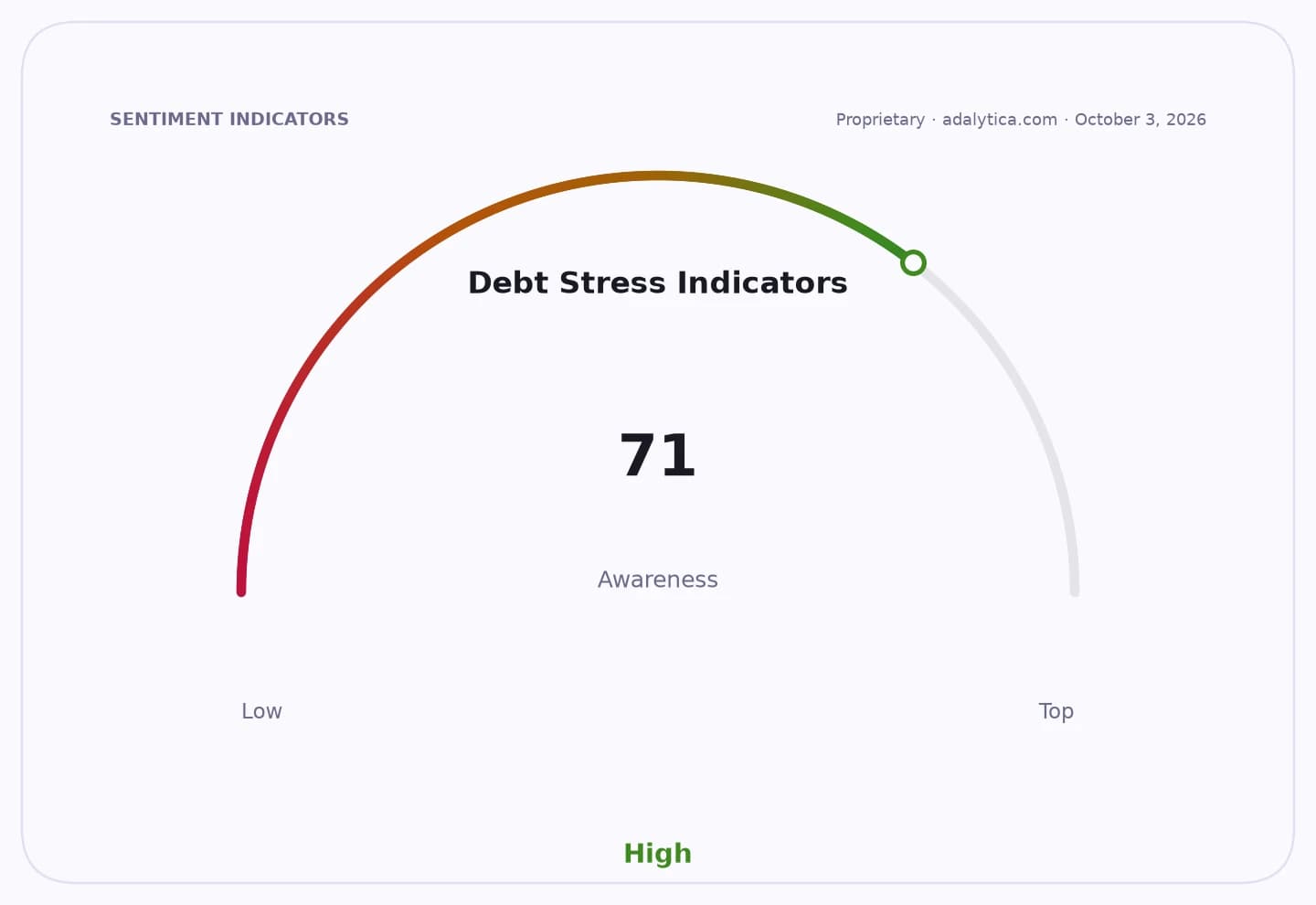
Household debt is becoming a bigger economic risk as borrowing costs stay elevated and more consumers lean on credit to bridge day-to-day spending gaps.
Croatia Household Debt Rises as Rates Stay High
In Croatia, 30.3% of households were indebted at the end of 2023 and early 2024, with average total debt of 22,100 euros, according to the central bank’s triennial household finance survey. That is not just a personal finance issue: it is a sign that a meaningful share of consumers is carrying a debt load large enough to leave them exposed to job losses, illness, divorce or any other shock that can quickly turn manageable obligations into arrears.
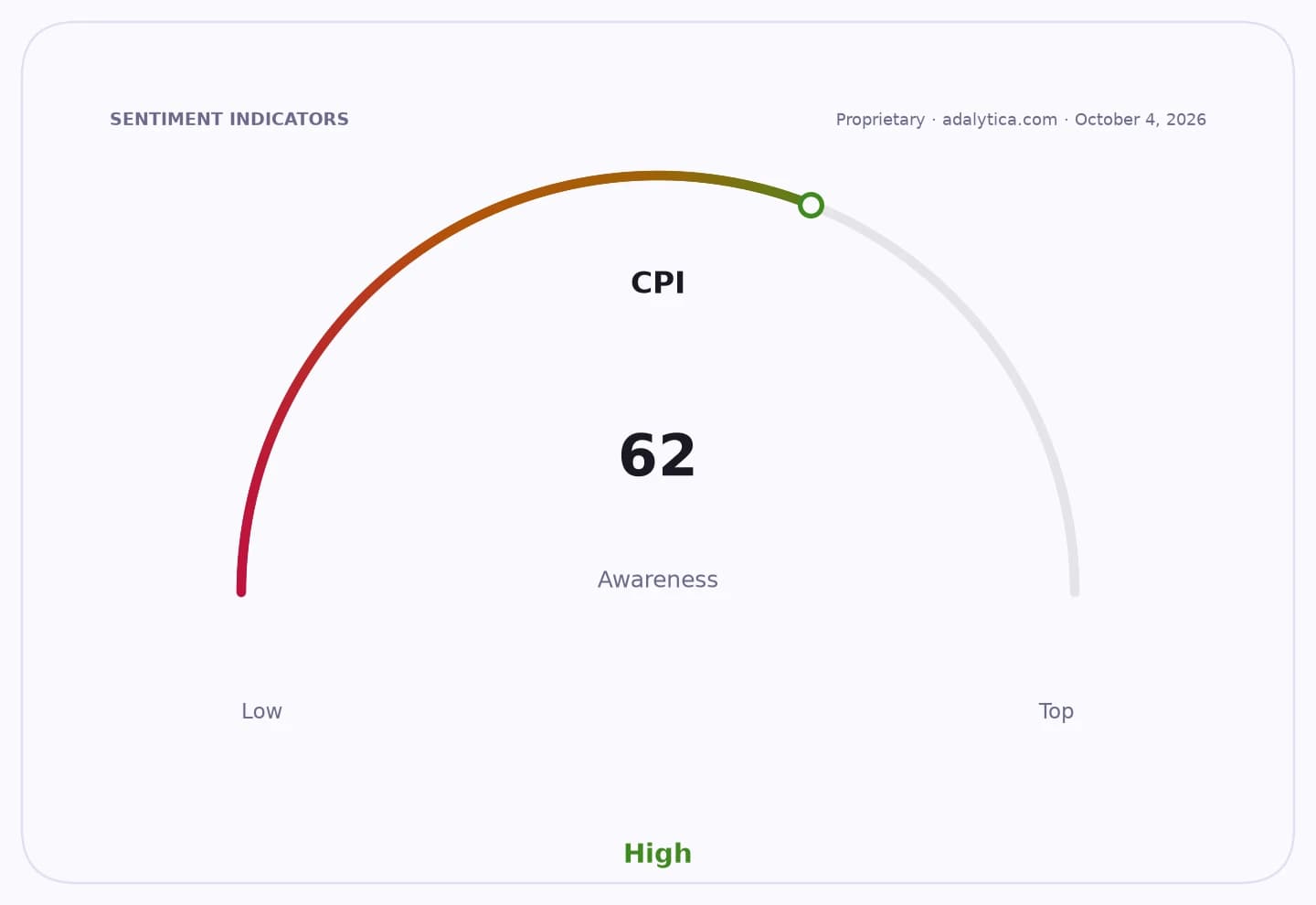
Sentiment IndicatorsⓘProprietary · adalytica.com · October 4, 2026
This is a snapshot — live sentiment, awareness and momentum for 130+ markets update continuously in the dashboard.Open AlphaPulse
The broader backdrop matters. Across developed economies, debt service pressure has risen as rates have normalized from the ultra-low era. In the U.S., the federal funds rate is still around 3.75% in the latest data, while the 10-year Treasury yield is above 5%, keeping consumer loans, revolving credit and refinancing conditions tighter than they were for much of the past decade. That environment tends to punish households that rely on overdrafts, installment purchases and credit cards to smooth consumption, because several modest obligations can become one large burden once financing costs compound.
For lenders, that dynamic is already visible in the share prices of consumer finance firms. Capital One Financial, Synchrony Financial and American Express have all seen their stocks weaken from recent highs, with technical indicators such as the 50-day moving average, RSI readings and MACD pointing to softer momentum for some names. American Express and Capital One have also disclosed monthly delinquency and charge-off data in recent SEC filings, underscoring how closely investors are watching credit quality as household stress evolves.
The story is not that debt is always bad. Borrowing is often rational when it finances a home, education or an unavoidable expense. The problem is when debt is built on short-term spending decisions or on a failure to absorb a shock. The Croatian guidance reflects that reality: the first step is to face the full balance sheet, then separate urgent obligations from expensive ones, and work down balances methodically rather than trying to solve everything at once. That approach matters economically because it reduces the probability that a household slides from liquidity strain into default.
The behavioral side is just as important. Social comparison, “keeping up with the Joneses,” and FOMO-driven purchases can quietly push spending above income, especially when retailers use time-limited discounts to encourage impulse buying. Those are not merely psychological quirks; they are a transmission channel from consumer behavior into credit demand, delinquency and eventually tighter lending standards. When households borrow to sustain lifestyles rather than fund assets, the balance sheet deteriorates faster and the recovery becomes more dependent on higher income or lower rates.
For investors, the key implication is that consumer debt stress can cut both ways. Credit-card and specialty-finance lenders may benefit from higher yields in the near term, but they also face rising loss risk if delinquency trends worsen. Banks with heavier consumer exposure can see provisioning pressure build, while bond markets tend to demand a premium for duration and credit risk when household vulnerability rises. Treasury trading signals also matter here: Adalytica’s trade signal for U.S. Treasury bonds shows fear, while the S&P 500 signal remains neutral, suggesting investors are still balancing growth resilience against the risk that tighter financial conditions start to bite harder.
The practical conclusion is straightforward. Households that confront debt early, prioritize the most expensive obligations and rebuild even a small cash buffer are far less likely to need restructuring. For markets, the next catalyst is whether elevated rates and slower labor-market momentum start to feed more clearly into consumer delinquencies, forcing lenders and policymakers to reassess how much debt the household sector can carry before stress becomes systemic.
| Entity | Gains | Losses |
|---|---|---|
| Households that cut spending | ▲Lower interest burden | ▼Short-term consumption |
| Credit-card lenders | ▲Higher interest income | ▼Higher delinquency risk |
| Bond investors | ▲Higher yields | ▼Greater credit stress |
| Retailers using impulse sales | ▲Near-term sales lift | ▼Weaker demand if households delever |