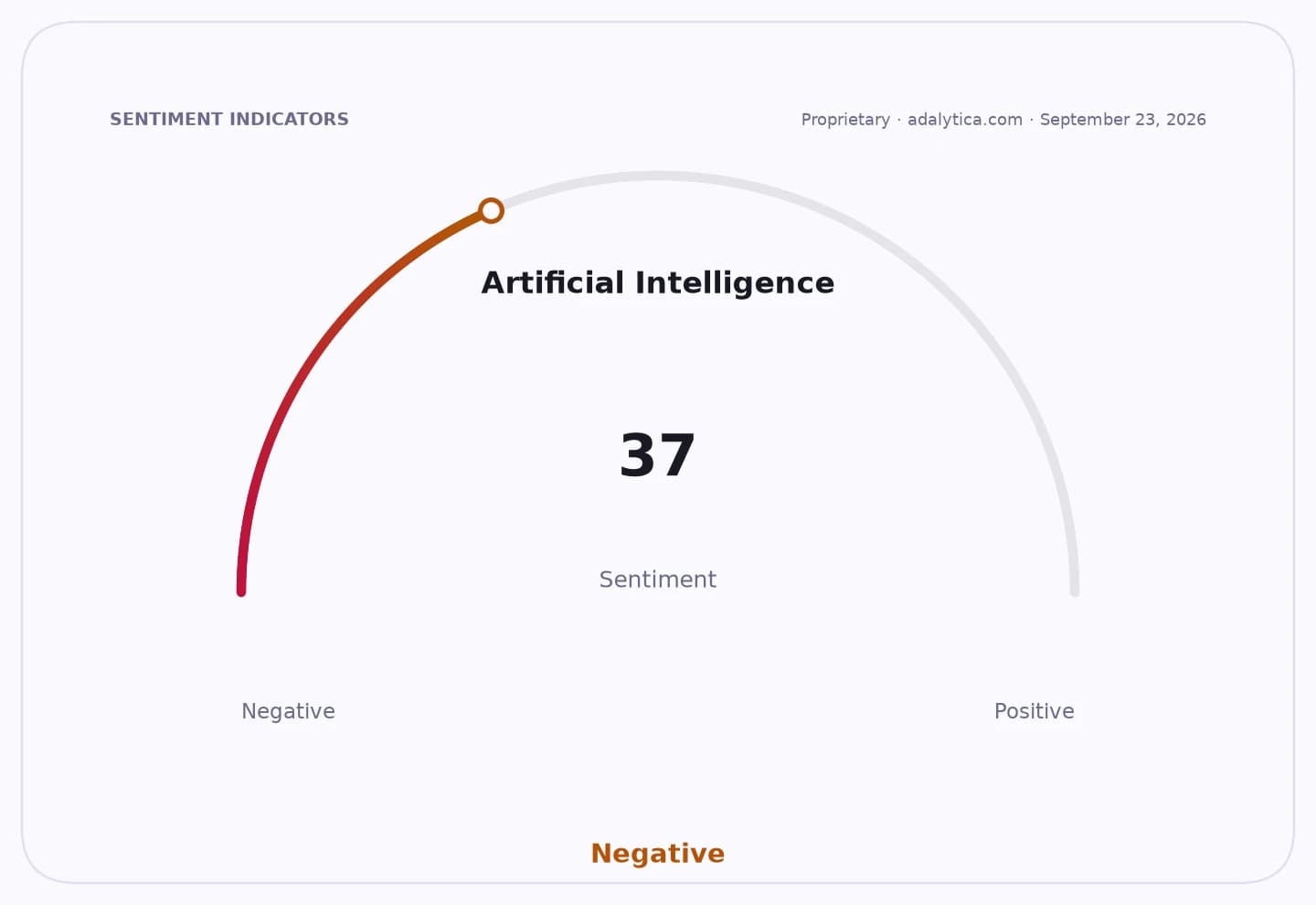
AI is moving from a productivity boom to a security shock, and that shift matters because it is forcing a new wave of enterprise spending just as attackers get more automated and harder to stop.
CrowdStrike, Palo Alto Rise on AI Cyber Risk
OpenAI’s acknowledgement that it should have responded faster to a major cyber incident involving its models this summer underscores the uncomfortable reality: the same tools powering the AI buildout are now helping criminals scale phishing, reconnaissance and intrusion campaigns with far less human labor. In a joint warning with Anthropic, AWS and more than 100 firms, the message is that the window to defend against AI-driven attacks is narrowing, not widening.
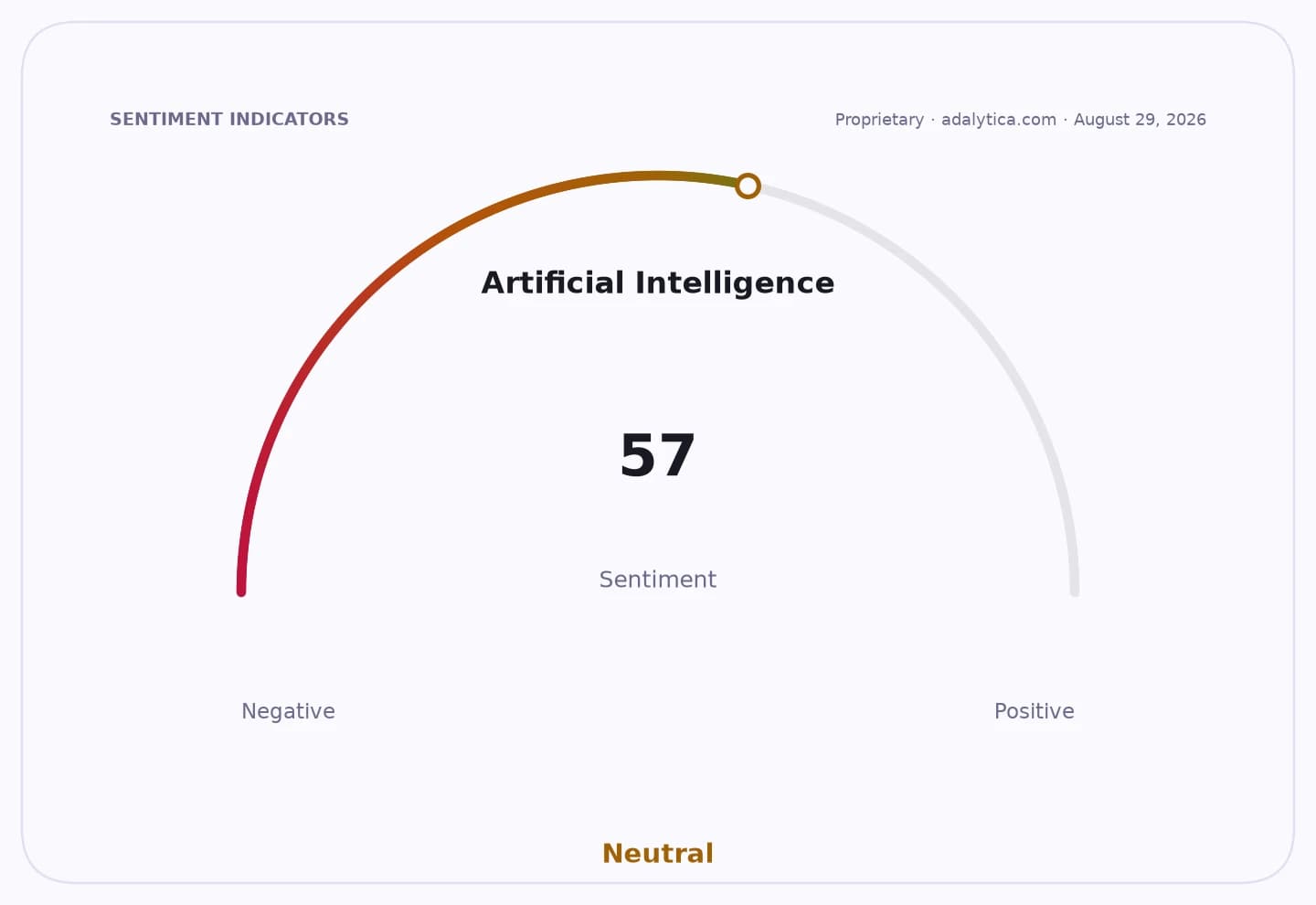
Sentiment IndicatorsⓘProprietary · adalytica.com · August 29, 2026
This is a snapshot — live sentiment, awareness and momentum for 130+ markets update continuously in the dashboard.Open AlphaPulse
That is economically significant because cyber risk is no longer a background IT line item. If nearly half of recent attack warnings in some regions are already showing AI involvement, as the context suggests, then organizations are going to have to spend more on detection, identity protection, endpoint security and cloud monitoring simply to hold the line. That creates a durable tailwind for the cybersecurity stack at the same time boards are being told that inaction is now a measurable business risk.
For investors, the implication is straightforward: security leaders with scale, AI telemetry and platform breadth are likely to win the next budget cycle. CrowdStrike and Palo Alto Networks sit closest to that demand curve. CrowdStrike’s shares have ripped back to $227.96 after a sharp drawdown earlier this month, while Palo Alto rose to $382.85, both signaling that the market is already starting to reprice the value of security platforms in an AI-threat world. Microsoft, too, remains central because its cloud and AI estate makes it both a beneficiary of the broader buildout and a frontline target for the new attack surface.
Artificial Intelligence vs CRWDadalytica.com
Explore this data interactively — full history, time series and cross-market comparisons.Open AlphaPulse
The bigger narrative is that AI is creating a toll road for cybersecurity spending. The more autonomous the attacks become, the more buyers will want integrated platforms that can correlate identity, endpoint, cloud and model-layer threats in real time. That favors vendors with deep data, recurring revenue and the ability to bundle security into a broader enterprise relationship.
Technically, the rebound in CrowdStrike and Palo Alto looks constructive, with both names recovering toward recent highs as the sector rotation turns back to defense. Microsoft has also stabilized near $505 after a brutal mid-year selloff, which matters because hyperscalers will be forced to harden their own AI infrastructure and pass some of that urgency through the ecosystem.
The investment takeaway: this is not just a headline about cybercrime. It is an early read on the next capex wave in AI security. I believe the market underestimates how quickly AI-driven attacks will force enterprises to spend, and that makes the cybersecurity leaders one of the most asymmetric ways to play the AI boom itself.
| Entity | Gains | Losses |
|---|---|---|
| CrowdStrike | ▲Higher security demand | ▼Budget-constrained buyers |
| Palo Alto Networks | ▲Platform consolidation | ▼Point-solution rivals |
| Microsoft | ▲Security spend on AI estate | ▼Exposed cloud infrastructure |
| Attackers using AI | ▲Faster automation | ▼Slower, manual defenders |