An industry-backed survey says as many as 33 million U.S. adults who do not currently own cryptocurrency are likely to buy in 2026, underscoring how much room the market still has to expand even as skepticism, confusion and fraud fears continue to restrain adoption.
Crypto Survey Finds 33 Million U.S. Adults May Buy in 2026
The number is notable because it suggests crypto’s U.S. addressable market may be widening beyond the existing owner base, a development that matters for trading volumes, exchange revenues and the long-term case for mainstream digital-asset investing. But the report is a measure of intent, not actual purchases, and the biggest hurdle remains basic understanding rather than a lack of access.
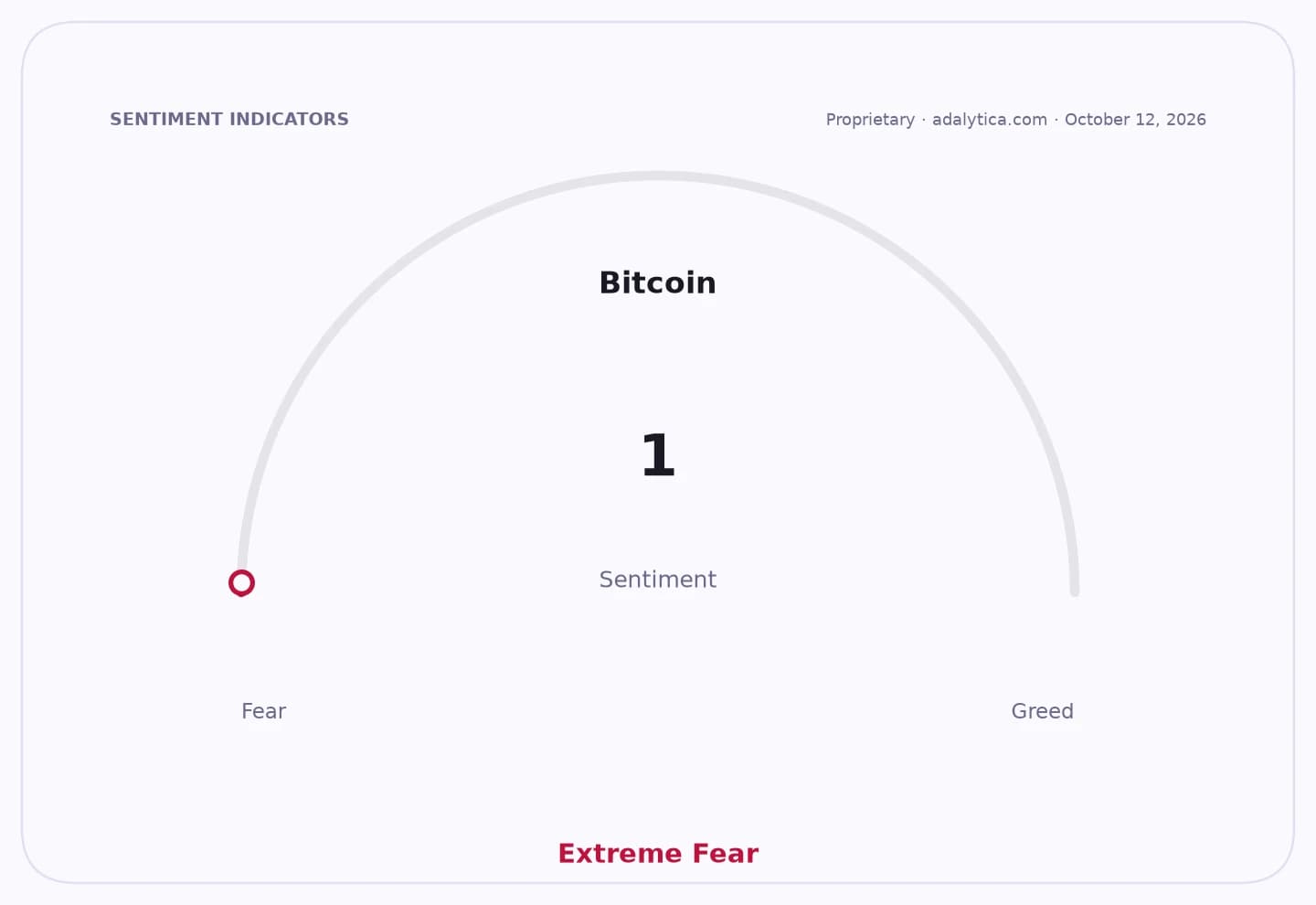
Sentiment IndicatorsⓘProprietary · adalytica.com · October 17, 2026
This is a snapshot — live sentiment, awareness and momentum for 130+ markets update continuously in the dashboard.Open AlphaPulse
The 2026 Crypto Readiness Report, commissioned by the National Cryptocurrency Association and conducted by The Harris Poll, surveyed 2,014 U.S. adults who did not own crypto. It found 59% were open to owning it in some form, while 41% said they actively avoided it. The headline estimate of 33 million prospective buyers comes from extrapolating responses nationally, not from observed transactions.
That distinction matters for investors. Crypto adoption has long been driven by cycles of price appreciation, speculation and product innovation, but sustained growth depends on converting curiosity into actual account openings and funded purchases. If even a fraction of those 33 million nonowners move from interest to action, it would support trading activity at exchanges and brokerages and deepen liquidity across bitcoin and other digital assets.
Still, the survey points to a familiar bottleneck. Lack of understanding was the most common barrier, cited by 48% of respondents among their top three reasons for staying out. Security and fraud concerns followed at 43%. Asked what would make them more comfortable, 26% pointed to easier-to-understand information and 25% to stronger fraud or scam protections.
Those findings help explain why crypto-related equities remain highly sensitive to changes in retail participation and confidence. Coinbase, Robinhood and other listed platforms benefit when new users enter the market and trade more frequently, but they also face the burden of proving that crypto can scale beyond speculative bursts. Coinbase shares recently have been viewed cautiously as the sector awaits fresh earnings updates, while Robinhood and Block are also under scrutiny as investors assess whether interest in digital assets is translating into durable revenue.
The report also suggests that the growth narrative for crypto is shifting from pure price momentum to education, user experience and consumer trust. Among respondents who said they were likely to buy in 2026, 41% cited portfolio diversification. That is a more traditional investment rationale than the meme-driven or momentum-led behavior that dominated earlier crypto cycles, and it could broaden the appeal of digital assets if marketed and packaged more like mainstream financial products.
For now, though, the industry still has a credibility problem. A survey can quantify openness, but it cannot guarantee conversion, especially in a market still marked by volatile prices, regulatory uncertainty and recurring concerns over scams and custody risks. The most important takeaway for investors is that the next phase of crypto adoption may depend less on another rally and more on whether the industry can make ownership feel understandable, safer and more routine.
| Entity | Gains | Losses |
|---|---|---|
| Crypto exchanges | ▲More potential users and trading volume | ▼Reliance on fragile retail intent |
| Coinbase, Robinhood, Block | ▲Higher adoption could lift revenue | ▼Trust and compliance burden |
| Nonowners open to crypto | ▲Easier access to diversification | ▼Risk of losses and fraud |
| Skeptical consumers | ▲Lower near-term exposure | ▼Missed upside if adoption widens |