Cyprus’ income inequality remains above the European Union average, underscoring a labour market split between high earners in finance and low-paid workers in sectors such as agriculture that could keep consumer demand uneven and complicate efforts to broaden growth.
Cyprus inequality stays above EU average in 2025
Eurostat said Cyprus posted a Gini coefficient of 31.2 in 2025, higher than the EU average of 29.2, even as the bloc as a whole saw a modest improvement from 29.4 a year earlier. The reading leaves Cyprus slightly below Greece but well above more equal-income economies such as Slovakia and Belgium, and points to a distribution of disposable income that remains skewed by household and sectoral differences.
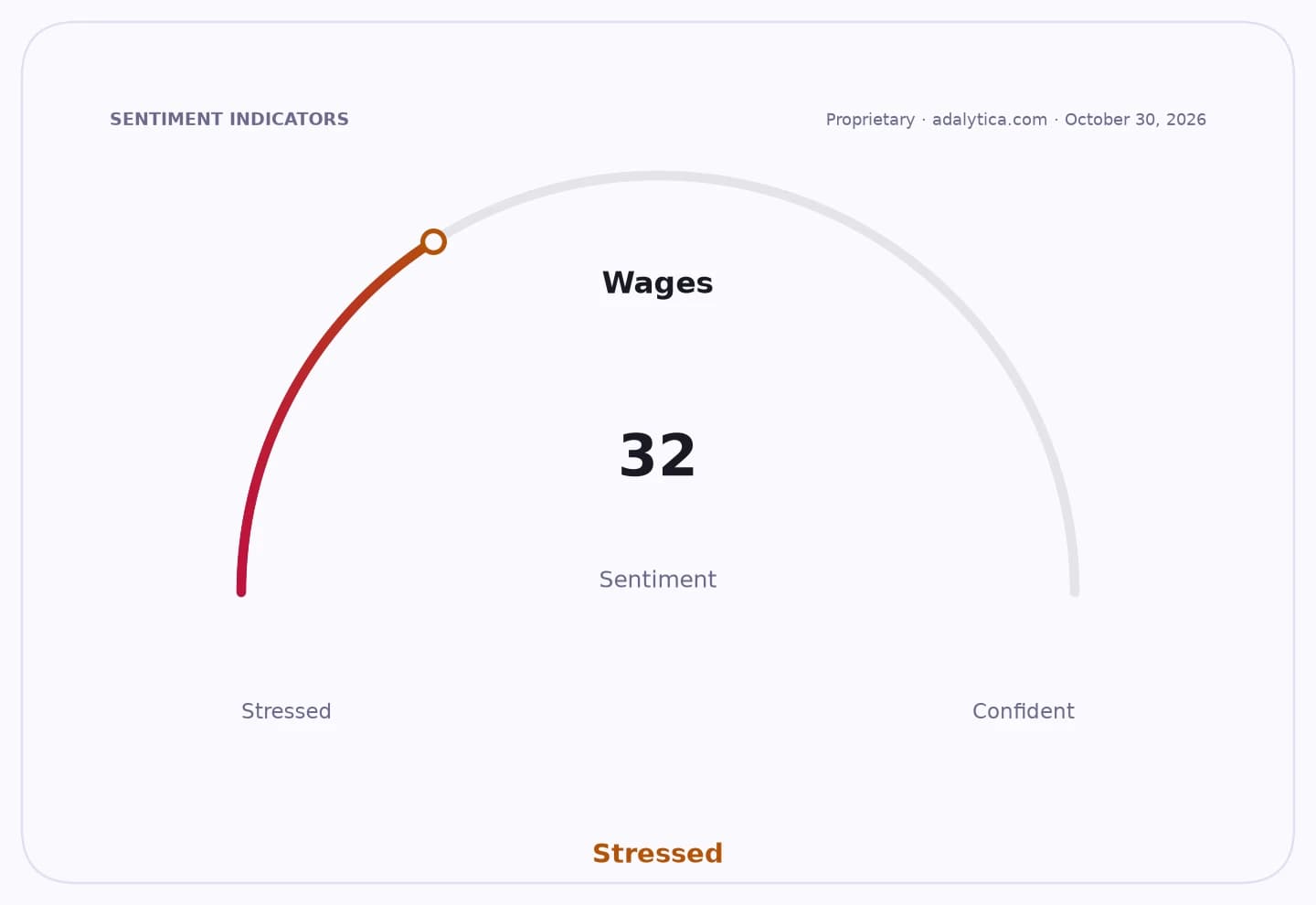
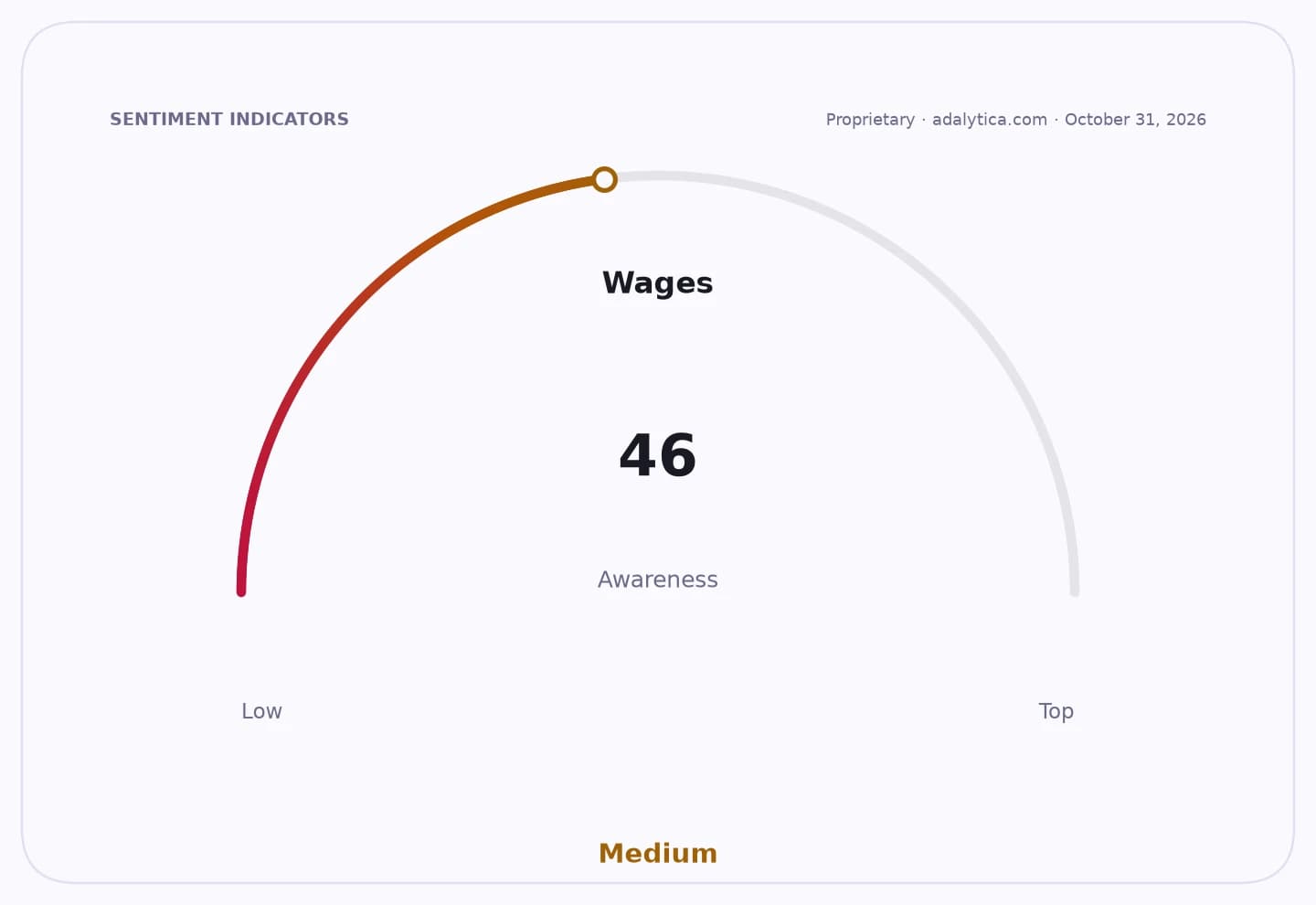
Sentiment Indicators
The broader significance is that inequality in a small, open economy can translate quickly into uneven spending power. When a larger share of income accrues to top earners, domestic consumption tends to become more dependent on asset-rich households and services exposed to tourism, finance and professional activity. That leaves lower-paid workers more vulnerable to inflation, weak wage bargaining power and abrupt shifts in employment conditions.
Separate 2025 earnings figures from the Cyprus Statistical Service give a sharper picture of those gaps. Average gross monthly earnings were €2,591, versus a median of €1,953, a difference of €638 or about 33%. That spread shows how a relatively small cohort of high earners pulls the average above what most workers actually take home.
The distribution is also heavily skewed toward the bottom end. Almost a quarter of employees — 24.2% — earned less than €1,500 a month, while the single largest pay band was €1,000 to €1,249, accounting for 13% of workers. At the top end, men held a 3.1 percentage point advantage in the €6,000-and-above bracket, highlighting how the best-paid jobs remain unevenly distributed by gender.
Sectoral pay differences were even starker. Average monthly earnings ranged from €956 in agriculture to €5,038 in financial and insurance activities, meaning the best-paid sector paid more than five times as much as the weakest. For investors, that matters because it reinforces the role of financial services as a key income engine, while leaving swathes of the labour force tied to lower-productivity activity that offers less scope for broad-based wage growth.
Nationality also remains a dividing line. Cypriot workers had median monthly earnings of €2,145, compared with €1,597 for non-Cypriots. Among non-Cypriots, average pay ranged from €664 in agriculture to €6,649 in financial and insurance activities, suggesting that migration remains closely linked to both low-wage jobs and the most competitive parts of the services economy.
The data does not point to a macro crisis. Cyprus unemployment is low by European standards, and the country’s growth model still benefits from finance, business services and tourism. But the persistence of a wide income gap is economically relevant because it can limit the durability of consumption-led growth, sharpen social pressure for redistribution and raise the political cost of policies seen as favouring capital or higher earners.
For investors, the takeaway is mixed. Banks and financial services firms benefit from a wage structure that supports a strong high-income segment and steady demand for credit and wealth services. At the same time, retailers, mass-market consumer companies and housing-linked sectors may face a more stretched middle and lower-income customer base. The figures also suggest that policymakers will remain under pressure to address pay dispersion through labour-market measures, tax policy and training if they want growth to be more evenly shared.
| Entity | Gains | Losses |
|---|---|---|
| Financial and insurance firms | ▲Higher-income customer base | ▼— |
| Low-wage workers | ▲— | ▼Slower earnings convergence |
| Cypriot economy | ▲Strong services sector | ▼Broad-based consumption |
| Policymakers | ▲Clear case for reform | ▼Pressure over inequality |