Cyprus’s economy is growing much faster than workers’ pay, and that gap is now shaping the political fight over minimum wages, tax relief and labor rights.
Cyprus wage growth lags economy in 2020-2025
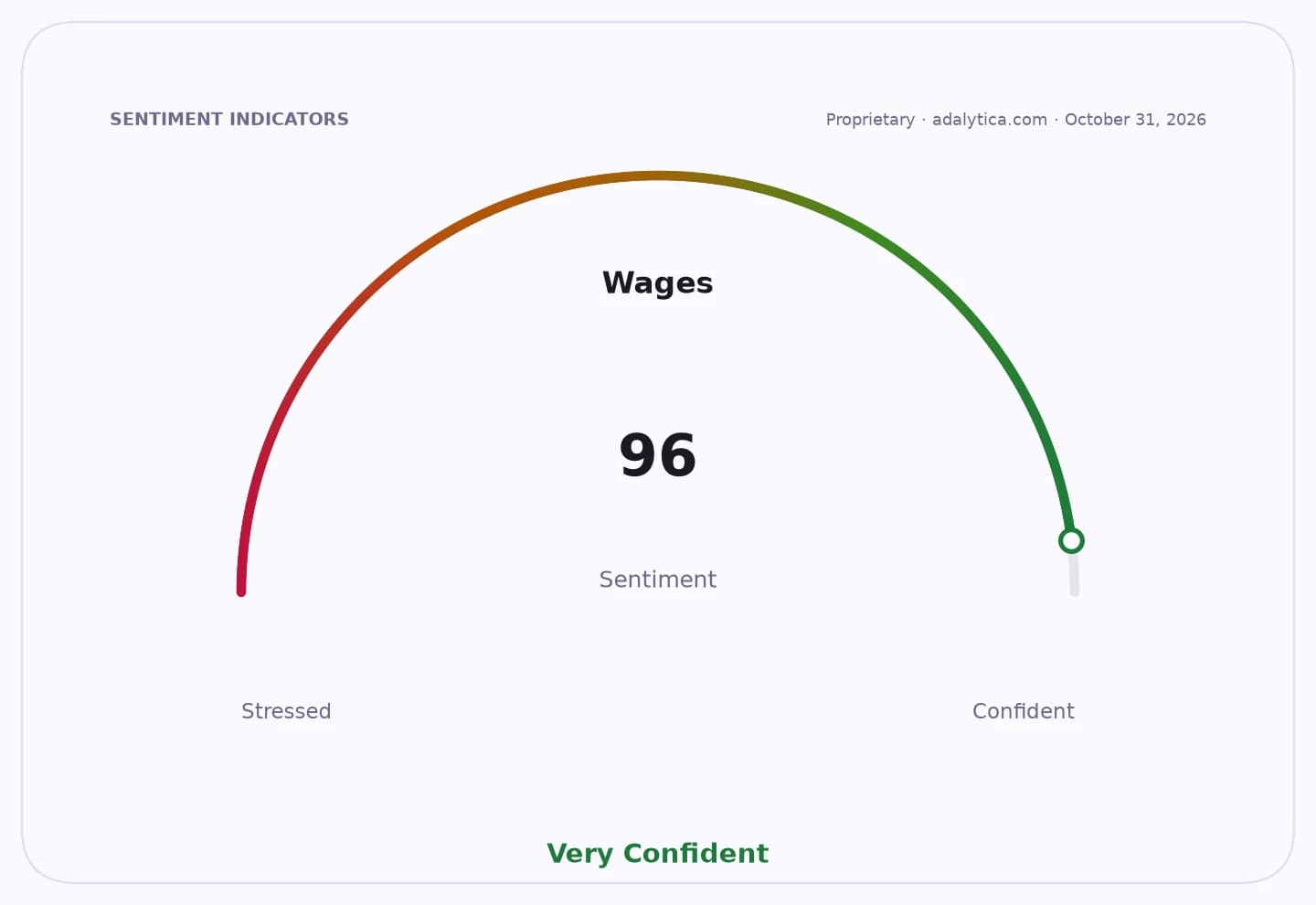
Wages
From 2020 to 2025, the economy expanded 35.4% in real terms, while the real average wage rose only 10.4% and the median wage just 5.9%, underscoring how much of the recovery has bypassed ordinary employees. That disconnect matters economically because weak wage transmission can keep household demand subdued even when GDP and state finances look strong.
Sentiment Indicators
The divide is especially sharp across sectors. The average wage in financial services reaches €5,038, compared with just €1,649 in tourism and hospitality, while half of employees earn no more than €1,953 gross and more than a third make less than €1,500.
Inflation pressure is still eroding the lowest paid. The purchasing power of the minimum wage fell 2.8% between July 2025 and July 2026, according to the figures cited, while three in four workers remain without collective bargaining coverage. For investors, that points to a consumer base that is growing more slowly than headline output suggests, even as the island posts state surpluses and talks up resilience.
The political response is moving toward tax relief and wage intervention. The government is fast-tracking a wage law that would exempt the upcoming minimum-wage increase from income tax, while opposition party Akel is pressing for a bigger minimum wage, an inflation-linked adjustment mechanism and broader collective agreements.
That mix could support take-home pay for lower-income workers without immediately raising labor costs as much as a straight wage hike, but it also highlights the broader constraint on Cyprus’s economy: growth is being carried by sectors and households that are not evenly sharing in it. The next test is whether the wage law and tax changes can reach workers quickly enough to ease pressure on consumption and labor unrest.
| Entity | Gains | Losses |
|---|---|---|
| Low-wage workers | ▲Higher take-home pay | ▼Real wage erosion |
| Government | ▲Political cover on wages | ▼Pressure over inequality |
| Employers in tourism/hospitality | ▲Slower immediate labor-cost shock | ▼Higher wage demands later |
| Financial sector workers | ▲No direct effect | ▼Public scrutiny of wage gaps |