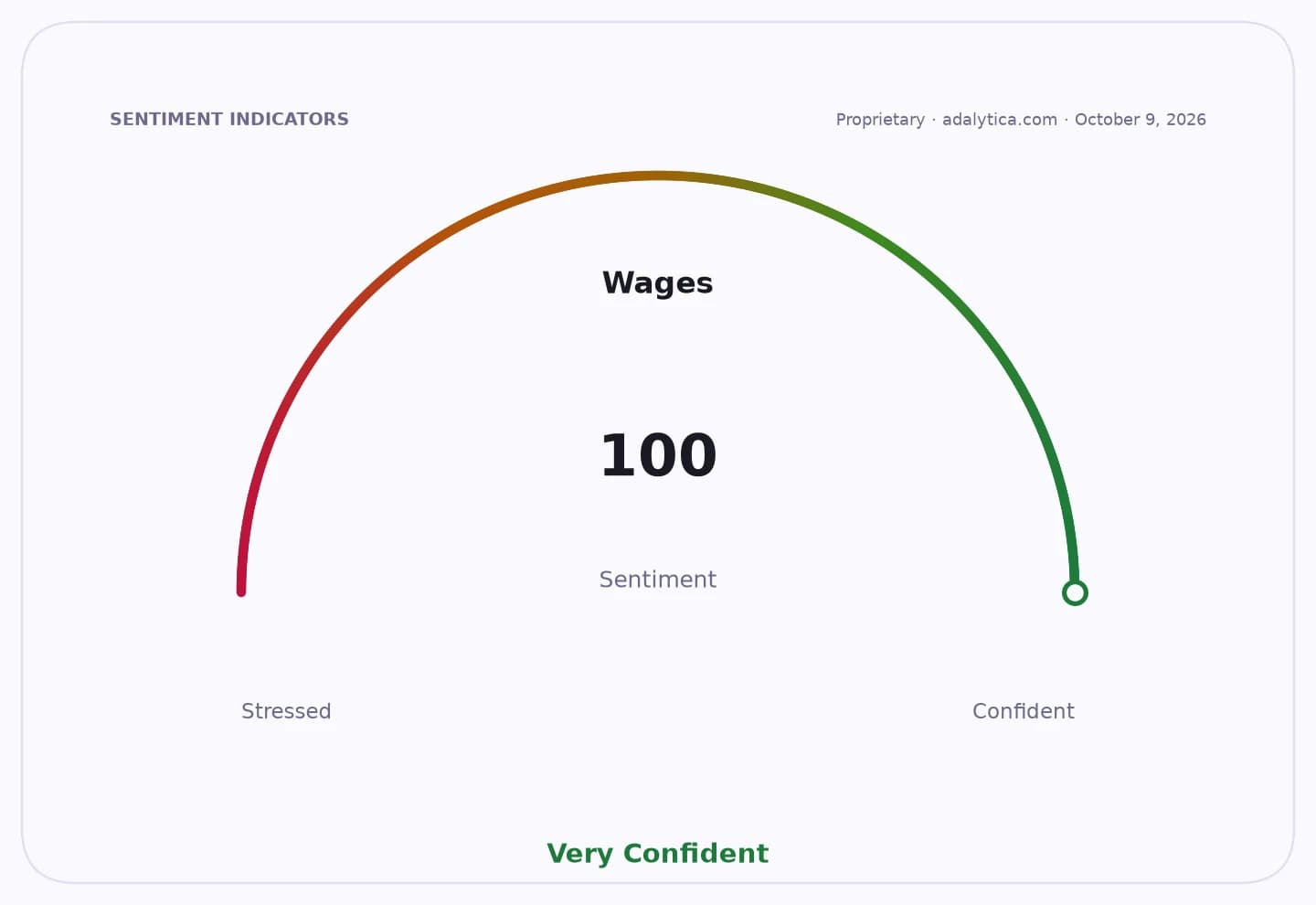
Greece will raise the minimum wage and cut unemployment contributions from April 2027, giving about 600,000 private-sector employees a modest boost in take-home pay even as employers face higher labor costs overall.
Greece to Raise Minimum Wage in April 2027
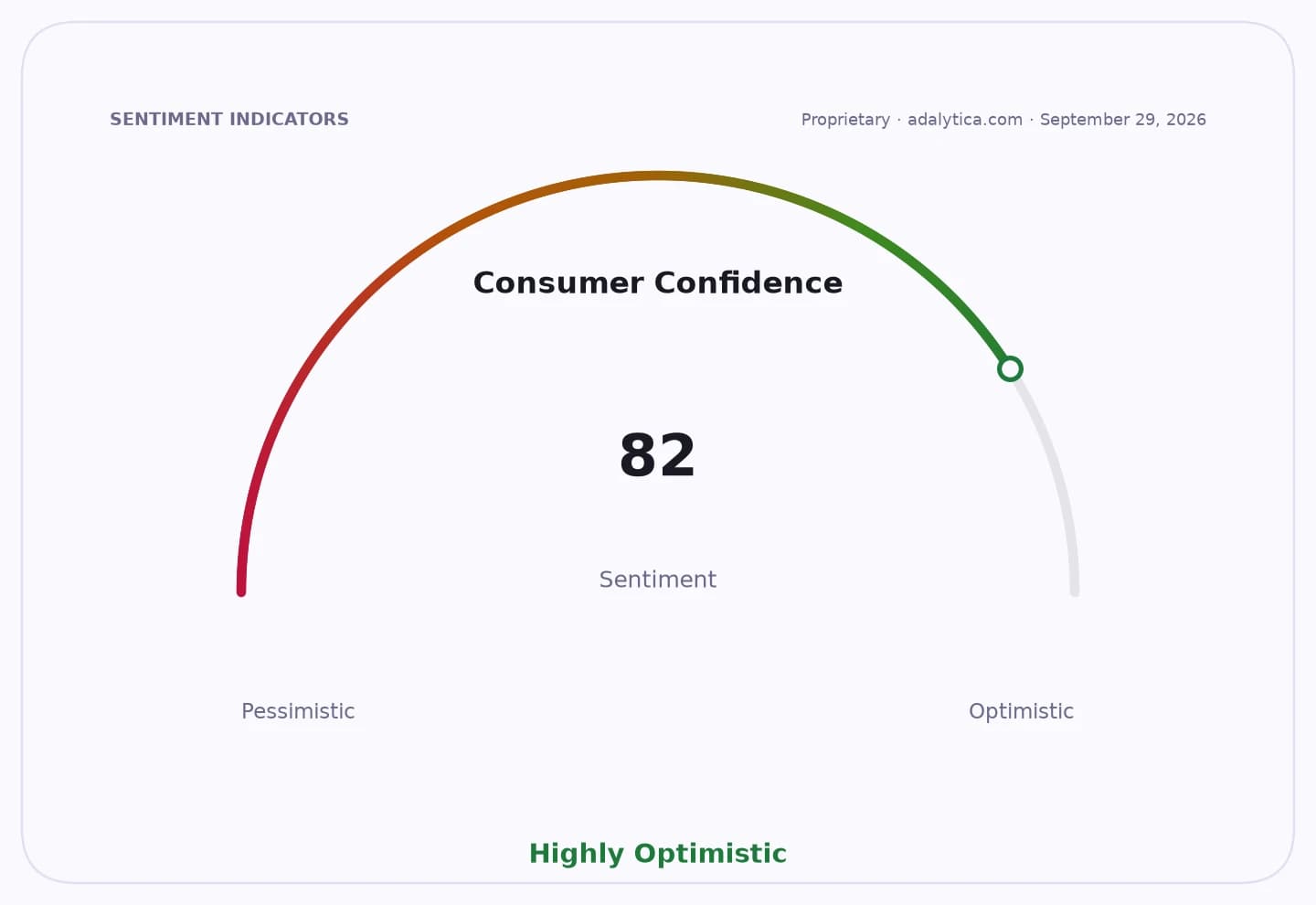
Consumer Confidence
The move matters because it combines a transfer to workers with a broader attempt to keep labor-market costs contained at a time when policymakers are still trying to support consumption without stoking inflation. Under the draft law, the total unemployment contribution falls to 1.9% from 2.4%, with the worker’s share reduced to 0.7% from 1.2% while the employer rate stays unchanged at 1.2%. The change effectively shifts the relief to employees, lifting net pay before tax.
Sentiment Indicators
For workers on the new minimum wage of 960 euros gross a month, which the government has signaled will rise from 920 euros, the direct gain from the lower deduction is only about 4.8 euros a month. On 1,000 euros gross, the monthly gain rises to 5 euros, and on 2,000 euros it reaches 10 euros. Spread across a full year, that equates to 60 euros, 90 euros and 120 euros respectively — though in 2027 the measure would apply only from April, limiting the immediate impact.
The bigger economic significance is on the demand side. Greece’s labor market has improved sharply from the crisis years, with unemployment now around 4.1% in the latest readings, far below the double-digit levels seen in the past decade. Employment has also been expanding steadily, with payrolls close to 159,000 in the data set cited. In that context, the policy aims to reinforce disposable income without a large fiscal outlay, supporting household spending at a time when consumer confidence remains fragile and market sentiment indicators show elevated caution.
For investors, the key question is whether the wage hike and lower employee deductions will support consumption enough to offset the higher wage bill for businesses. The draft estimates suggest total employer labor costs still rise for the minimum wage cohort, to 1,169.18 euros a month for a 960-euro gross salary, and to 1,217.9 euros for a 1,000-euro salary. That may be manageable for larger firms but tighter for small employers, especially in labor-intensive sectors such as retail, hospitality and services.
The policy also highlights a familiar trade-off in Greece’s labor market: stronger household income versus pressure on company margins. Bulls will argue the measure supports domestic demand, reinforces formal employment and helps protect low-wage workers from inflation. Bears will note the cash benefit to workers is small, while businesses still absorb higher payroll costs, which could weigh on hiring or force price increases if demand is weak.
The main investor takeaway is that the government is prioritizing income support for workers while keeping the employer contribution rate unchanged, a sign it wants to boost net pay without changing the broader tax wedge too abruptly. The next catalyst will be how the measure is folded into the final 2027 budget and whether the wage increase is accompanied by any further labor-cost relief for firms.
| Entity | Gains | Losses |
|---|---|---|
| Low-wage workers | ▲Higher net pay | ▼Still limited relief |
| Employers | ▲Stable contribution rate | ▼Higher payroll costs |
| Greek consumers | ▲More disposable income | ▼Limited boost in real terms |
| Labor-intensive firms | ▲Predictable policy framework | ▼Margin pressure |