Cyprus is back under pressure from inflation, with prices rising 5.2% in August and leaving the island with the second-highest rate in the euro area, a development that is squeezing wages, household budgets and forcing renewed political pressure on the government.
Cyprus Inflation Rises 5.2% in August

For workers, the significance is immediate: the PEO union said Cyprus has now run above the eurozone average for four straight months, with the gap widening to 1.9 percentage points. That divergence matters because Cyprus is not dealing with isolated price spikes, but with a persistent loss of purchasing power at a time when many families are already exposed to higher food, housing and transport costs.
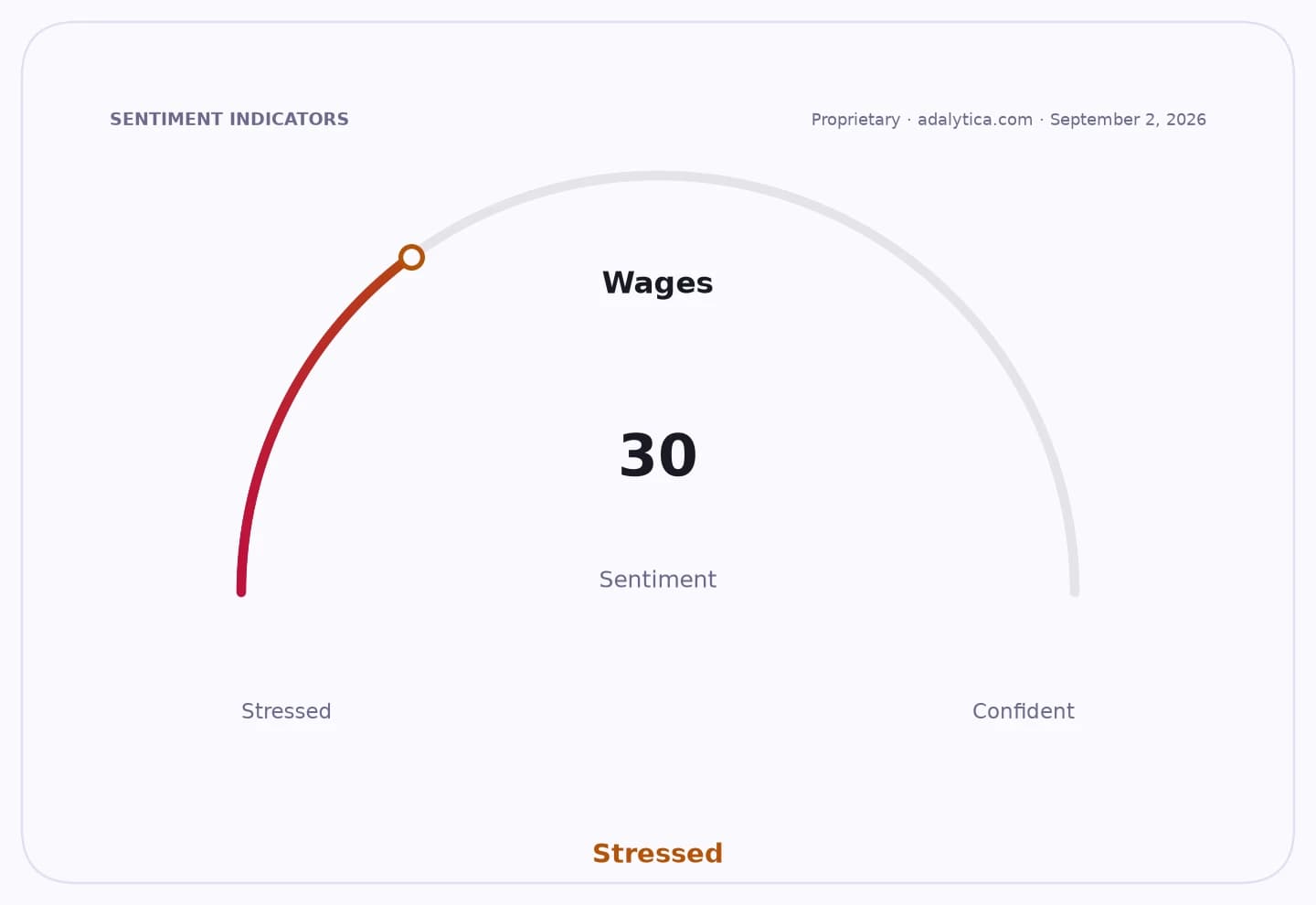
Sentiment IndicatorsⓘProprietary · adalytica.com · September 3, 2026
This is a snapshot — live sentiment, awareness and momentum for 130+ markets update continuously in the dashboard.Open AlphaPulse
The burden is falling hardest on lower-income households. PEO said overall prices have climbed 17.19% since 2020, but food is up 20.27%, housing 36.72% and transport 21.56%. Those categories absorb a larger share of income for poorer workers, meaning headline inflation understates the strain on daily living standards. In practice, the inflation shock is not just a macroeconomic statistic; it is a real-income squeeze that can depress consumption and deepen inequality.
The union’s criticism goes beyond the latest CPI print and points to a broader policy failure. It argues that government support has been piecemeal and temporary, including relief on electricity, fuel and heating costs that has not been made permanent. It also says the guaranteed minimum income has been frozen for 12 years, while wage-protection mechanisms do not cover a large share of workers because of labour-market deregulation.
That political pressure matters for markets because it raises the likelihood of further fiscal intervention, particularly around electricity VAT, fuel taxation and social transfers. PEO is calling for a permanent 5% VAT rate on electricity, wider access to discounted power tariffs, higher indexed benefits, an end to what it calls double taxation on fuels, and an expansion of automatic wage indexation. Each would have distributional consequences and could affect consumer spending, utility pricing and government revenue.
The backdrop is a Cyprus economy that has otherwise been growing and adding jobs, which makes the inflation problem more visible rather than less. When unemployment is relatively low, workers have less protection from a prolonged rise in living costs unless wages keep pace. If they do not, domestic demand can weaken even in an expanding economy, creating a drag on growth and a political opening for unions and opposition parties to demand more aggressive relief.
Investors should watch two channels. First is the ECB, where persistent inflation pressure in the euro area keeps policy restrictive for longer, leaving borrowing costs elevated across the bloc. Second is Cyprus-specific fiscal policy, as any shift toward broader subsidies or tax cuts would affect utilities, fuel demand and public finances. The central issue is whether wage growth and social policy can catch up with price pressures before inflation becomes embedded in household behaviour and wage negotiations.
| Entity | Gains | Losses |
|---|---|---|
| Workers and households | ▲Higher relief if support expands | ▼Purchasing power from 5.2% inflation |
| Cyprus government | ▲Revenue from higher prices | ▼Political credibility on cost-of-living policy |
| ECB / rate hawks | ▲Case for restrictive policy | ▼Those expecting faster rate cuts |
| Consumer-sensitive sectors | ▲Potential boost from subsidies | ▼Margins if taxes or regulation rise |