Czech central bank gold buying has accelerated to a record pace, lifting reserves above 63 tonnes as Prague uses the recent bullion selloff to deepen a strategic shift away from reliance on paper assets.
Czech Gold Buying Signals Reserve Diversification

The move matters because official-sector gold demand has become one of the strongest supports for the bullion market at a time when high U.S. yields and a firmer dollar would normally pressure non-yielding assets. Czech policymakers are treating the price decline not as a warning signal, but as an opportunity to build a larger reserve buffer against geopolitical and currency risk.
Sentiment Indicators

“We took advantage of the price drops,” the central bank said, according to the seed report, after gold retreated sharply from its March highs. Comex gold futures closed at $4,104.10 on July 10, down about 22% from $5,294.40 in early March. The SPDR Gold Shares ETF closed at $377.01, below both its 50-day and 200-day moving averages, conventional technical levels watched by market traders.
The Czech buying fits a wider pattern of central banks increasing gold allocations as reserve managers seek assets outside the dollar-based financial system. The National Bank of Tanzania has bought 28 tonnes worth about $3.68 billion over the past 18 months, while other institutions have expanded their role in bullion markets, including Citi joining London’s gold clearing network.

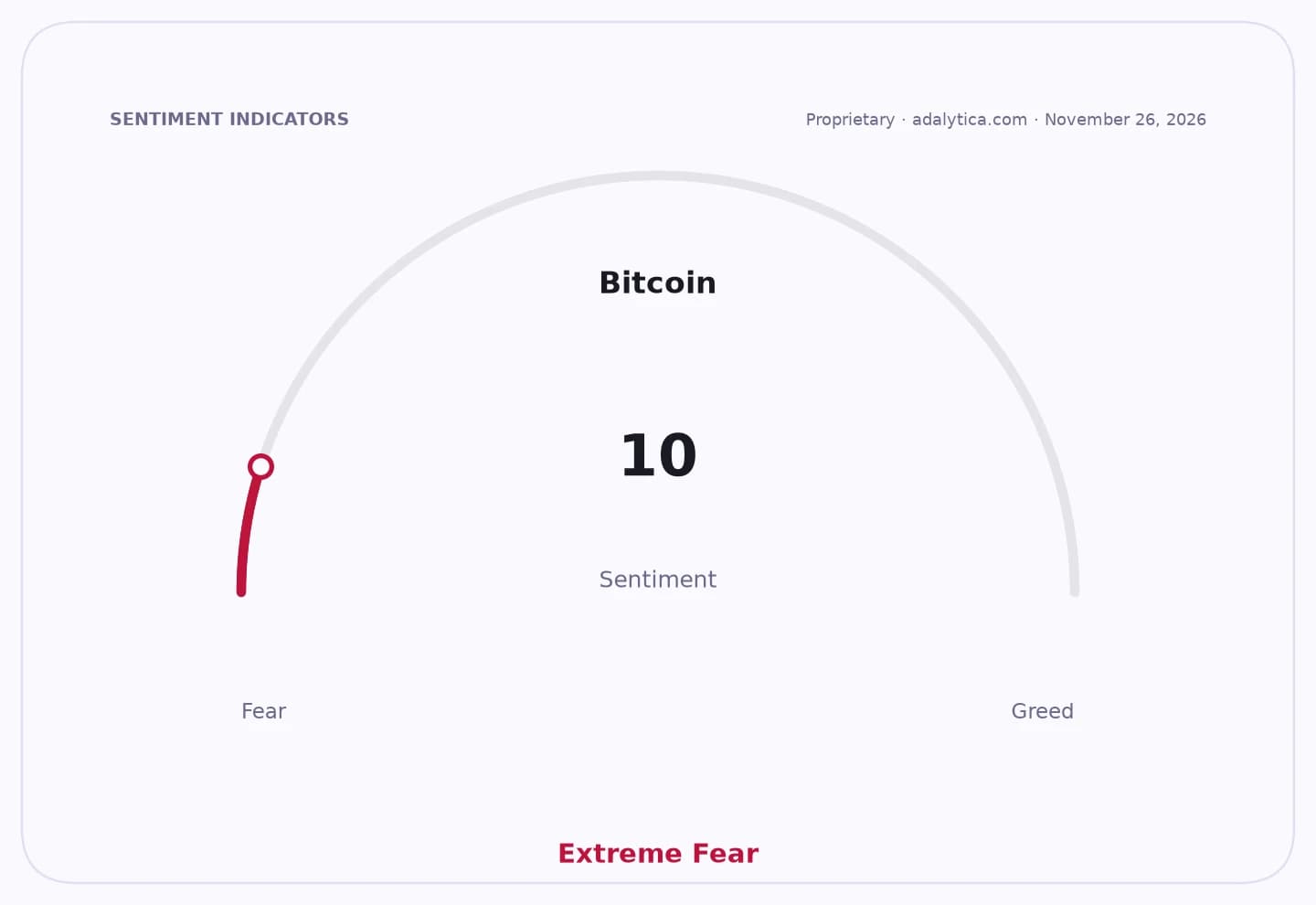
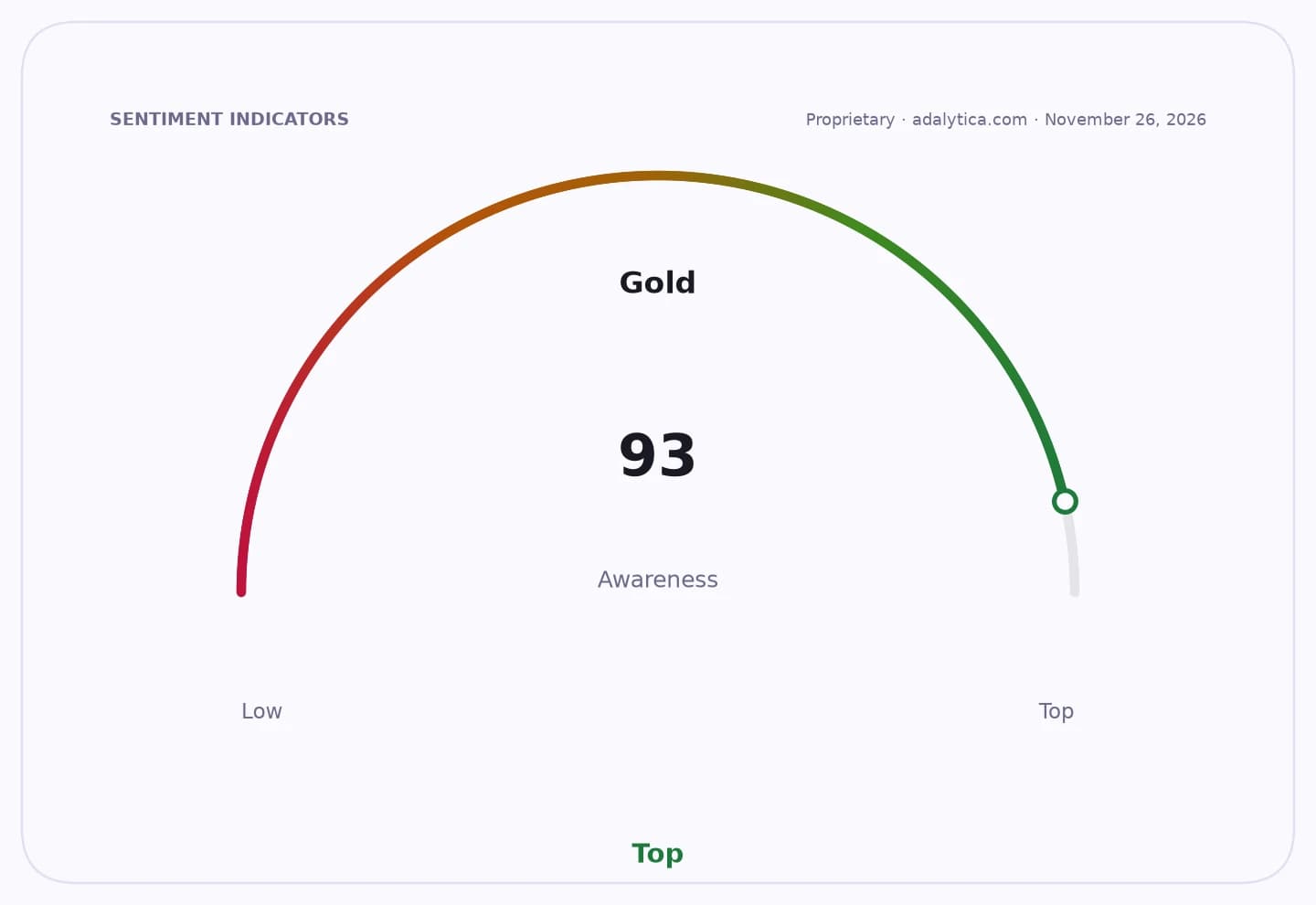
For investors, the official-sector bid is important because central banks are typically long-horizon buyers. Their purchases can soften downturns, support miners and bullion-backed funds, and reinforce gold’s role as a hedge when geopolitical risk rises. Adalytica.com’s Gold Fear & Greed Index showed gold sentiment at 83, in “Greed” territory, while its global stability sentiment gauge stood at 7, or “Extreme Fear,” underscoring the risk backdrop behind the reserve shift.
The macro setting remains mixed for bullion. The U.S. 10-year Treasury yield was near 4.54%, while the federal funds rate was around 3.63%, keeping real-rate competition alive. At the same time, gold’s pullback has made reserve accumulation cheaper for central banks that want to raise holdings without chasing the market at peaks.
The Czech central bank’s purchases are small compared with the holdings of the largest reserve managers, but the direction is significant. A European monetary authority using weakness to build gold reserves signals that the post-2022 trend toward diversification remains intact even after a sharp price correction.
Further buying by official institutions would strengthen the floor under gold, while a sustained rise in yields or the dollar would test how much of the market is being driven by strategic reserve demand rather than speculative momentum.
| Entity | Gains | Losses |
|---|---|---|
| Czech central bank | ▲Larger hard-asset buffer | ▼Less liquidity in reserve mix |
| Gold miners and bullion funds | ▲Official-sector demand support | ▼Pressure if prices keep sliding |
| Dollar reserve assets | ▲Diversification challenge | ▼Lower relative allocation |
| Gold shorts | ▲Central-bank bid risk | ▼Less downside follow-through |