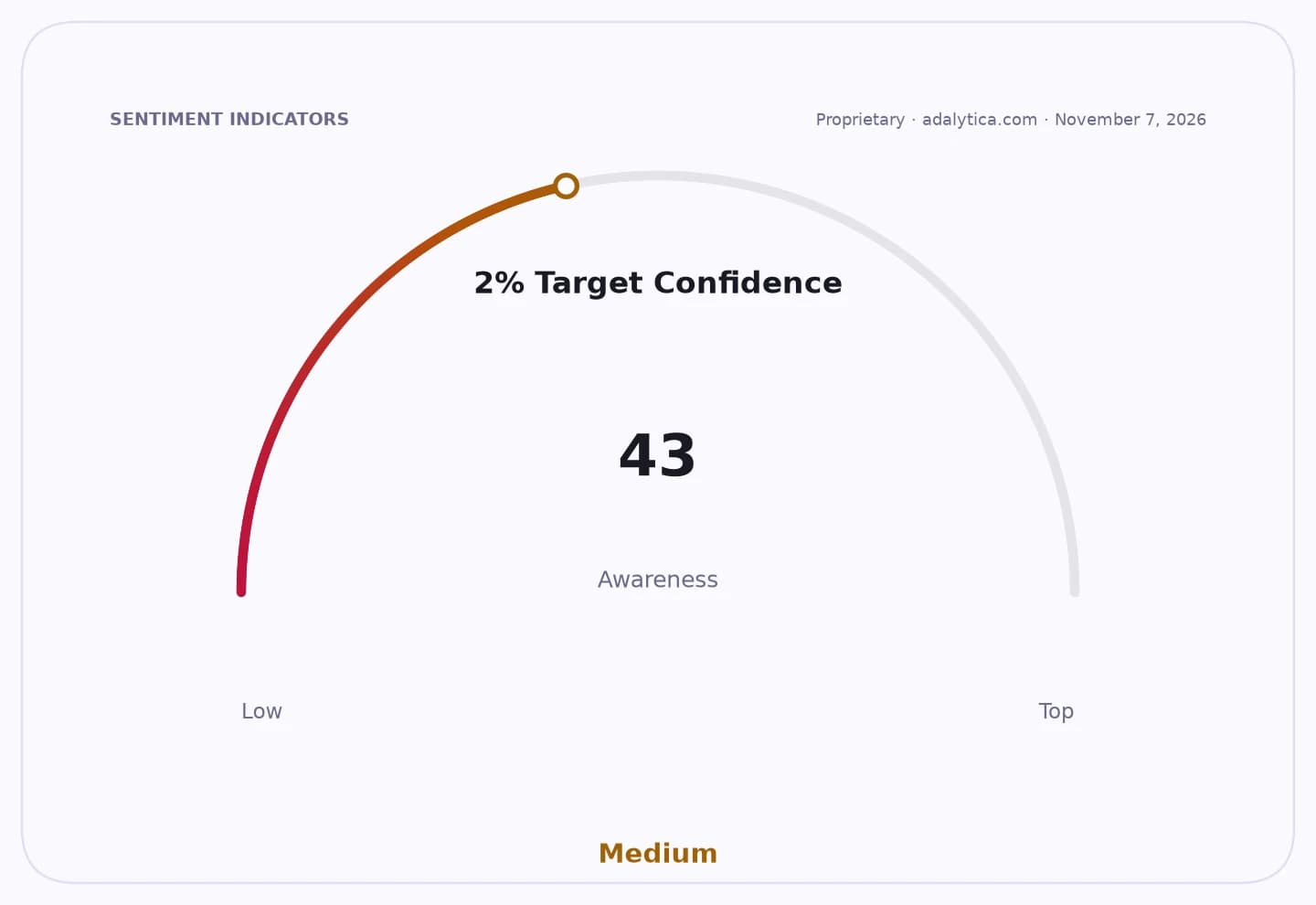
Czech inflation eased to 2.4% in October, but the slowdown is unlikely to stop the Czech National Bank from tightening again as economists warn that energy bills and a weaker harvest could push price growth back above 3% next year.
Czech inflation eases to 2.4% as CNB eyes hike
The preliminary reading, up 0.4% from September, was the first annual slowdown since June and marked a retreat from September’s 2.5%. But it still leaves consumer prices rising faster than the central bank would like, especially with services up 4.5% and energy prices, including motor fuels, climbing 5.6% from a year earlier.
Sentiment Indicators
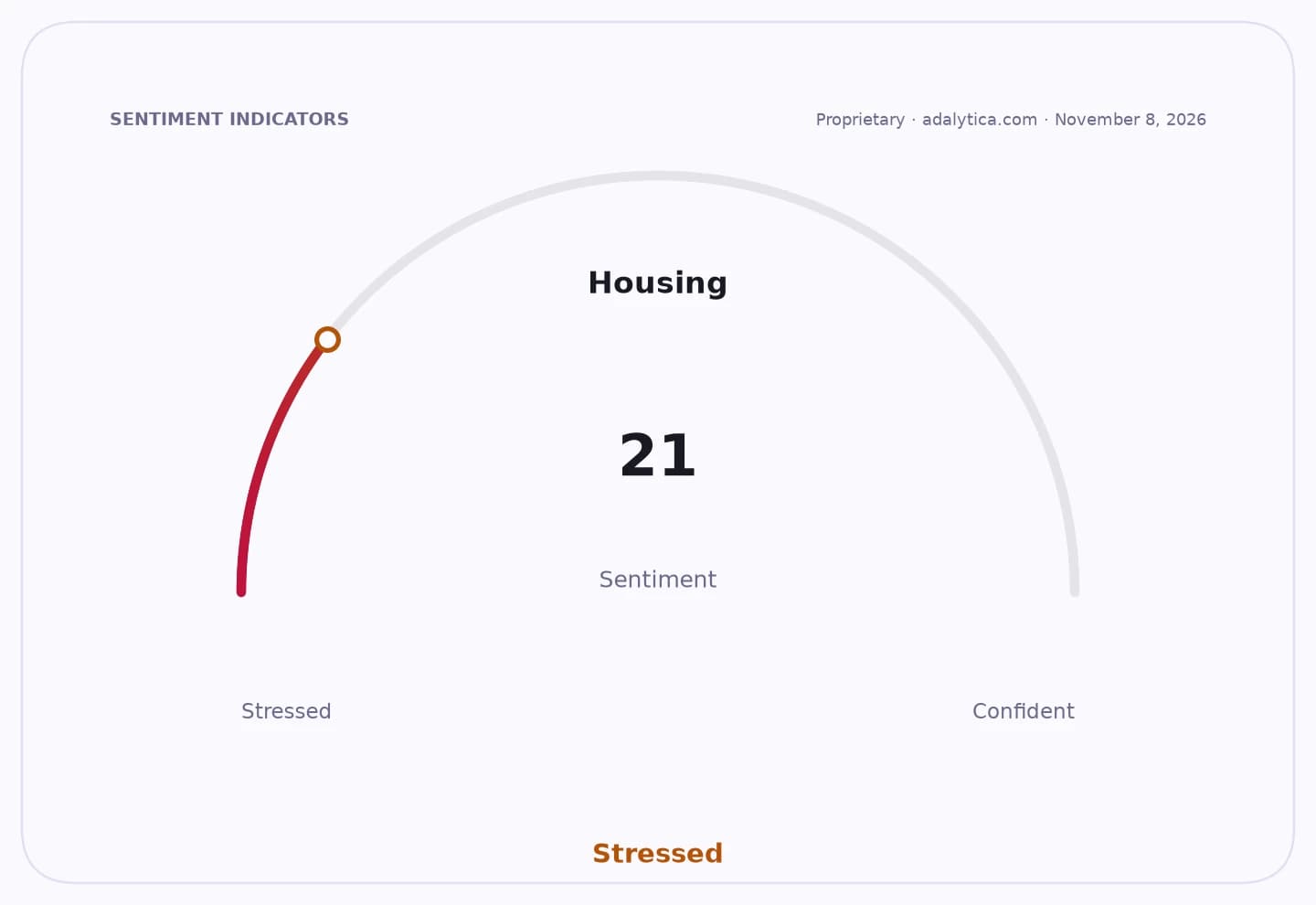
For households, the October figures offered only partial relief. Food and nonalcoholic drink prices fell 4% year on year, helping contain the headline rate, but that buffer may not last. Deloitte chief economist David Marek said this year’s cheaper food reflects last year’s harvest, while prices in 2027 will be shaped by this year’s much weaker crop.
That keeps the inflation outlook sticky at a time when policymakers are already under pressure to defend price stability. Higher wholesale energy costs are also expected to feed through more forcefully around year-end as suppliers rework tariffs, according to Banka Creditas chief economist Petr Dufek.
Analysts contacted by ČTK expect inflation to exceed 3% in 2027, a forecast that reinforces bets on tighter policy despite October’s softer headline print. Economists expect the Czech central bank to lift its benchmark rate by a quarter point to 4% at Thursday’s meeting.
For investors, the message is that Czech rates may stay higher for longer, supporting the koruna in theory while keeping pressure on domestic borrowing costs and rate-sensitive sectors. Final October inflation data are due Nov. 10, but the broader trajectory now matters more than one modestly cooler month.
| Entity | Gains | Losses |
|---|---|---|
| Czech National Bank | ▲More room to hike | ▼Dovish expectations |
| Czech savers | ▲Higher deposit yields | ▼ |
| Czech households | ▲Cheaper food in October | ▼Higher energy and loan costs |
| Rate-sensitive borrowers | ▲ | ▼Higher borrowing costs |